
As satellite constellation architectures scale and high-frequency RF systems push into millimetre-wave bands, conventional CNC machining faces severe geometric, lead-time, and weight constraints. Horizon Microtechnologies is resolving these bottlenecks by combining precision polymer micro-additive manufacturing (micro-AM) with proprietary 3D functional metallization and protective coatings. By applying conductive, antistatic, or environmentally protective metal layers (such as copper, silver, and gold) to lightweight printed microstructures, the company replaces bulky metal hardware without compromising electrical or shielding performance.
Andreas Frölich, Founder and CEO of Horizon Microtechnologies, discusses moving from feasibility studies to space-qualified production under ESA’s SPARK program, industrializing phased-array shielding housings, and expanding application-led RF product families through late 2026.
A brief description of the company and its activities
Andreas Frölich: Horizon Microtechnologies is a Karlsruhe-based advanced manufacturing company specialising in precision polymer micro-additive manufacturing combined with functional coatings and metallisation. The company creates micro-scale and meso-scale parts that use polymer 3D printing for geometry, precision, and design freedom, then adds metallic or protective coatings where required. Its work is especially relevant for passive electromechanical and RF components such as shielding housings, antennas, filters, waveguides as well as electrodes, sensor heads, nozzles, and microfluidic structures. Horizon’s core proposition is not simply “3D printing small parts”, but enabling functional 3D micro components that combine low weight, complex geometry and application-specific surface functionalities through its proprietary coating technology. The company has particular traction in RF, millimetre-wave, space, electronics testing, sensing, medtech, and life sciences applications. The company focuses on microscale components with added functionality via in-house 3D coating processes.
What are the main areas of activity of the company?
A.F: Horizon’s main activity areas are RF and microwave components, space hardware, industrial sensing, electronics testing, microfluidics, medtech/life sciences, and specialist coated micro components. In RF and mmWave, the company supports antennas, filters, waveguides and related devices using polymer micro-AM plus copper, silver, and other coatings. In space, Horizon is focusing on these passive RF components and electromechanical hardware such as shielding housings for phased-array antenna elements and related satellite payload applications. The company is also active in coated polymer parts where properties such as low, e.g., non-metallic conductivity for antistatic effects, resistance to chemicals, increased wettability, biocompatibility or environmental protection are required. Its broader services include micro-AM, 3D coatings (HMT-Metal, HMT-Conductive and HMT-Protect), allowing customers to move from conceptual parts to functional components with application-specific properties.
What’s the news about new products/services?
A.F: The most important current development is Horizon’s move from proven coated micro-AM capability toward production of space-qualified satellite hardware. Its metallised polymer shielding housings are being positioned for use in phased-array antennas and related payloads, where large constellation volumes create pressure around weight, cost, and manufacturability. This is underpinned by production-scaling activity around shielding housings, with a target to translate space qualification and manual manufacturing by skilled labor into industrial production and deployment. Horizon is also expanding its coating capability and exploring new coating variants, including gold-coated polymer micro-AM components for demanding applications. The practical message is that Horizon is no longer only offering feasibility work, one-off demonstrators and verification-scale small series production, it is increasingly building product families and scalable processes for customer use cases in space, RF, electronics testing, sensing and MedTech.
What are the ranges of products/services?
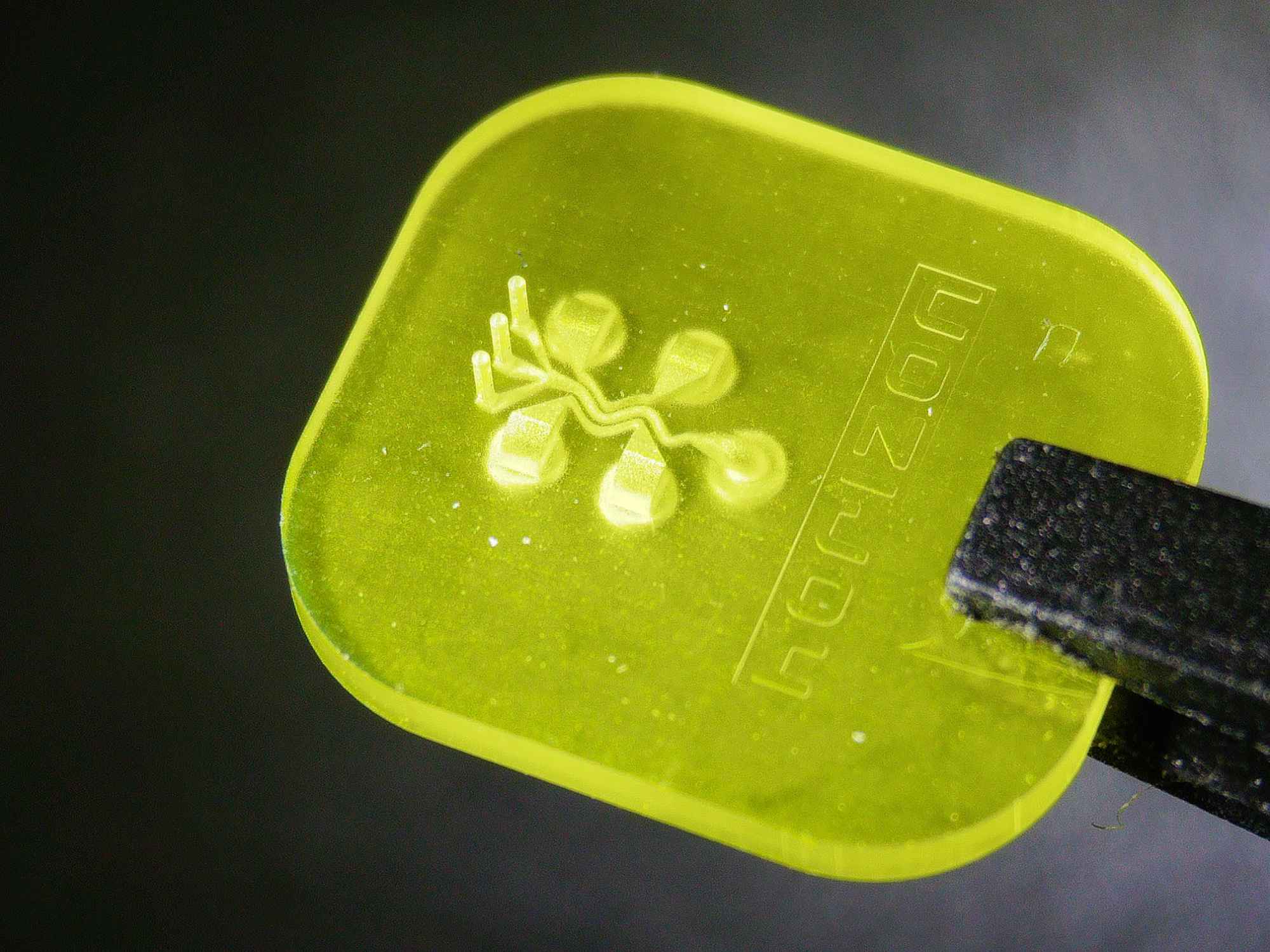
A.F: Horizon offers both contract development/manufacturing services and increasingly application-led product families. Designing-in the manufacturing options enable by the combination of 3D printing and 3D coating, different customer benefits are unlocked. Its services include high-precision polymer micro-AM, coating of customer-supplied or Horizon-produced 3D parts, metallisation, protective coatings, transparent conductive coatings, and design/manufacturing support for RF and mmWave components. Product and application ranges include off-the-shelf as well as bespoke horn-type antennas, lensed antennas, microwave filters, waveguides, shielding housings, electrodes, nozzles, sensor structures, microfluidic devices, MEMS/optics packaging and generally coated micro components. The company’s RF offer includes metallic, dielectric, and hybrid antennas, filters and waveguides, often using monolithic geometries that are difficult or uneconomic with conventional machining. The common thread is functional microfabrication — precision geometry plus surface properties such as conductivity, protection, wettability or chemical resistance.
What is the state of the market where you are currently active?
A.F: The market is moving quickly because several industries now need components that are smaller, lighter, more integrated and faster to develop. In RF and mmWave, higher frequencies make tolerances, surface roughness, internal geometry, and metallisation quality increasingly important. The company has recently highlighted how precision additive manufacturing is setting new benchmarks for RF and millimetre-wave systems as conventional routes become constrained by geometry, integration, and lead time. In space, New Space and constellation architectures are creating a strong pull for passive components that can be made at higher volumes without sacrificing qualification confidence. Horizon’s space-readiness campaign, supported through ESA’s SPARK project line, has shown that metallised polymer components can be qualified for harsh LEO-relevant environments when engineered correctly.
What can you tell us about market trends?
A.F: The strongest trend is the convergence of miniaturisation, light weighting, functional integration, and qualification readiness. Customers increasingly want more than prototypes; they need credible manufacturing routes that can move from concept to production without redesigning the process chain. In electronics, increasing miniaturization of electronics packages creates a need for interconnect technology that can scale down accordingly. In space, SWaP (size, weight and power) pressures are intensifying as constellations scale and payload architectures become more complex. In RF and mmWave, designers are pushing toward smaller, more compact waveguide geometries, filters, antennas, and feed structures that challenge conventional machining in terms of manufacturability as well as decreasing size, driven by the shift to higher frequencies. Another trend is materials substitution, replacing bulk metal where the function is primarily surface conductivity, for shielding or waveguiding. That creates opportunities for metal-coated polymer parts that are lighter, can be made with higher design freedom without constraints imposed by CNC machining and more scalable.
What are the most innovative products/services marketed?
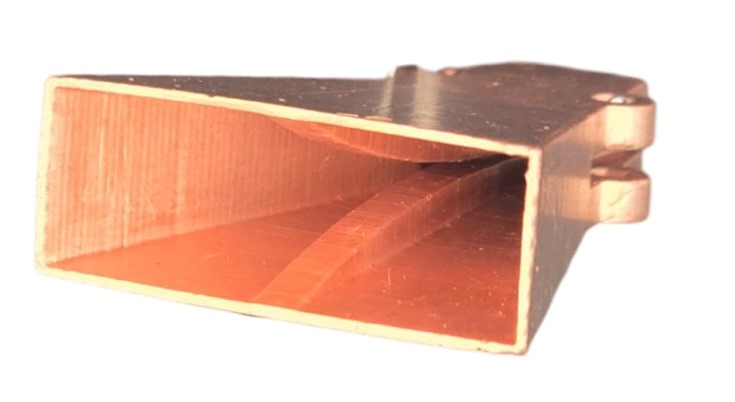
A.F: The most innovative area is Horizon’s platform for metallised polymer micro-AM passive RF and space components. This includes space-qualified shielding housings, antennas, waveguide structures, RF filters, and corrugated devices. Horizon’s previous work has demonstrated copper-coated micro-AM horn antennas as a route to proving manufacturing suitability for high-frequency and antenna applications. Its RF design services also address antennas, filters, and waveguides, including geometries that are hard or impossible to obtain through subtractive machining. In the space sector, Horizon’s platform allows successful competition with incumbent technologies simultaneously on weight, cost and performance.
What estimations do you have for the second half of 2026?
A.F: For the second half of 2026, Horizon expects continued momentum around space, RF, and production scaling. The company’s priority is to convert space qualification work into customer-led programmes, especially around passive RF hardware., with a goal to become a go-to source for efficient contract development and manufacturing of passive RF components for space – based on a manufacturing process that can be used efficiently both during development, verification and ramp-up. Horizon also expects activity around adjacent applications in electronics testing, sensing, medtech/life sciences, and high-frequency components. The outlook is therefore one of selective growth, more customer conversations, more application-specific validation, stronger industrialisation, and the expansion of coated polymer micro-AM from specialist capability into a credible manufacturing route for demanding, high-value compon