
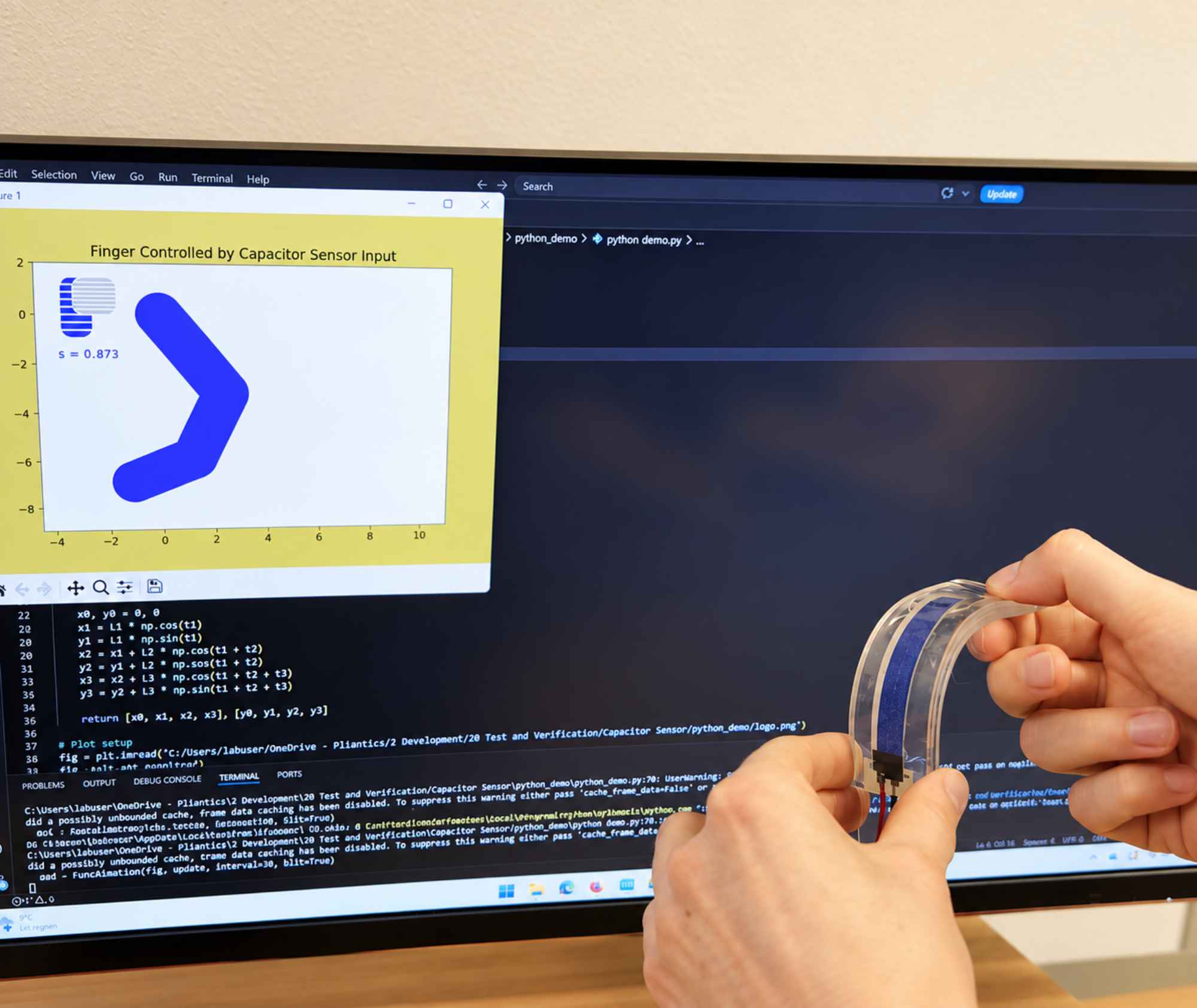
As the robotics and automation sectors move toward inherently safe and flexible physical interactions, Pliantics is developing compliant actuators and strain gauges based on the electrostatic “soft capacitor” principle. Founded by Guggi Kofod and supported by the UK’s Advanced Research + Invention Agency (ARIA) under its Robot Dexterity program, the company focuses on high-volume production processes for soft electrodes and compliant components. Capable of handling strains exceeding 50% and interrogating signals at bandwidths above 1 kHz, Pliantics’ soft strain gauges and bending sensors offer high-speed feedback for dynamic, force-controlled systems. Through early-access Proof-of-Concept projects, Pliantics provides custom sensor geometry, capacitance measurement reference designs, and prototype electric actuators designed to deliver muscle-like force and energy density for next-generation automation.
Interview with Guggi Kofod, CEO/Founder of Pliantics.
A brief description of the company and its activities.
Guggi Kofod: Pliantics develops new compliant actuators and strain gauges, based on the electrostatic “soft capacitor” principle. Pliantics aims to help unlock the robotic and automation paradigms of the future, where we believe compliance and force-control will provide huge benefits over the current high-precision approaches. The current activities are funded by the Advanced Research + Invention Agency (ARIA, UK) within its Robot Dexterity program.
What are the main areas of activity of the company?
G.K: Pliantics is currently developing and maturing materials, processes and components. Our core technology solves issues around high-volume production of soft electrodes, and using these to assemble compliant actuators and sensors accurately and economically. The basic principles are now well established, and many types of prototype actuators and sensors have been built.
What’s the news about new products/services?
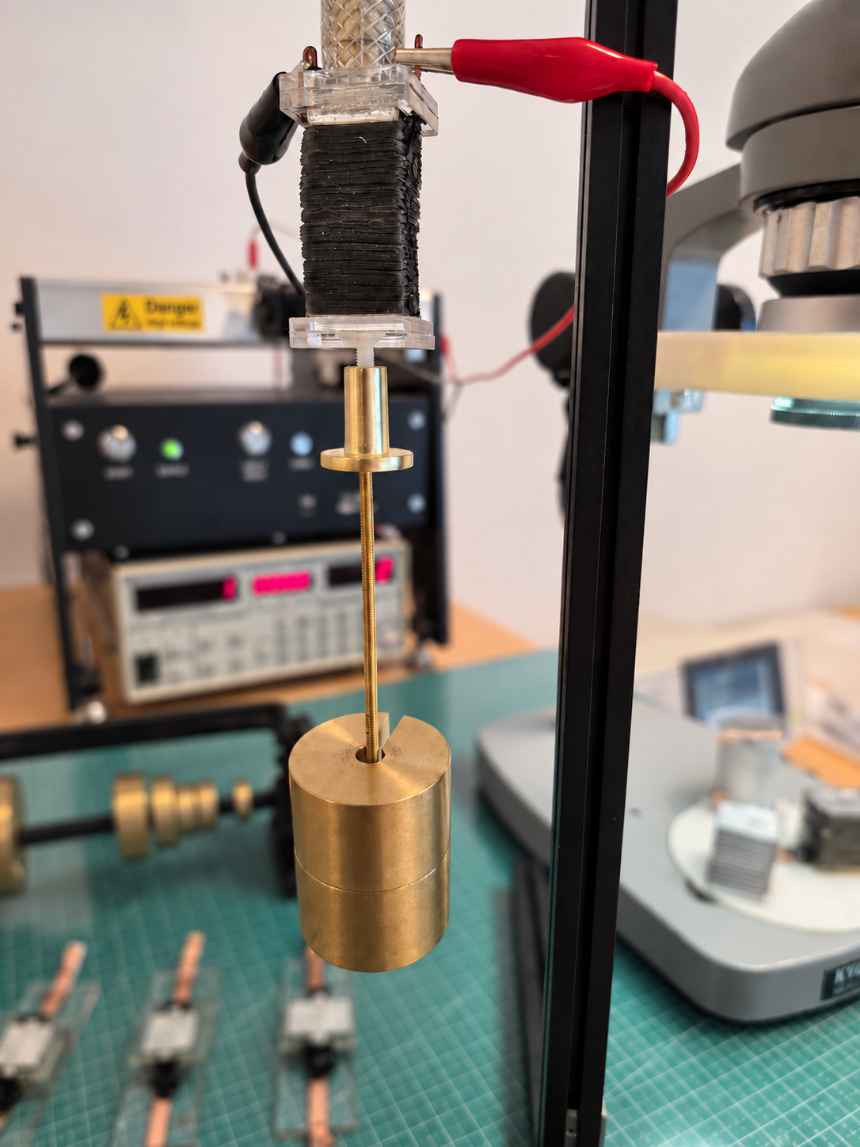
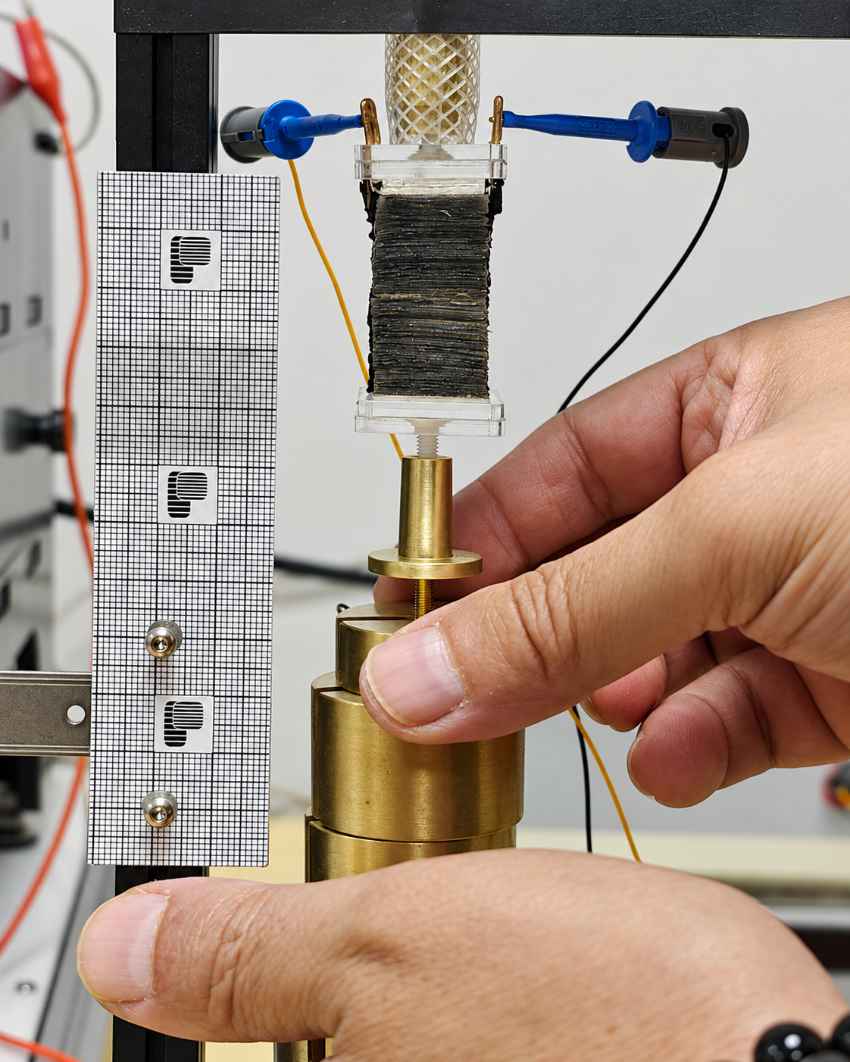
G.K: Our sensors have proven fast and accurate, and we are now developing them for a couple of Proof-of-Concept projects with exciting applications in compliant automation. These strain gauges allow high-bandwidth interrogation well over 1 kHz, which should provide adequate feedback for even high-speed compliant automation. They are very soft and allow for strain well over 50%. They can also be deployed as bending sensors when deployed on flexing and bending beams, able to handle small and large curvatures.
What are the ranges of products/services?
G.K: Pliantics offers access to test our technology in Proof-of-Concept projects. We can design sensors that are matched to specific needs and geometries. We have several reference designs for the measuring the capacitance, all based on available ICs and processors to simplify integration.
What is the state of the market where you are currently active?
G.K: Compliant actuators and sensors are relatively niche today, but growing rapidly. The pneumatic soft grippers are the prime example demonstrating that compliance can matter more than precision when handling fragile objects.
What can you tell us about market trends?
G.K: Compliance has become the main safety feature of cobots, achieved through motor current sensing feedback – we believe that this sets the stage for safety through inherently compliant robotics, where force and position feedback must be achieved through fusion between existing and novel sensor modalities. Inherent compliance may eventually become the unlock that enables ubiquitous robotics and automation.
What are the most innovative products/services marketed?
G.K: Our sensors are now available through direct contact with us, even if these products are not yet presented on our website. Our compliant actuators will combine high work energy density and high power efficiency with complete simplicity and silence, features which are difficult to achieve using small servos. We can offer early access to the specifications of our coming actuators, and will collaborate with interested developers on applications.
What estimations do you have for the second half of 2026?
G.K: We expect to show that our sensors are easily integrated into designs and that they provide the feedback signals to enable reliable operation in compliant systems. Our fully electric actuators may come to show motion and force comparable to that of biological muscle.