
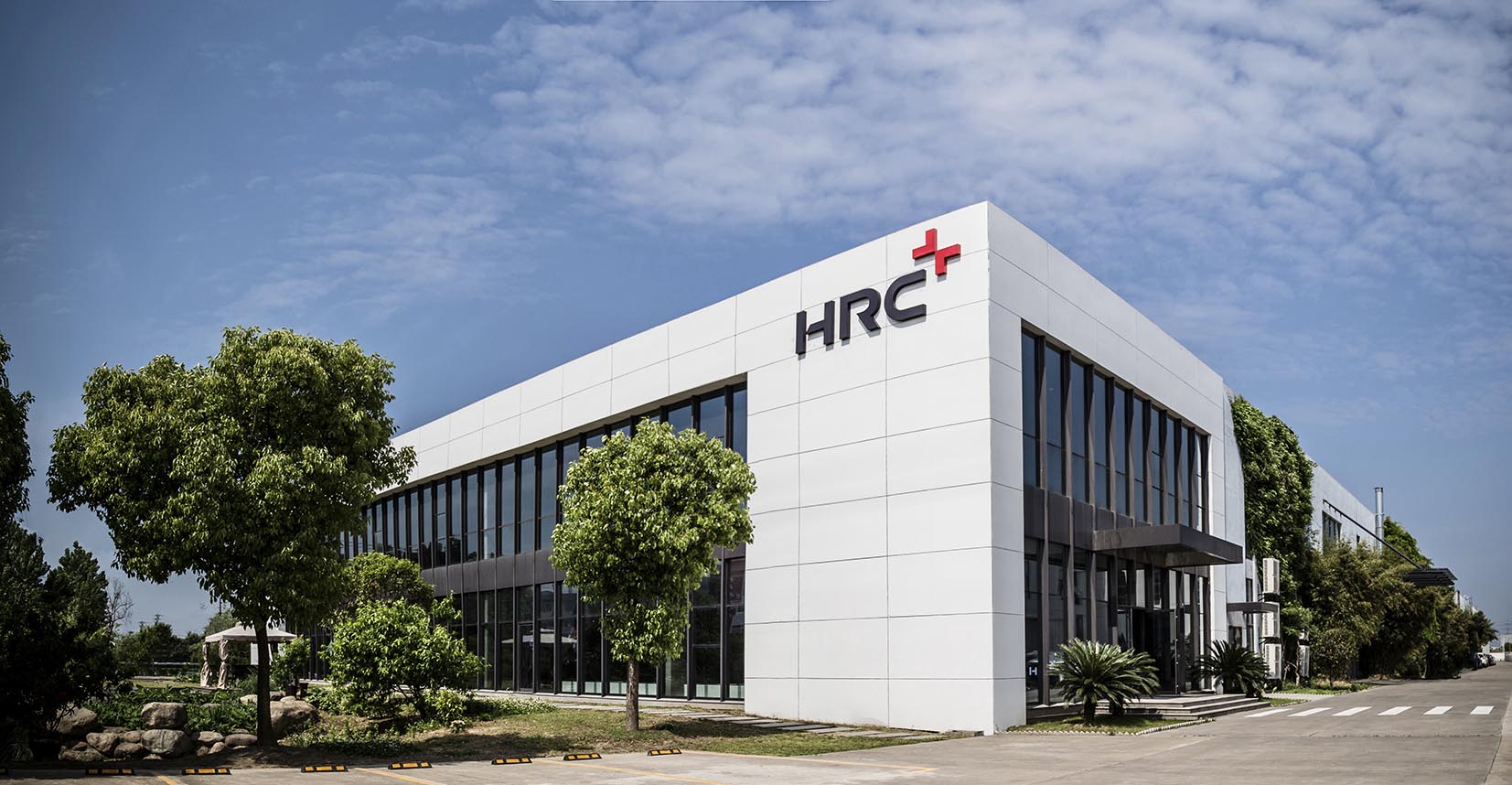
As a global leader in advanced composite solutions, HRC pioneers the development of high-performance carbon fiber products, offering comprehensive and sustainable solutions that meet the diverse needs of various designated application industries.
What are the most common industrial challenges your clients face today, and how does your company address them?
Most HRC customers operate in technology-intensive sectors such as automotive, general aviation, low-altitude mobility, robotics and construction. Their common challenge is balancing lightweighting, cost, performance and scalability in a commercially viable solution.
HRC addresses these needs through integrated capabilities covering material development, structural design, CAE simulation, tooling, mass production and in-house surface treatment. With annual capacity exceeding one million parts, early-stage concurrent engineering with rigorous quality control throughout development and production helps customers reduce technical risk, improve manufacturability, and achieve measurable gains in cost, quality, and delivery performance.
How do you identify the specific operational needs of a client before proposing a solution?
HRC follows a structured process to understand each customer´s technical and operation requirements. Product managers work closely with customers to review project objectives, delivery expectations, quality, appearance, testing, validation and logistics needs, while carefully interpreting technical specifications and drawings.
A cross-functional project team is then formed, bringing together specialists in materials, structural design, tooling and manufacturing. Through joint technical reviews and feasibility studies, the team evaluates both stated needs and potential operational constraints. The output is a detailed consolidated product feasibility report, ensuring that each proposed solution is technically sound and, aligned with the customer’s actual operating conditions.
Can you share an example of how your solutions improved efficiency, productivity, or reliability for a customer?
One example involved a carbon fiber and metal co-cured component for a low-altitude aircraft application, where the customer required hole accuracy of ±0.01 mm. Because conventional carbon fiber machining equipment operates at high speed and low torque, achieving stable metal processing presented a significant challenge. HRC formed a dedicated task force and used matrix testing to optimize customized tools, spindle parameters and floating tool holders. The resulting process met all dimensional requirements.
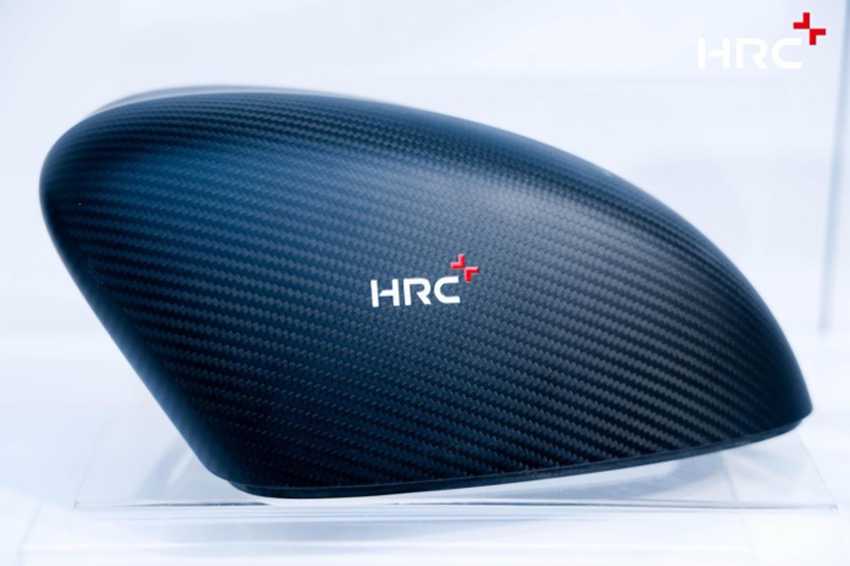
Another case was a carbon fiber rear-view mirror for an automotive customer. The original autoclave curing cycle exceeded three hours per part, while daily demand was more than 800 sets. HRC shortened the curing cycle through resin formulation adjustment and improved line efficiency through automation, enabling stable mass supply.
What role does innovation play in the development of your products or services for industrial applications?
For HRC, innovation is a practical tool for solving industrial challenges. It is embedded throughout material formulation, structural design, tooling, process development and intelligent manufacturing.
Examples include fast-curing resin systems that improve production takt time, simulation-driven design that shortens development iterations, and flexible tooling and automated production systems that support consistent high-volume manufacturing. These innovations are valuable because they are translated into manufacturable products. They help address real challenges related to cost, quality, efficiency and reliability while achieving measurable industrial value.
How do your solutions help companies adapt to increasing demands for sustainability and energy efficiency?
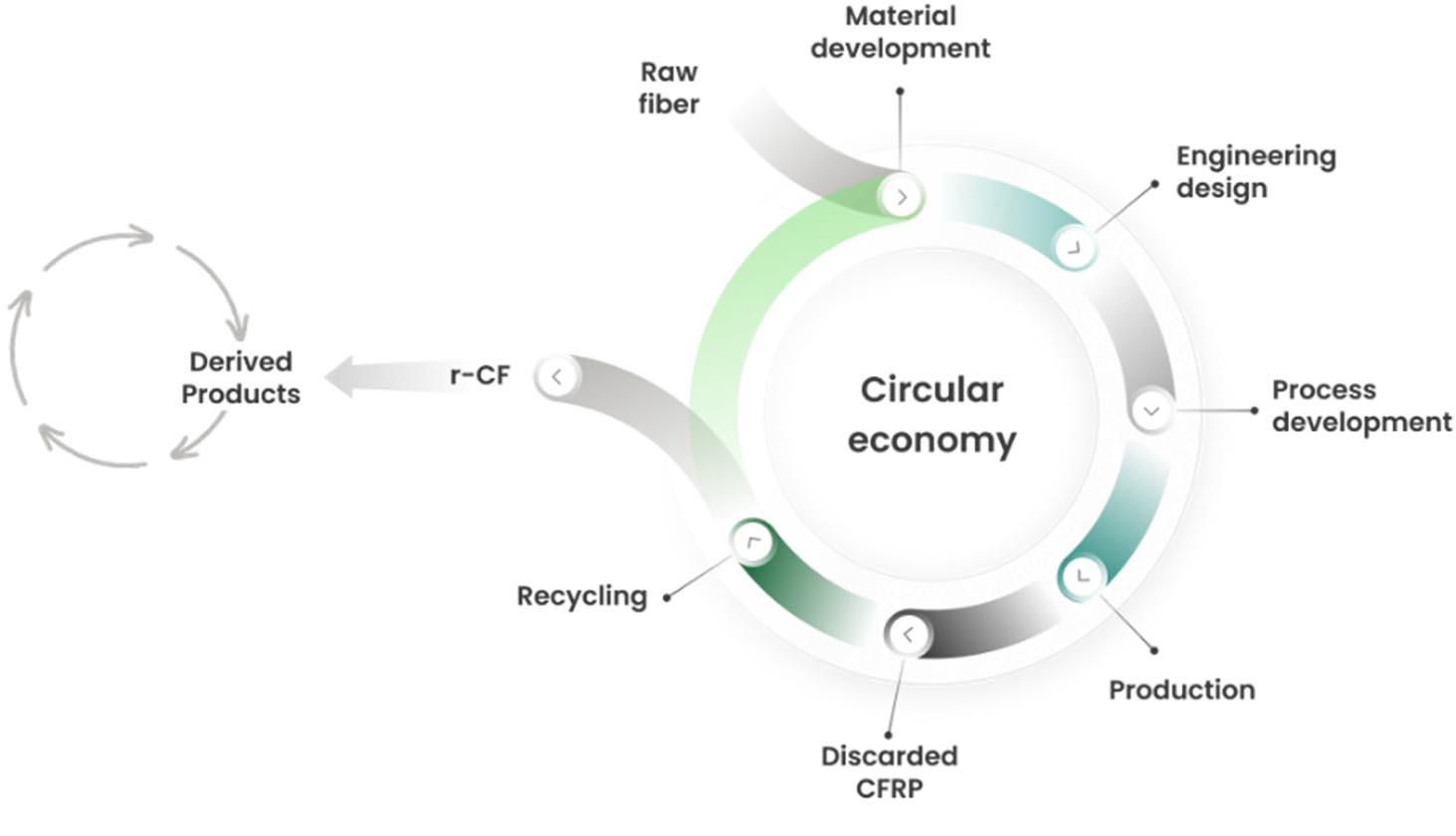
HRC integrates sustainability into both technology development and business practice. The company has built a lifecycle approach covering material development, industrial application, recycling and reuse, helping customers reduce environmental impact without compromising performance.
A key example is HRC’s patented carbon fiber recycling technology, which recovers carbon fiber efficiently with low energy consumption and no chemical pollution. The recovered fiber retains more than 95% of the original physical properties of virgin carbon fiber, while its carbon emissions are only 4.7% of those of virgin material. HRC is also working with Airbus Lifecycle Services Centre in China on the systematic recovery and reuse of carbon fiber composites from retired aircraft, demonstrating how recycled carbon fiber can move into scalable, high-value industrial applications.
In what ways do you customize your technologies or services to fit different industries or production environments?
HRC customizes its solutions through a model that combines specialized business units with a shared group-level technology platform. Dedicated teams serve sectors such as automotive, aerospace, industrial applications and construction, ensuring that each project aligns with relevant certification requirements, development cycles, process standards and delivery expectations.
At the group level, HRC integrates core capabilities in material formulation, product design, simulation and testing. For advanced research & innovation projects, HRC also collaborates with Fraunhofer ICT through the HRC R&D Center, an open lightweighting research platform in Asia. This structure anables advanced research to be translated efficiently into validated and scalable solutions tailored to different industries.
How important is digitalization and data-driven decision-making in the solutions you provide to clients?
Digitalization and data-driven decision-making are essential to delivery reliability, operational transparency and continuous improvement. Integrated ERP and WMS systems digitalize and automate the process from order to delivery.
Data allows HRC to manage production planning and inventory more accurately, respond quickly to changes in customer demand, and build full-chain quality traceability. Process data is also used to optimize manufacturing parameters, while real-time cost and financial visibility supports continuous efficiency improvement. For customers, this means more reliable delivery, stronger quality assurance and closer collaboration based on shared data rather than assumptions.
What challenges do companies typically encounter when implementing new industrial technologies, and how do you support them during the transition?
When companies introduce new industrial technologies, they often face uncertainties related to technology maturity, process stability, workforce readiness, project timilines and the inherent risk of innovation.
HRC supports customers through a phased approach of validation, implementation and scale-up.
In the early stage, HRC conducts pre-research and process validation through its R&D Center to reduce technical uncertainty. When bottlenecks arise, joint problem-solving teams are quickly formed, involving internal experts in materials, design, process and manufacturing, together with external resources when needed. This parallel engineering approach accelerates issue closure and helps customers progress from technical breakthrough to stable mass production under controlled risk.
How do you measure the long-term success and impact of your solutions for customers?
HRC measures long-term success by whether a solution creates sustainable competitive value for the customer and develops into a stable long-term partnership. After delivery, the key question is what the solution has achieved: cost optimization, improved quality consistency, better manufacturability, or a breakthrough in product design. Impact is evaluated through customer feedback and satisfaction, order continuity and growth, quality complaint rates, defect escape rates, achievement of cost targets, and the market performance of the customer’s end products. This customer-value-based evaluation approach helps HRC continuously refine its solutions and create lasting value for both parties.
Looking ahead, what emerging industrial needs or trends are shaping the future direction of your company’s solutions?
New energy vehicles, low-altitude mobility, robotics, commercial space and sustainable construction are becoming key growth areas for carbon fiber applications. Across these sectors, demand is increasing for specific performance, shorter production cycles, greater scalability and improved sustainability.
In response, HRC is focusing on high-performance thermoplastic carbon fiber composite systems and related processes. Compared with traditional thermosets, thermoplastic composites offer shorter molding cycles, greater recyclability and better compatibility with automated high-volume production. By combining new material formulations with compression molding, injection molding and in-line layup, HRC aims to broaden the industrial adoption of carbon fiber by making composite solutions more cost-effective, repeatable, scalable, and recyclable.