
Five years ago, many companies were asking whether they should automate.Today, the question is very different.
They are asking how to build automation that can actually scale, adapt to change, and continue creating value over the next ten years.
That’s where SEER Robotics comes in.
SEER Robotics is a platform-based intelligent robotics company. Rather than focusing on a single robot type, they provide the robot brain, software platform, and robotics ecosystem that enable customers to build and operate intelligent automation more efficiently.
Today, the company’s technology supports thousands of robot models across industries including manufacturing, automotive, electronics, logistics, energy, healthcare, and many others.
SEER Robotics’ mission is simple: make intelligent robots more accessible and easier to deploy at scale.
Interview with Miya Gong, Global Marketing Director at SEER Robotics.
What are the main areas of activity of the company?
Miya Gong: From my perspective, customers are usually trying to solve three challenges.
The first is choosing the right robot.
The second is integrating robots into existing operations.
The third is scaling automation without starting over every time.
Everything we do revolves around solving those three problems.
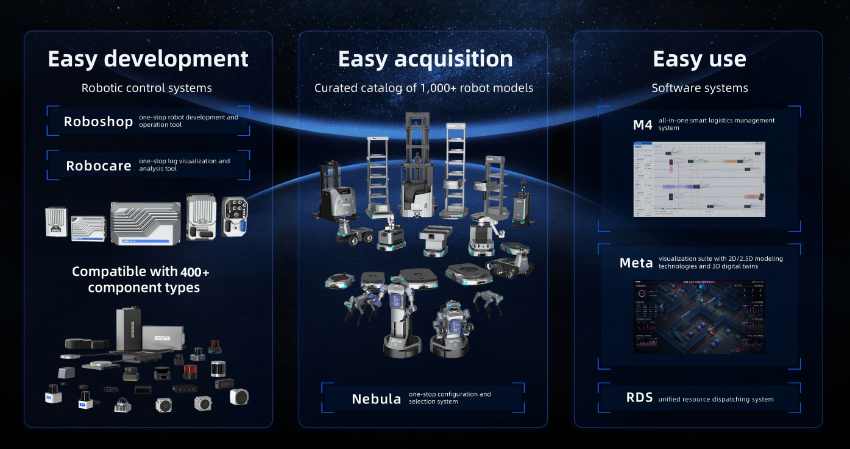
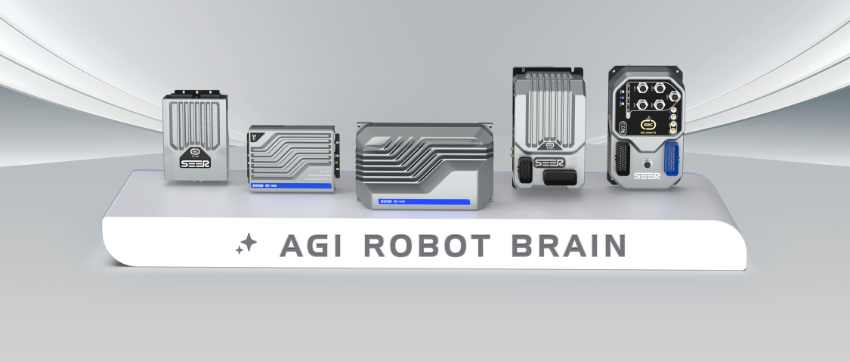
At the foundation, we provide intelligent robot controllers, which act as the brain of the robot.
On top of that, we provide software for fleet management, deployment, scheduling, and operational coordination.
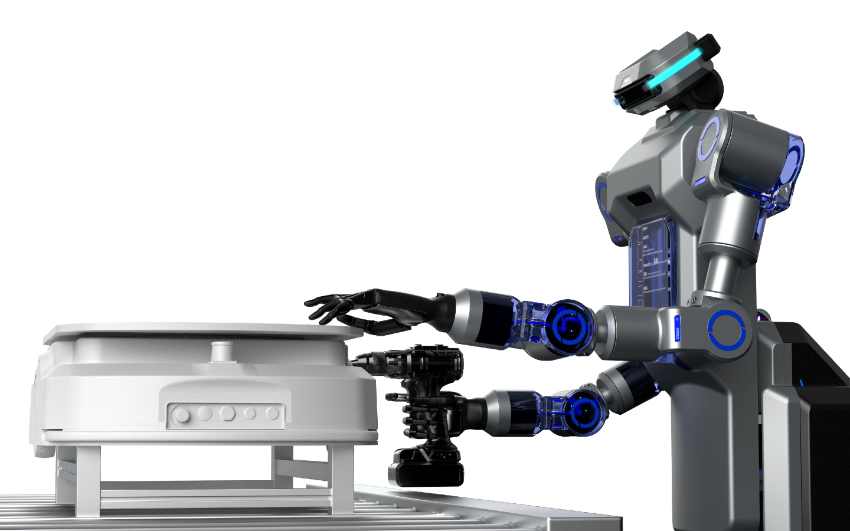
And finally, we provide a broad robotics ecosystem covering automated forklifts, AMRs, lifting robots, picking-related solutions, and emerging forms of embodied intelligent robots.
What makes our approach different is that these components work together through one unified platform rather than as isolated products.
What’s the news about new products/services?
M.G: What we are seeing globally is that customer expectations are changing rapidly.
A few years ago, automation projects were often focused on simple and repetitive workflows.
Today, customers want to automate tasks that are much more complex.
They want robots to operate in narrow aisles, handle damaged pallets, manage mixed loads, work alongside people, and coordinate across multiple facilities.
To address these challenges, we are investing heavily in AI-driven perception, intelligent fleet coordination, and embodied intelligence technologies.
For us, embodied intelligence is not simply a technology trend.
It represents the next stage of automation, where robots can better understand their environment, make smarter decisions, and adapt to real-world variability.
The goal is not to build robots that look more intelligent.
The goal is to make automation more practical and more reliable for customers.
What are the ranges of products/services?
M.G: Most factories do not need one robot. They need multiple robot types working together.
A warehouse may require automated forklifts. A production line may require compact AMRs. A distribution center may require lifting robots.
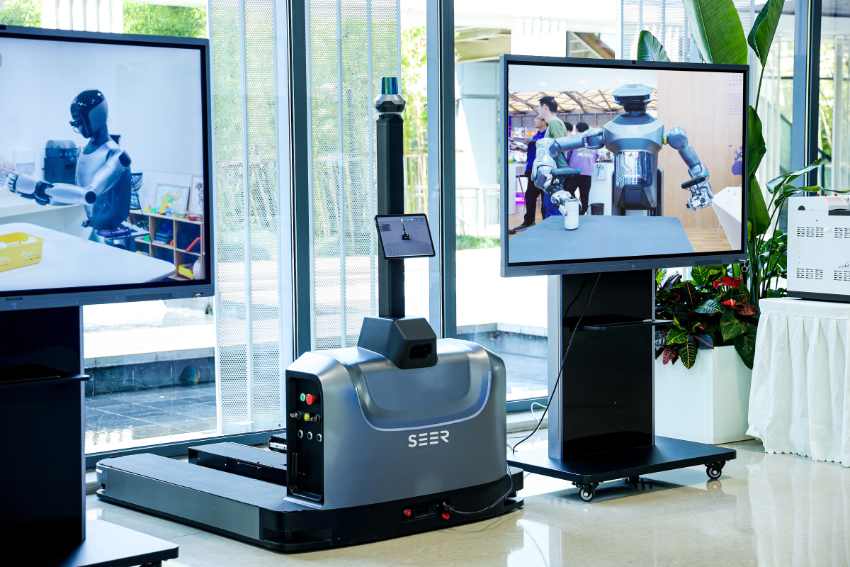
Future facilities may incorporate humanoid or embodied intelligent robots. The challenge is not finding individual robots. The challenge is making all of them work together efficiently.
That’s why our product portfolio spans robot controllers, software platforms, deployment tools, fleet management systems, and a broad range of mobile robots.
What customers ultimately gain is not simply access to more products.
They gain a flexible automation architecture that can evolve as their business evolves.
What is the state of the market where you are currently active?
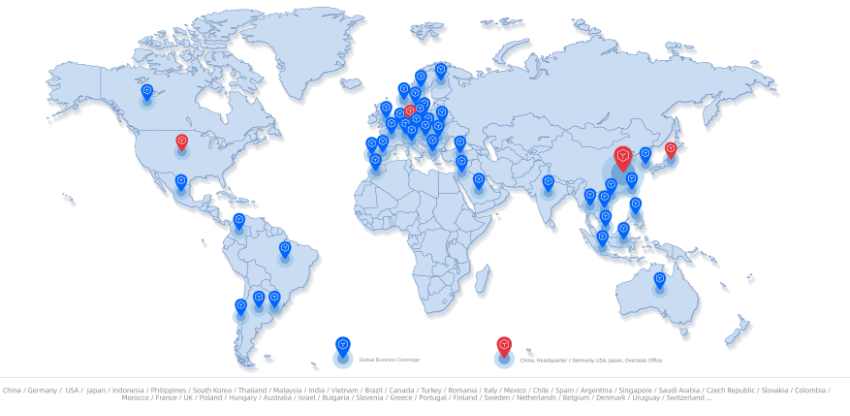
M.G: The market is becoming increasingly focused on operational resilience. Across North America, Europe, and Asia, the conversations are surprisingly similar.
Labor costs may vary. Regulations may vary. But the underlying challenge is often the same.
Companies need operations that can continue running efficiently despite labor shortages, market volatility, supply chain disruptions, and changing customer expectations.
In fact, the latest industry research shows that workforce shortages remain one of the biggest challenges facing supply chain operations worldwide, while AI and robotics are becoming strategic priorities for future competitiveness.
As a result, customers are becoming more selective.
They are no longer looking for impressive demonstrations.
They are looking for automation solutions that can deliver measurable operational results.
What can you tell us about market trends?
M.G: I believe we are seeing three major trends.
The first is the transition from single-machine automation to system-level orchestration.
Companies no longer want individual robots solving isolated tasks.
They want robots, software systems, facilities, and people working together as one coordinated operation.
The second trend is the growing role of AI in physical operations.
AI is moving beyond analytics and reporting.
It is increasingly being applied to scheduling, decision-making, predictive maintenance, exception handling, and operational optimization. Recent industry research suggests AI is expected to become the most disruptive technology in supply chains over the next decade, with robotics and automation close behind.
The third trend is scalability.
Customers are asking fewer questions about technology itself and more questions about deployment.
How quickly can it be implemented?
How easily can it integrate with existing systems?
Can it expand from one site to ten sites?
These are becoming the key decision factors.
What are the most innovative products/services marketed?
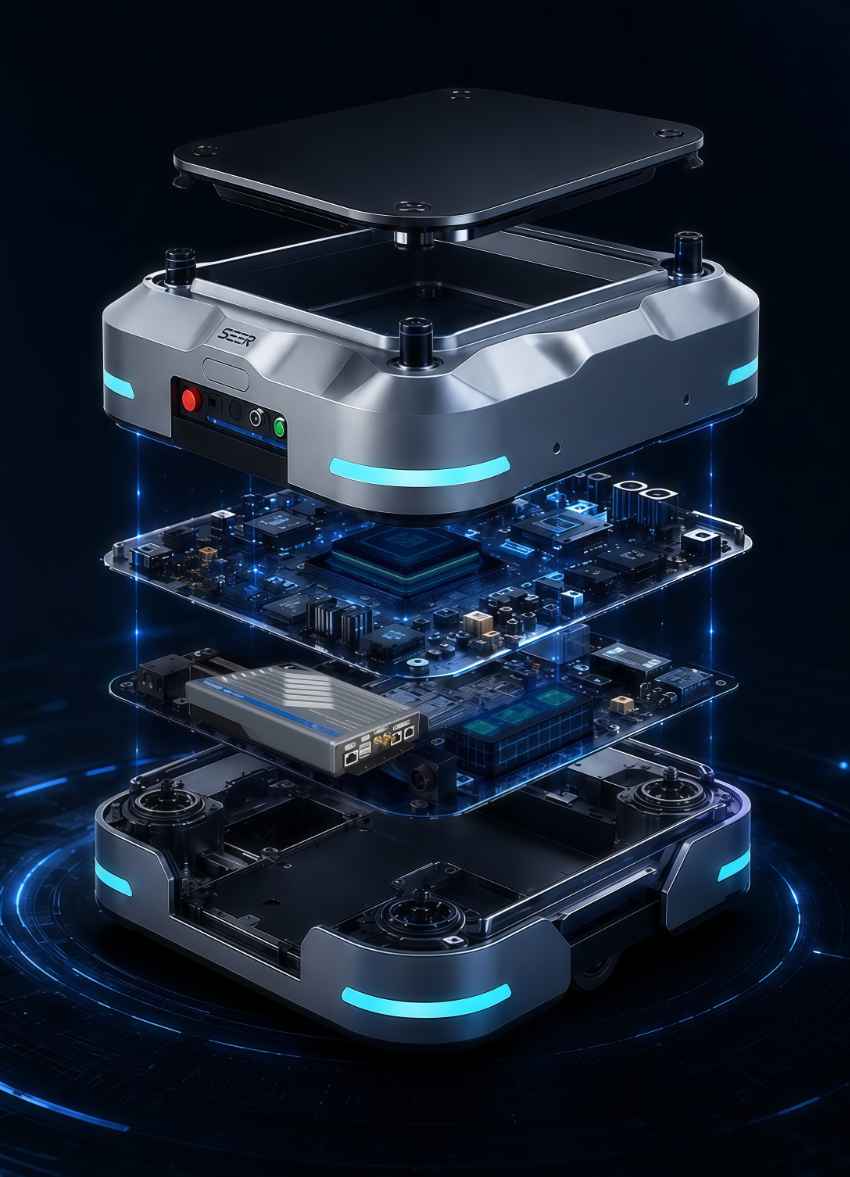
M.G: I actually think the most innovative thing is not a specific robot. It is the platform approach.
Historically, many automation projects were built around individual machines.
But customers are increasingly looking for long-term automation capabilities rather than isolated solutions.
Our platform combines robot controllers, software systems, deployment tools, fleet management capabilities, and a broad robotics ecosystem into one framework.
This allows customers to start small, validate results, and expand gradually without rebuilding their entire automation strategy.
From my perspective, innovation is not about creating the most advanced technology on paper.
Innovation is about making technology easier to adopt, easier to scale, and easier to generate value from.
What estimations do you have for the second half of 2026?
M.G: I expect demand for automation to remain strong throughout the second half of 2026.
However, I also believe customers will become even more disciplined in how they evaluate investments.
The focus will increasingly shift toward ROI, deployment speed, integration capability, and long-term scalability.
We are already seeing companies move beyond asking, “How many robots should I buy?”
Instead, they are asking, “How do I build an automation architecture that can support my business for the next decade?”
I think that shift will continue. The companies that succeed will not necessarily be the ones with the most technology.
They will be the ones who can connect AI, automation, software, and operational execution into one practical system.
Ultimately, the future belongs to organizations that can turn automation from a collection of tools into a sustainable competitive advantage.