
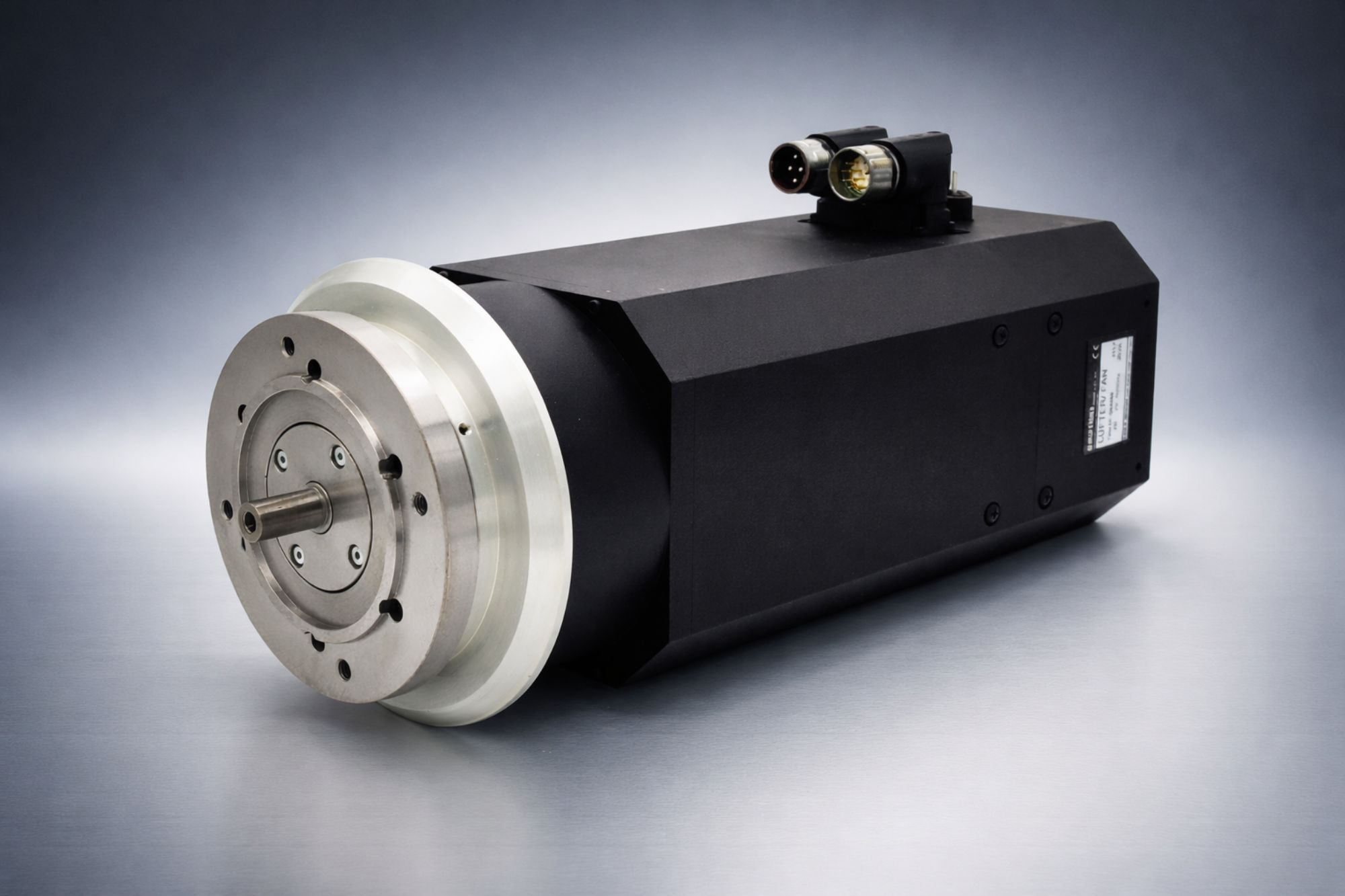
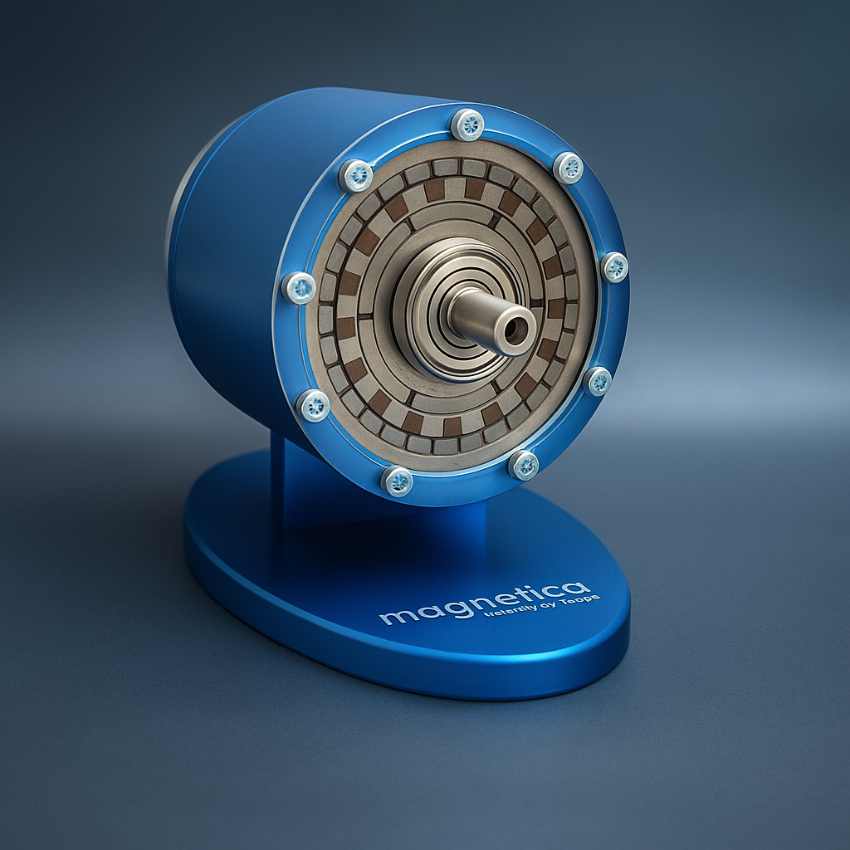
magnetica, based in Horb am Neckar, Germany, specializes in the development and manufacturing of innovative magnetic gear systems for industrial applications. With more than 15 years of experience in magnetic drivetrain technology, the company focuses on enabling contactless torque transmission through permanent magnetic fields, without mechanical gear teeth, lubrication, or wear.
Interview with Tobias Zeller, Product Manager at magnetica GmbH
A brief description of the company and its activities
Tobias Zeller: By replacing physical contact with magnetic interaction, magnetica offers an alternative to conventional mechanical transmission systems wherever maintenance-free operation, hygienic design, silent performance, or integrated overload protection provide significant added value.
From initial feasibility studies and simulation-based concept development to prototype manufacturing and customized series solutions, magnetica supports customers throughout the entire product development process. Its goal is not only to introduce magnetic gears as a new component technology, but to rethink drive systems as a whole.
What are the main areas of activity of the company?
T.Z: magnetica’s activities focus on the development and implementation of magnetic gear solutions for applications where conventional mechanical transmissions reach their limits.
One major field is the food and pharmaceutical industry, where lubricant-free and hygienic power transmission is essential. In these environments, magnetic gears offer clear advantages by eliminating contamination risks while reducing maintenance requirements.
Another important area is medical technology, where clean, quiet, and reliable drive solutions are increasingly demanded for advanced equipment and automation systems.
The company is also highly active in agitator and mixing systems, where magnetic gear technology enables hermetically sealed, wear-free operation. By integrating gear reduction and magnetic coupling into a single component, entirely new system architectures become possible.
Beyond these specialized applications, magnetica develops solutions for standard drive systems, including compact transmissions for e-bikes and industrial machinery, as well as test bench systems and high-speed driven tools, where integrated overload protection and exceptional speed capability offer significant technical benefits.
What’s the news about new products/services?
T.Z: A major focus is the continued expansion of high-speed magnetic gear solutions, particularly for demanding industrial tooling and testing applications.
Current development efforts are centered on magnetic drivetrain systems capable of operating at rotational speeds of up to 60,000 rpm, opening new possibilities in high-performance test rigs, advanced machining environments, and compact electric drive systems.
In parallel, magnetica is increasingly positioning itself as an engineering partner, offering simulation-driven design optimization, rapid prototyping, and tailored application support to accelerate customer implementation.
What are the ranges of products/services?
T.Z: magnetica provides both standard and customized magnetic gear solutions across a broad range of industrial requirements.
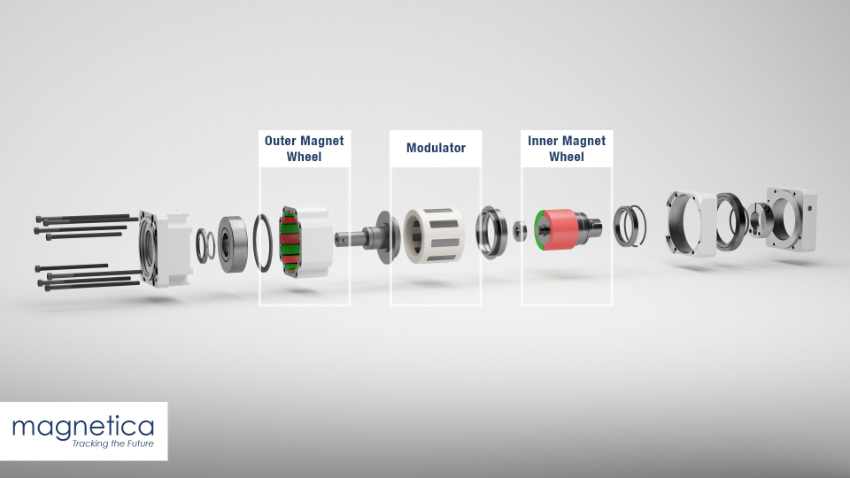
Its specialized in coaxial magnetic gears for compact power transmission, high-speed magnetic gearboxes, and integrated torque-limiting systems that inherently provide slip functionality and overload protection.
In addition, torque ranges, transmission ratios, and integration concepts can be individually adapted, enabling highly flexible implementation across different industries and operating conditions.
What is the state of the market where you are currently active?
T.Z: The market for magnetic gears remains highly specialized, but momentum is clearly increasing. Rising demands for maintenance-free systems, higher machine availability, and cleaner industrial processes are creating growing interest in contactless drivetrain technologies.
While conventional gearboxes still dominate due to cost advantages and superior torque density in many standard applications, magnetic gears are increasingly recognized as the better solution in areas where reliability, hygiene, or integrated overload protection are critical.
Industries such as automation, medical technology, semiconductor manufacturing are particularly receptive, as they increasingly seek alternatives that improve both performance and system robustness.
What can you tell us about market trends?
T.Z: Several key trends are accelerating demand for magnetic gear technologies.
The ongoing electrification of industrial systems is driving the need for quieter, more efficient drivetrains. At the same time, predictive maintenance strategies favor wear-free components that reduce service intervals and unexpected downtime.
Increasing hygiene requirements in food and pharmaceutical production further strengthens the demand for lubricant-free drive systems. In parallel, machine builders are pursuing miniaturization and higher functional integration, both of which align well with the compact design potential of magnetic gears.
In addition, customers increasingly value integrated functional safety, where the inherent slip behavior of magnetic gears can serve as a built-in torque limiter without requiring additional mechanical components.
What are the most innovative products/services marketed?
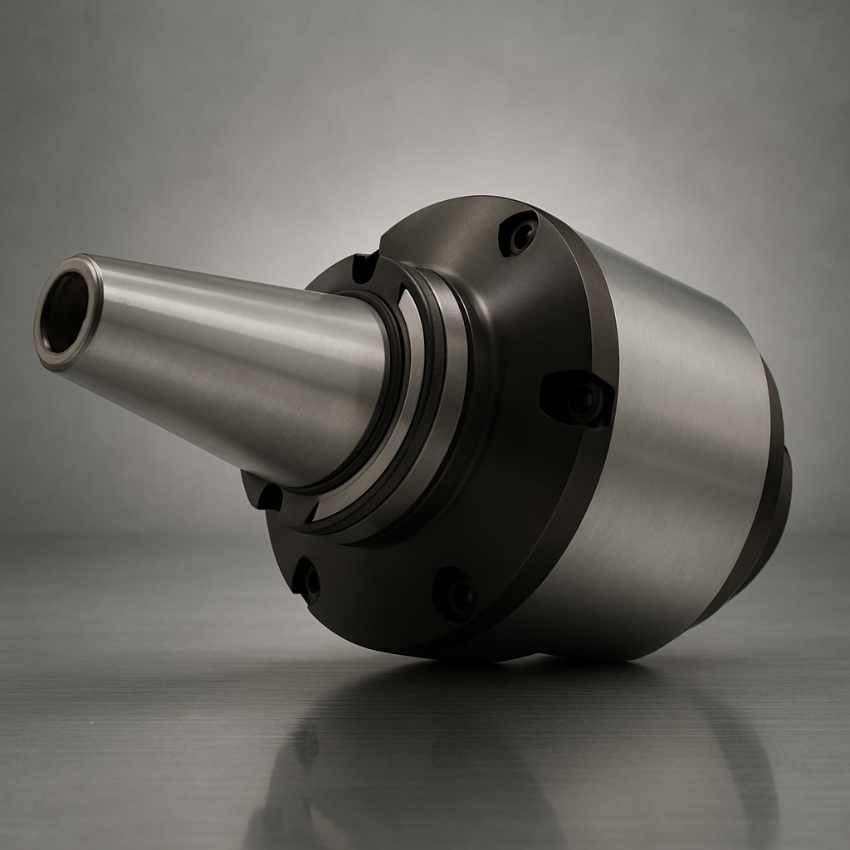
T.Z: Among magnetica’s most innovative developments is its high-speed magnetic driven tool, specifically engineered for demanding machining applications.
The system currently achieves rotational speeds of up to 40,000 rpm at 1.2 Nm torque, entirely without lubrication. This enables a compact, maintenance-free, and plug-and-play solution that eliminates the need for cooling circuits or complex auxiliary systems, offering clear advantages in reliability, cleanliness, and machine integration.
Another highly innovative product area is magnetic gear drives for agitator systems. Conventional agitator setups typically require a combination of an electric motor, a mechanical gearbox, and a separate magnetic coupling to ensure hermetic sealing.
magnetica combines the gearbox and magnetic coupling into one integrated component, significantly reducing installation space, mechanical complexity, and overall system cost.
These solutions demonstrate the broader potential of magnetic gear technology, not only as an alternative to conventional transmissions, but as a way to simplify entire drive architectures while improving performance and operational reliability.
What estimations do you have for the second half of 2026?
T.Z: For the second half of 2026, magnetica expects continued technological progress and a broader market presence across multiple industries.
A key development focus will be the further advancement of its high-speed driven tool, with the goal of achieving even higher rotational speeds and expanding its capabilities for increasingly demanding machining applications.
At the same time, the company anticipates continued diversification of its product portfolio, with magnetic gear solutions being adapted to a growing range of industrial use cases—from hygienic processing systems and agitator drives to compact standard drive systems and specialized tooling solutions.
As awareness of the advantages of magnetic gear technology continues to grow, magnetica expects rising demand for integrated, maintenance-free drive systems that combine multiple functions—such as torque transmission, overload protection, and hermetic sealing—within a single compact component.
The second half of 2026 is therefore expected to be an important phase for scaling both technological capabilities and application diversity, reinforcing magnetica’s position as a driving force in the industrial adoption of magnetic drivetrain technology.