
A persistent challenge in industrial automation, infrastructure, and end-of-line test benches is integrating high-precision, programmable power supplies without consuming excessive control cabinet space or incurring inflated engineering costs. Traditional laboratory-grade power units are bulky, difficult to integrate into cabinet rail setups, and often forced into redundant configurations that double hardware costs unnecessarily. By applying Silicon Carbide (SiC) semiconductors, Pitztal-based Camtec Powersupplies miniaturized high-voltage programmable power supplies onto standard DIN rails. Furthermore, by decoupling inrush current limiters into standalone modular units (ESB series) and implementing browser-based master-slave control architectures, industrial plant designers can reduce installation copper requirements, cut hardware costs by up to 40%, and swap field interfaces without system downtime.
Interview with Oliver Walter, CEO of Camtec Powersupplies in Pitztal, Germany.
How does your company define “real impact” when it comes to industrial innovation, and how do you measure it in practice?
Oliver Walter: Innovation for innovation’s sake makes no sense if it is an end in itself or is developed solely for marketing reasons. We are a highly specialized company dedicated to technological innovation in the field of true high-end power supplies. In our view, innovation must have a “real impact” on those who use our devices. We typically spend years, keeping our eyes and ears open, observing market needs and trends, and listening to customers and users in our markets before we decide to begin developing a new product or product line.
We define “real impact” as our ability to continuously and significantly better meet our customers’ needs in order to shape a better future. We are satisfied with our “real impact” when our solutions make our customers’ lives significantly easier. This includes general ease of use—like being the first to offer modular industrial power supplies that can be programmed via a web browser. And it includes our strict “design-to-service” principle. The goal is to make production more cost-effective, safer, or more efficient—and, where possible, more environmentally friendly—for those who use CAMTEC power supplies.
What specific customer challenges or industry pain points are your solutions designed to address?
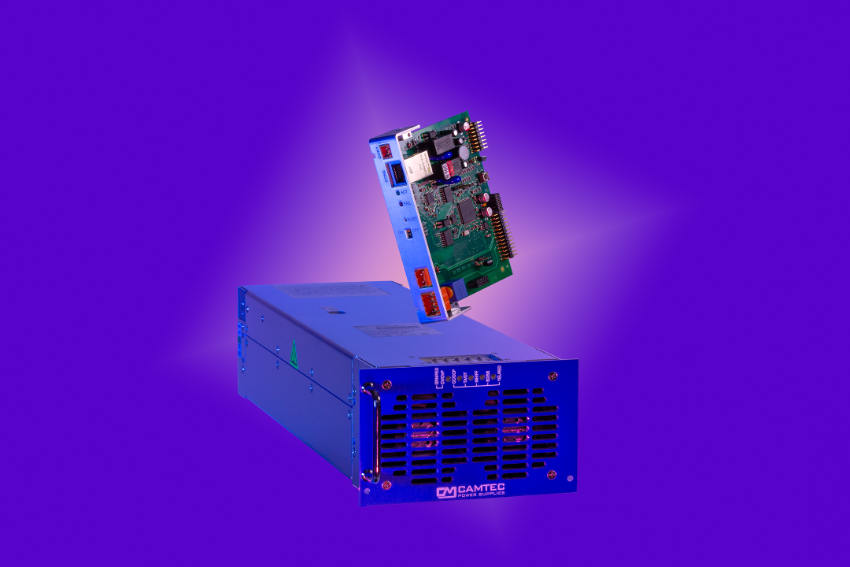
O.W: Space requirements and system integration have long been common challenges for industrial power supplies. Programmable, high-precision power supplies usually are very large. Integration requires considerable effort. CAMTEC was the first company to take the initiative to mount these devices on a DIN rail for control cabinets. One key to this was the use of SiC technology in innovative circuit designs. A technological revolution that broke with general engineering tradition but shrinked the component outstandingly.
Same for price and user-friendliness. We address both aspects: When it comes to price, we focus on the highest quality and robustness—the hallmarks of CAMTEC—but we also have the confidence to omit pricely features that our average user doesn’t always need. Take our CPS-EC2000 series, for example: For some models in the series, we have omitted programmability to enable the cost-effective construction of simple test benches, without sacrificing the precision of a laboratory power supply. This fills a gap that we saw, exists for end-of-line test benches as all other features of those fully match the quality of the programmable devices. And our customers still receive these products with output voltages of several hundred volts to handle all modern testing tasks. As far as we can tell, this is unique. – In fact, our industrial customers are thrilled with this—partly because it saves them a lot of money.
Can you share an example where your technology or service significantly improved a customer’s operations, efficiency, or sustainability?
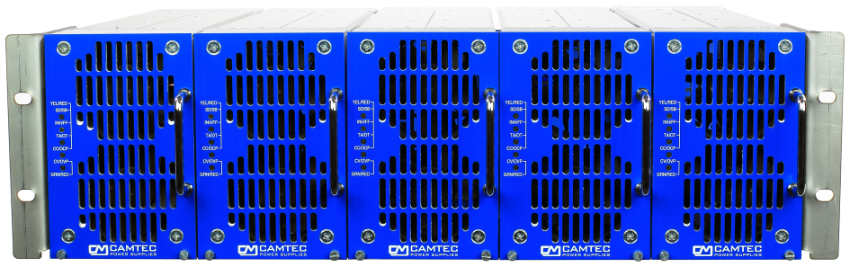
O.W: Two examples quick and easy: Our new programmable CPS modular series the power supply modules can easily be run parallelly or redundant in a master slave configuration. It took us a few years to figure this out, but now, with systems that have double or even higher levels of redundancy, the number of components required by the customer is so much lower that, compared to a conventional solution—in which two programmable power supplies are built into the system—the customer actually saves up to 40% in costs. Furthermore, the devices follow an innovative “design-to-service” concept that, for example, allows customers to replace the interface on-site. As a result, our design helps minimize downtime and maximize cost savings during operation.
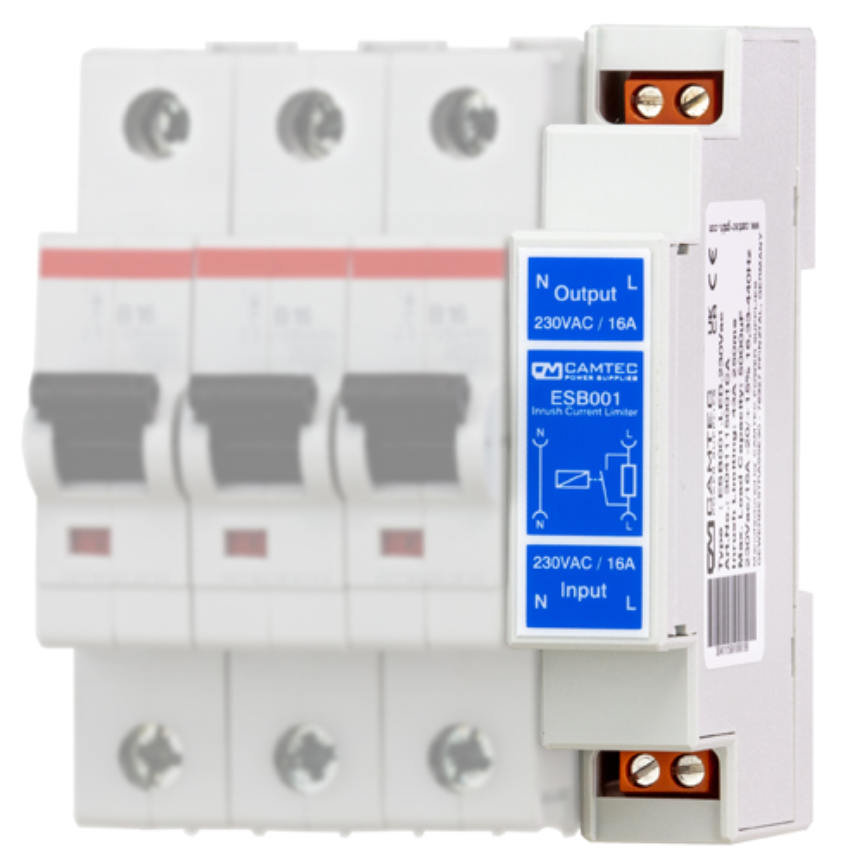
The idea behind our new inrush current limiters was similar, but in a completely different field—and it has proven itself: The CAMTEC ESB inrush current limiters—we were the first to remove these from power supplies and manufacture them as separate devices—enable significantly simpler design of lighting systems in buildings, as well as in tunnels, train stations, parking garages, and refineries. Less copper and a fraction of the installation effort required for traditional designs… The total savings on the installation of large properties are immense. Examples include the Dubai Mall and the new Bloomberg HQ in London. And all this without compromising safety. On the contrary: Since the power grid is protected against overcurrent, it optimizes fire safety and helps conserve valuable raw materials.
How do you ensure that your innovations remain relevant and adaptable to rapidly changing industrial environments?
O.W: We closely monitor the markets to identify new technological trends. Sometimes we integrate new, relevant hardware features into existing devices. A large portion of our products is used in infrastructure, such as in rail transportation, energy storage, power plants, or the oil and gas industry.
For example, our new products are compatible with Industry 4.0. This allows customers to monitor the operational status of the power supplies at any time.
How do digitalization and emerging technologies (such as AI, IoT, or automation) enhance the impact of your offerings?
O.W: Ai is now considered a standard in a modern development environment. It is part of the design progress but also a welcome tool during the preliminary development phase. For the final product documentation Ai helps us to save time on recurring routines. Also, Ai can help us simulate complex processes and thus reveal incompatibility or potential for improvements.
At the product level, AI does not play a significant role in programmable power supplies today; however, it does in customer applications. Therefore, it is essential to enable comprehensive control of the product in order to realize its full potential in terms of energy efficiency as well as maximum system lifespan and/or availability.
For example, our design allows the system operator to swap out the product interface, while the system fully recognizes any compatible power supply and automatically calibrates itself to it. From our customers’ feedback, we have learned that they want a plug-and-play, ready-to-use, high-quality, and modular power supply system that minimizes installation time so they can focus on their core task—such as developing a high-tech machine. The power supply now serves as a tool to help them achieve their performance goals for both hardware and software and to enable remote maintenance and control at a whole new level.
What role does sustainability play in your innovation strategy, and how does it translate into measurable benefits for your clients?
O.W: Since our products are based on a flexible platform system—comparable to a vehicle platform in the automotive industry—we can tailor the power supplies to our customers’ needs at a reasonable cost and with a short time-to-market.
Sustainability begins right in the design process to ensure maximum flexibility and application compatibility. The goal is to develop power supplies whose service life can be extended significantly and that can continue to be used even after system hardware updates or even retrofits.

On site of our FAB we have invested in the latest production machine technology available on the market. The energy consumption of the machines is much lower now although the efficient output has doubled. It is a question of awareness to use our scarce resources as efficiently as possible. A good part of our energy is sourced from PV modules to relieve the strain on public networks
How do you balance cutting-edge innovation with reliability, safety, and ease of integration for industrial customers?
O.W: The key to this is extensive testing. Validation tests account for most of the estimated time during the development phase of our products. When planning validation tests, verifying compliance with safety regulations for potential customer applications plays the most important role. This ensures that our products meet the relevant standards for industrial use in TT, TN-C, and modern TN-S networks, as well as other types of networks.
What feedback mechanisms do you use to understand customer needs and continuously improve your solutions?
O.W: Our support engineers record major requests into a reporting system. When a new design or a re-design of a product comes into discussion, we analyze the recordings. Also, our global distribution network has mostly been implemented a CSM and their results are being reported to us frequently.
Looking ahead, what key trends do you believe will shape industrial innovation, and how is your company preparing to deliver meaningful impact in this evolving landscape?
AI is, of course, on everyone’s lips. The advantages of AI models are so immense that one must speak of a third industrial revolution following the invention of the personal computer. Nevertheless, a power supply must be evaluated based on its intended tasks, and it makes little sense to implement expensive software in a standard 24V device designed to power control cabinet relays. On the other hand, complex testing tasks will benefit from the advantages of AI. It’s already evident that power supplies originally designed for simple laboratory use can now handle complex procedures in the testing of high-tech products such as batteries or fuel cells. The desire to further automate these complex scenarios and provide users with even more efficient and comprehensive tools goes without saying.
However, at Camtec, we also recognize the need for knowledge. Our customers should be able to find answers to recurring questions and perform routine tasks by consulting a knowledge base, without having to endure tedious wait times for a response from support. Additionally, there is the opportunity to make your own expertise available in such a way that system engineers can develop solutions faster and more efficiently by receiving the right answers to their critical questions.