
As European circular economy mandates take full effect, including the EU Packaging and Packaging Waste Regulation applied in August 2026, industrial waste management and food processing lines face unprecedented demands for rapid, material-specific inspection. Conventional RGB machine vision and standard Near-Infrared (NIR) sensors often fail to differentiate dark, carbon-black-filled plastics or subtle chemical variations in food products.
Hanover-based HAIP Solutions GmbH is addressing these industrial bottlenecks by streamlining the end-to-end hyperspectral imaging (HSI) workflow. By integrating high-resolution 4K RGB sensing with Short-Wave Infrared (SWIR) line-scan technology, specialized FMWIR illumination, and embedded GPU processing, the company allows real-time material classification directly on the camera without secondary industrial PCs. HAIP Solutions continues to expand its technology portfolio with proprietary BlackFusion alignment software, preparing for full system demonstrations at VISION 2026 in Stuttgart.
What are the main areas of activity of the company?
HAIP Solutions GmbH, based in Hanover, Germany, has developed user-oriented hyperspectral imaging solutions for industry and research since 2018. We develop cameras covering the visible, near-infrared and short-wave infrared ranges, alongside illumination and software for acquisition, analysis and classification.
Our aim is to make the complete hyperspectral workflow as reliable and straightforward as possible, from spectral data to information supporting process decisions. Usability and integration are central: users, system integrators and researchers should be able to implement hyperspectral imaging efficiently in existing workflows without relying solely on specialists.
What are the main areas of activity of the company?
We serve industry and research, increasingly focusing on industrial sorting and inspection. In recycling, hyperspectral imaging distinguishes materials by spectral characteristics rather than visible appearance alone. Applications include plastics, mixed waste, textiles, construction and demolition waste, glass and other materials.
In the food industry, spectral information supports detection of foreign materials, composition differences and quality characteristics that conventional RGB imaging may miss. Our technology is also widely used in vegetation and agricultural research, environmental monitoring, geology and materials research. Collaborative projects help us test detection concepts under real application conditions and incorporate findings into future products.
What’s the news about new products/services?
2026 has been an important year for us as we have expanded our portfolio around the complete hyperspectral workflow. A key development is our combined RGB and SWIR approach for industrial inspection and sorting. The BlackIndustry RGB captures highresolution 4K colour information at line rates up to 30,720 lines per second and combines with BlackIndustry SWIR 1.7 cameras. With the BlackFusion software, RGB and SWIR data can be digitally mapped to a shared scan line and synchronised within one workflow. This enables colour, shape and surface appearance to be evaluated alongside spectral information related to material composition.
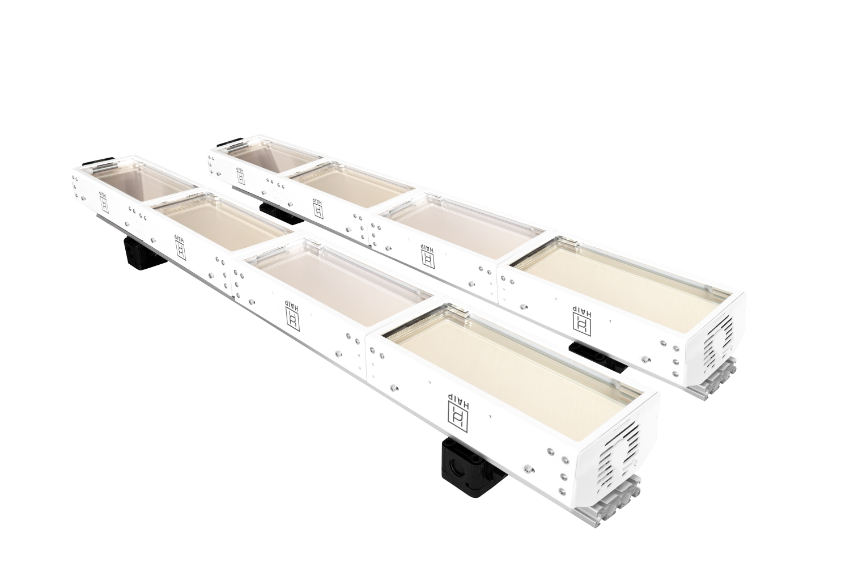
We introduced BlackBright FMWIR illumination for SWIR hyperspectral imaging from 900 to 1800 nm, with peak emission at approx. 1600 nm. Its high spectral intensity supports consistent data acquisition under challenging conditions. A dual-stage reflector combines a half-ceramic-coated emitter with an external silver-coated reflector to concentrate radiation into a defined measurement line. The uniform profile reduces stray radiation, specular reflections and thermal load.
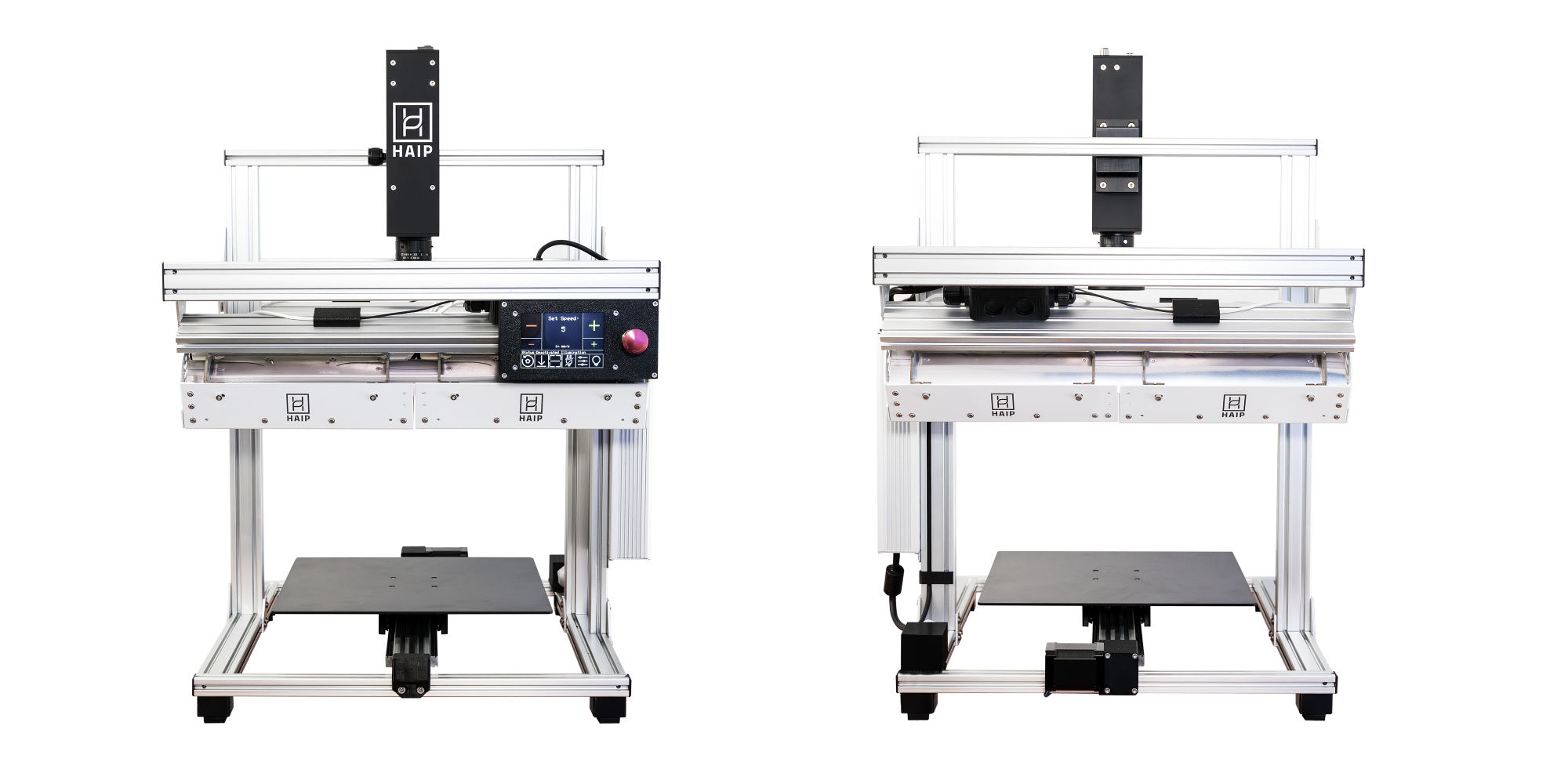
The new BlackIndustry Station combines camera, illumination and controlled sample movement in a ready-to-use scanning system for application development, laboratory measurements and at-line inspection. It also supports combined RGB and SWIR cameras with RGB and FMWIR illumination.
What are the ranges of products/services?
Our portfolio covers the components required for a complete hyperspectral workflow.
The BlackIndustry series includes hyperspectral line-scan cameras for VNIR, NIR and SWIR, plus an RGB camera for use with hyperspectral cameras. SWIR 1.7 models offer 640, 1280 or 2592 spatial pixels to suit throughput and detail requirements.
Specialist products include BlackBird V2 for easy integration with DJI Matrice 300, 350 and 400 RTK drones; BlackMobile V2, a handheld hyperspectral system with integrated illumination and processing; and BlackBullet V2, a compact VNIR camera for laboratory, field and integration applications. Our illumination portfolio includes broadband VNIR, RGBWW COB LED and BlackBright FMWIR systems.
Our BlackStudio software provides camera control, acquisition, visualisation, spectral analysis, classifier training and live classification. Classifiers trained in BlackStudio can be transferred directly to compatible BlackIndustry cameras. Classification can then run on the camera without additional processing hardware, reducing bandwidth and external processing requirements.
Technology is only one part of our offer. Direct customer contact is extremely important to us. We provide feasibility measurements, integration and technical support, and individual training, including on-site training. Understanding applications and jointly establishing suitable measurement conditions is often as important as camera selection.
What is the state of the market where we are currently active?
We see hyperspectral imaging at a transition point, moving from its long-established research role into industrial machine vision, sorting and inspection. Hyperspectral imaging systems must deliver reliable operation at industrial speeds, reproducible data, integration into existing automation and information for real-time process decisions.
Customers are interested when hyperspectral imaging solves specific problems better than established sensor technology and offers a clear path from measurement to integration.
What can you tell us about the market trends?
The circular economy is a major trend. European regulation is driving better material recovery and secondary raw-material quality. The EU Packaging and Packaging Waste Regulation began to apply in August 2026, with requirements progressively increasing recyclability and recycled-plastic use. New EU vehicle circularity rules also introduce binding recycled-plastic targets, increasing demand for reliable material identification and separation.
Strongly absorbing dark plastics containing carbon black remain challenging.
Conventional NIR sorting can struggle with weak reflected signals, while MWIR systems used to date are complex and expensive. SWIR hyperspectral imaging has the potential to change this field over the coming years.
Beyond recycling, lower entry barriers and increasingly affordable systems now allow hyperspectral technology in any in-line application requiring chemical information about materials. On-camera classification eliminates additional downstream processing hardware, such as industrial PCs, potentially reducing implementation costs and complexity significantly.
What are the most innovative products/services marketed?
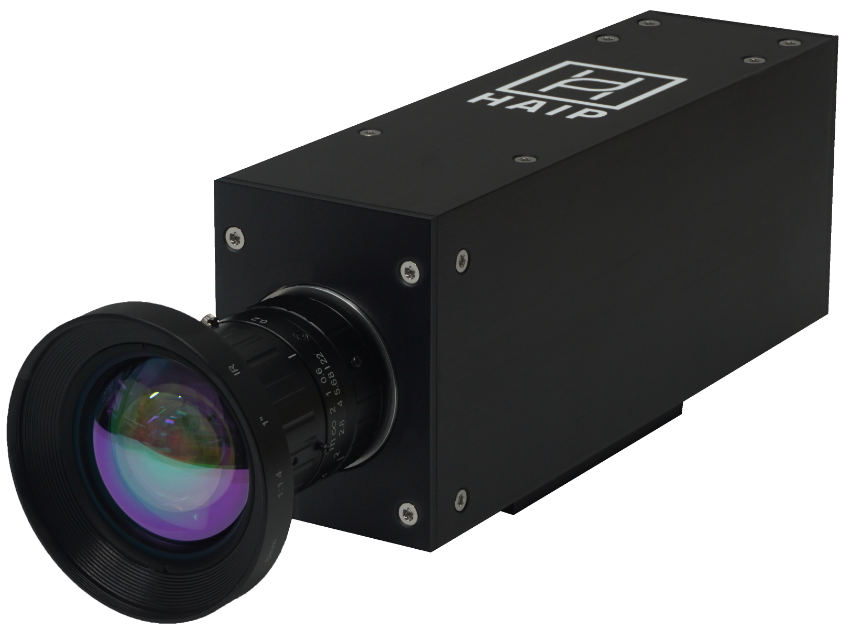
Innovation increasingly comes from components working together rather than individual products. BlackIndustry SWIR 1.7 Pro Max combines 2592 spatial pixels, a 950–1750 nm spectral range, high-speed ROI acquisition and integrated GPU processing for demanding sorting and inspection requiring detail and throughput.
BlackBright FMWIR provides stable, homogeneous measurement conditions through high spectral intensity between 900 and 1800 nm, reduced heat emission and a modular architecture for industrial integration. BlackFusion enables calibration, digital alignment and synchronisation of RGB and SWIR sensors, combining visible and spectral information in one inspection process.
Our on-camera classifier enables newly acquired data to be classified on integrated processing hardware using classifiers created in BlackStudio. Rather than simply producing large data volumes, the camera delivers information directly usable by the next automation stage.
What estimations do you have for the rest of 2026?
For the second half of 2026, our focus is on further industrialising hyperspectral imaging and demonstrating how its components work together in practice. At VISION 2026 in Stuttgart, from 6 to 8 October, we will present the complete workflow: SWIR and RGB acquisition, controlled illumination, analysis and classification, rather than individual cameras alone.
We expect recycling and food inspection to remain key areas. Through our research project HypReSort, we will continue work on difficult material fractions, particularly plastics containing carbon black. HyperFoil addresses hyperspectral process control and quality assurance in selective laser ablation of coated foils. We are also advancing RGB/SWIR sensor fusion and expanding BlackStudio.
We expect customers to prioritise ready-to-use hyperspectral solutions. We will continue combining high-performance sensing, suitable illumination, processing, software and direct application support. Our goal is not simply to generate more spectral data, but to make it reliable and accessible enough to support real decisions in research and industrial processes.