
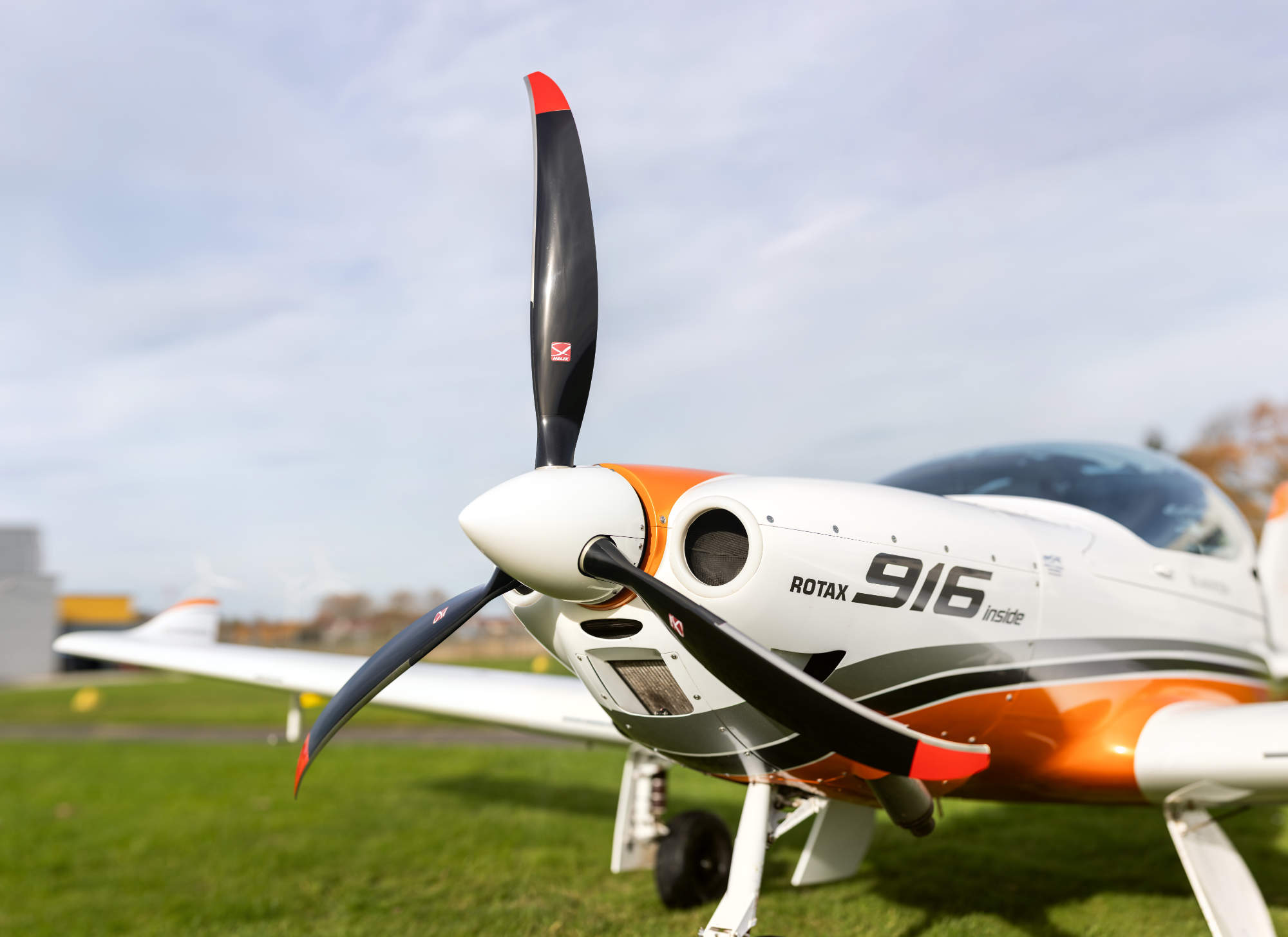
As light-sport aviation standards evolve following the implementation of the FAA’s MOSAIC regulations, German composite specialist, Helix-Carbon GmbH, is expanding its carbon propeller and rotor offerings across global general aviation, drone, and eVTOL markets. Founded in 1990 in Germany, Helix-Carbon holds EASA production organization approval (DE.21G.0126) and DIN EN 9100 manufacturing certification, delivering hand-finished carbon propellers from facilities in Germany and Thailand. The company manufactures over 1,000 propeller models ranging from 0.75 meters to 3 meters in diameter, serving ultralight aircraft, PPG trikes, experimental builds, and more than 70 UAV and eVTOL manufacturers. In 2026, Helix-Carbon introduced several product platforms, including the ARC high-curvature blade geometry featured on the VTL “Talon,” the electric and hydraulic H42A and H62A constant-speed systems with up to 5-blade configurations, and the H102A constant-speed propeller designed for high-performance engines rated up to and beyond 1,000 hp.
A brief description of the company and its activities
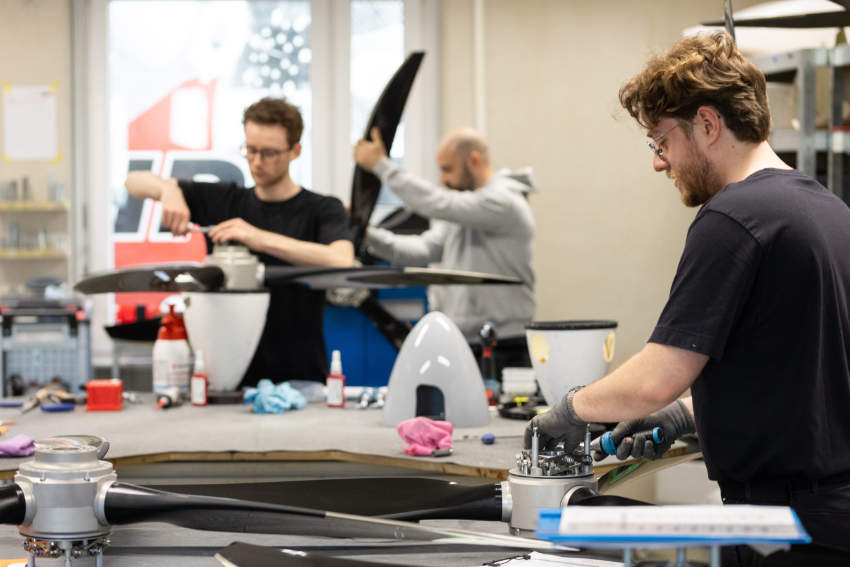
Helix-Carbon GmbH, based in Würselen near Aachen, Germany, has designed and manufactured carbon composite propellers since 1990. The company began with three people building propellers for paramotors and PPG trikes. Today Helix sells more than 10,000 propellers worldwide each year and has delivered over 100,000 in total. Helix is an EASA-approved production organisation (DE.21G.0126) with a DIN EN 9100-certified manufacturing process. It runs production in Germany and in Thailand through Helix Composites, and every propeller is still built and finished by hand.
What are the main areas of activity of the company?
Ultralight, LSA, gyrocopter, trike and experimental aircraft propellers, from fixed-pitch to constant-speed systems.
Paramotor propellers. Helix is a cornerstone in the paramotoring community and the OEM propeller manufacturer for Vittorazi.
eVTOL, multicopter, UAV and drone rotors. Helix supplies more than 70 manufacturers, for both civilian and defense applications.
Research and development. All custom propellers and rotors are developed in-house in NRW, from concept to destructive testing. Many R&D projects are in cooperation with FH Aachen and RWTH Aachen University.
What’s the news about new products/services?
2026 has been Helix’s biggest year of product launches to date:
ARC propeller design. Helix introduced a new generation of blade design. Its first member is the VTL “Talon”.
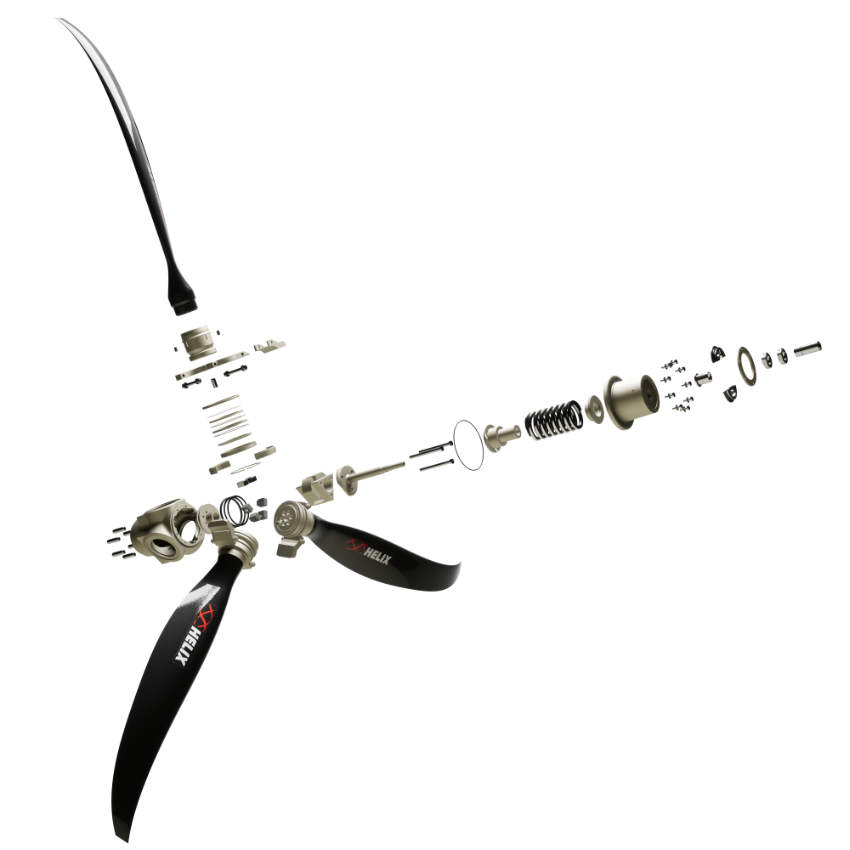
H62A, 3- and 5-blade. A hydraulic, in-flight adjustable propeller with a feathering option for turboprop and high-performance piston aircraft. In testing against an OEM propeller it improved efficiency and cruise performance by around 10%.
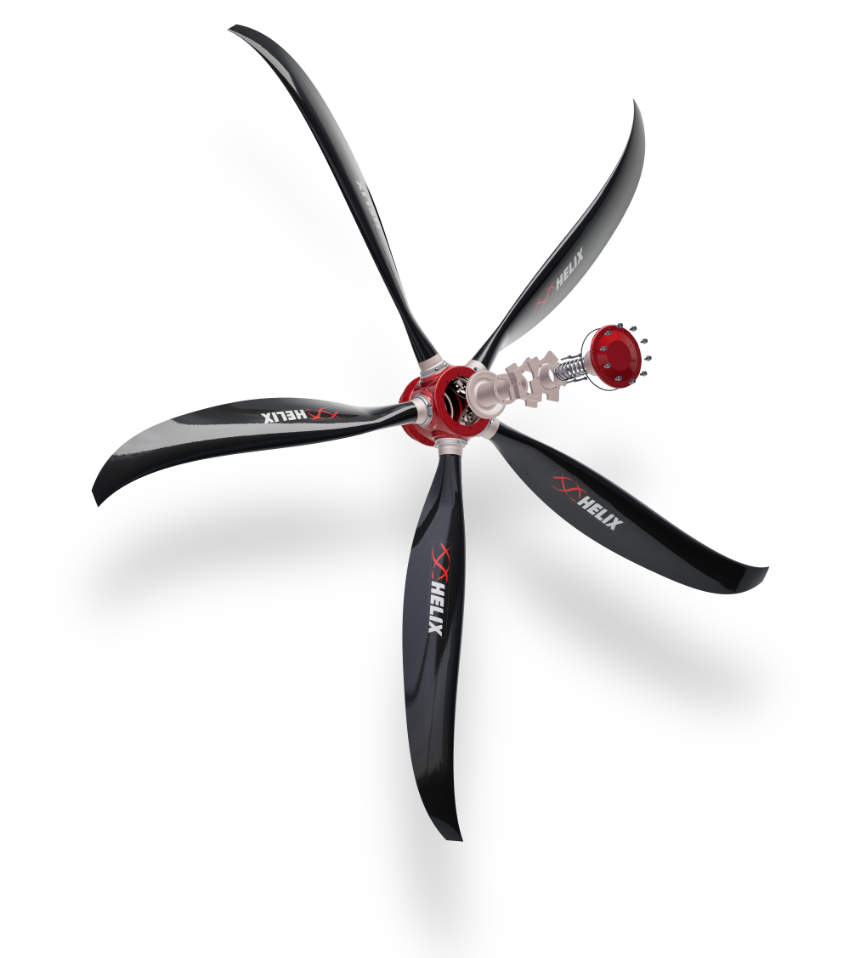
H42A, 5-blade. The H42A constant-speed system is now available in a 5-blade configuration.
H42A electric. A new electrically controlled H42A for Rotax engines without a hydraulic output, giving those aircraft constant-speed performance for the first time.
H102A. Helix’s largest propeller yet: a constant-speed system for experimental aircraft, large drones and engines up to and beyond 1,000 hp.
What are the ranges of products/services?
Helix offers more than 1,000 propeller models, from 0.75 m to 3 m in diameter, for engines from small paramotor units to over 1,000 hp:
- Fixed pitch, using the plug-in system Helix invented in 1994.
- Ground-adjustable.
- In-flight adjustable / constant speed: H42A, H62A and H102A, with hydraulic and electric control.
- Paramotor: H25F (up to 15 kW), H30F (up to 25 kW) and H40F (up to 47 kW).
- Custom rotors and propellers for eVTOL, UAV and multicopter manufacturers.
- Custom-wrapped propellers, finished in the customer’s own design.
What is the state of the market where you are currently active?
The biggest change in Helix’s market is MOSAIC, the FAA’s overhaul of US light-sport aviation. Its second and final phase took effect on July 24, 2026, and established a new light-sport certification category under Part 22. The old 1,320 lb weight cap has been replaced with stall-speed limits, and light-sport aircraft can now have four seats, retractable gear and variable-pitch propellers. That last point opens the US light-sport segment to exactly the constant-speed systems Helix specialises in, such as the H42A and H62A.
What can you tell us about market trends?
Many European aircraft manufacturers are now setting their sights on the US market, and MOSAIC has accelerated that push. Helix is partnered with several of these companies as they enter the US and aims to become a household name in American general aviation in 2027. Alongside this, demand keeps growing for quieter propellers and for propellers suited to electric and hybrid propulsion. Helix is developing both through publicly funded projects in North Rhine-Westphalia.
What are the most innovative products/services marketed?
ARC propellers and the VTL “Talon”. The Talon, the first ARC propeller, uses an aggressive, high-curvature blade geometry that lowers noise and increases efficiency and thrust.
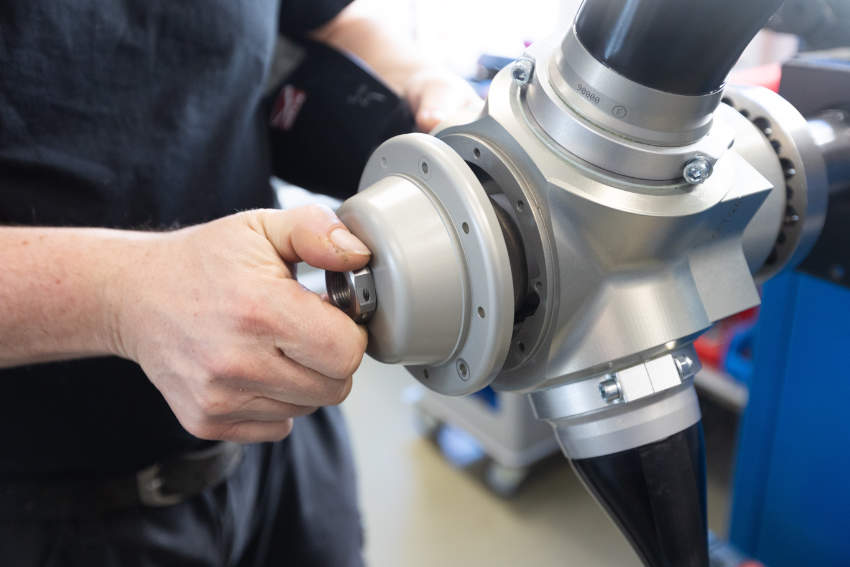
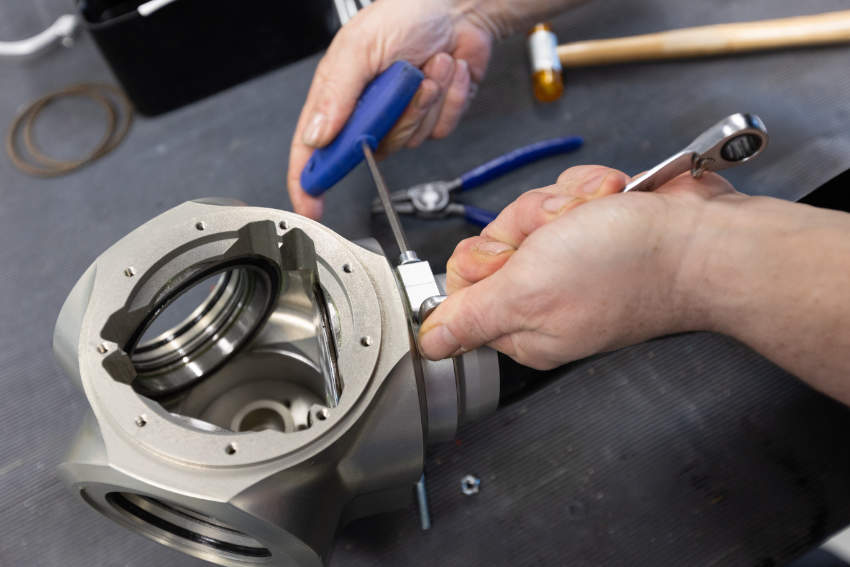
H42A and H62A constant-speed systems. These are Helix’s modern in-flight adjustable platforms, now in up to 5-blade configurations. They include an electric H42A for non-hydraulic Rotax engines and a feathering H62A for turboprops.
H102A. A constant-speed propeller that brings Helix carbon technology to engines over 1,000 hp.
Quiet and clean-aviation R&D. In the Flüsterprop.NRW project, Helix is developing a propeller for electric training aircraft that is at least 3 dB(A) quieter. In BaLoK.NRW, it is building a “Jetpeller” ducted propeller for a hydrogen fuel-cell drive.
What estimations do you have for the beginning of 2026?
Helix has grown rapidly in the second half of 2026. To meet rising demand, the company plans to expand operations at both its German and Thai sites in 2027–2028.