
As the polyurethane industry faces mounting regulatory pressure and economic incentives to increase circularity, German engineering specialist H&S Anlagentechnik GmbH is expanding its chemical recycling and process technologies globally. With nearly 40 years of expertise and over 350 completed projects worldwide, H&S combines conventional PU process engineering, including tank farms, metering systems, and prepolymer reactors, with advanced industrial recycling plants that convert post-industrial and post-consumer polyurethane foam waste into high-quality recovered polyols. Highlighted by major installations such as Ikano Industry in Poland and Mexico, the RENUVA™ program in France with Dow and the Vita Group, and mattress recycling facilities for RetourMatras in the Netherlands, H&S achieves substitution levels of up to 50% virgin polyols. Led by developments like its upcoming industrial flexible PU recycling plant in South Korea with KPX Chemical and Chinyang Polyurethane, H&S provides complete turnkey solutions backed by in-house R&D and laboratory waste evaluations.
Interview with Mila Skokova, Sales & Product Manager / Sales Management Deputy at H&S Anlagentechnik GmbH.
A brief description of the company and its activities.
Mila Skokova: H&S Anlagentechnik GmbH is a German engineering company with almost 40 years of experience in process technology and equipment for the polyurethane industry. With more than 350 projects implemented worldwide, H&S develops and supplies customized systems for PU raw material handling, processing and chemical recycling.
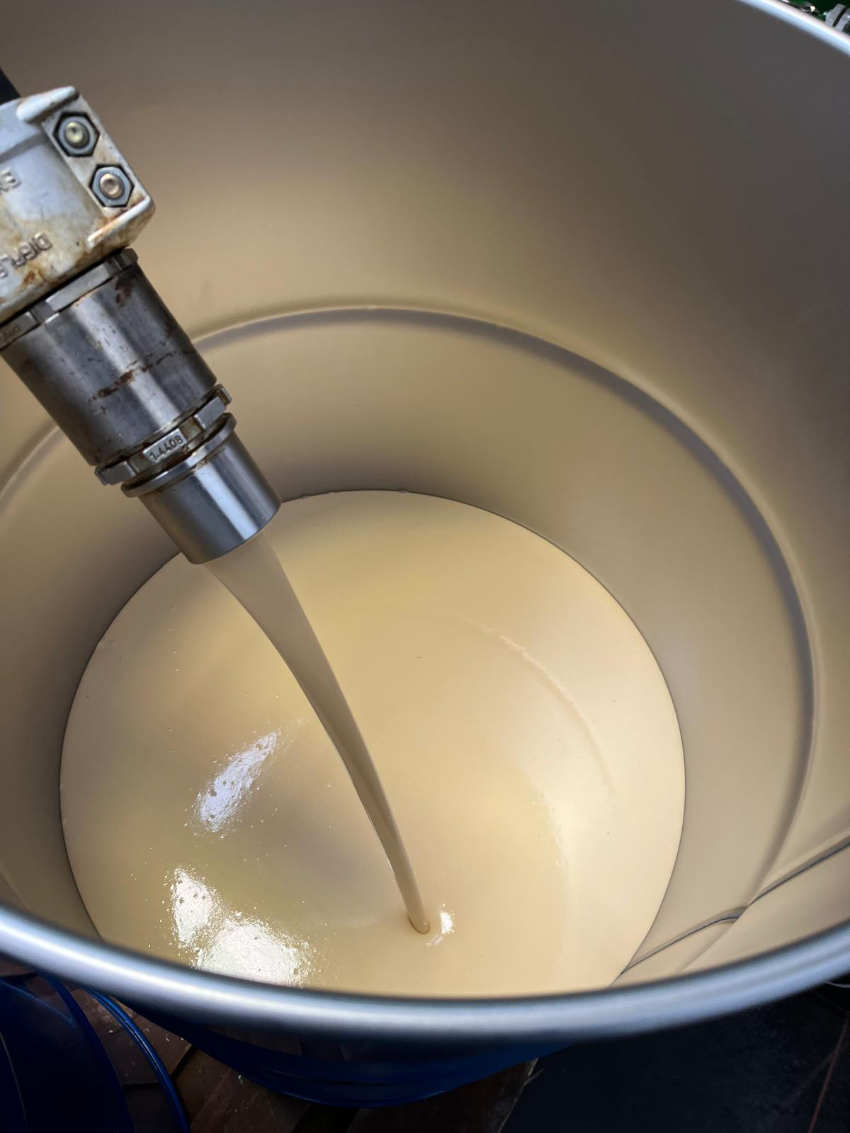
A major focus today is the development and industrial implementation of technologies that convert polyurethane waste into high-quality recovered polyols, enabling their reuse in PU production and reducing the consumption of virgin raw materials. H&S combines engineering expertise with its own R&D facility.
What are the main areas of activity of the company?
M.S: Our activities cover two main areas. The first is conventional PU process engineering, including tank farms, storage and metering systems, blending equipment, prepolymer reactors and customized process equipment.
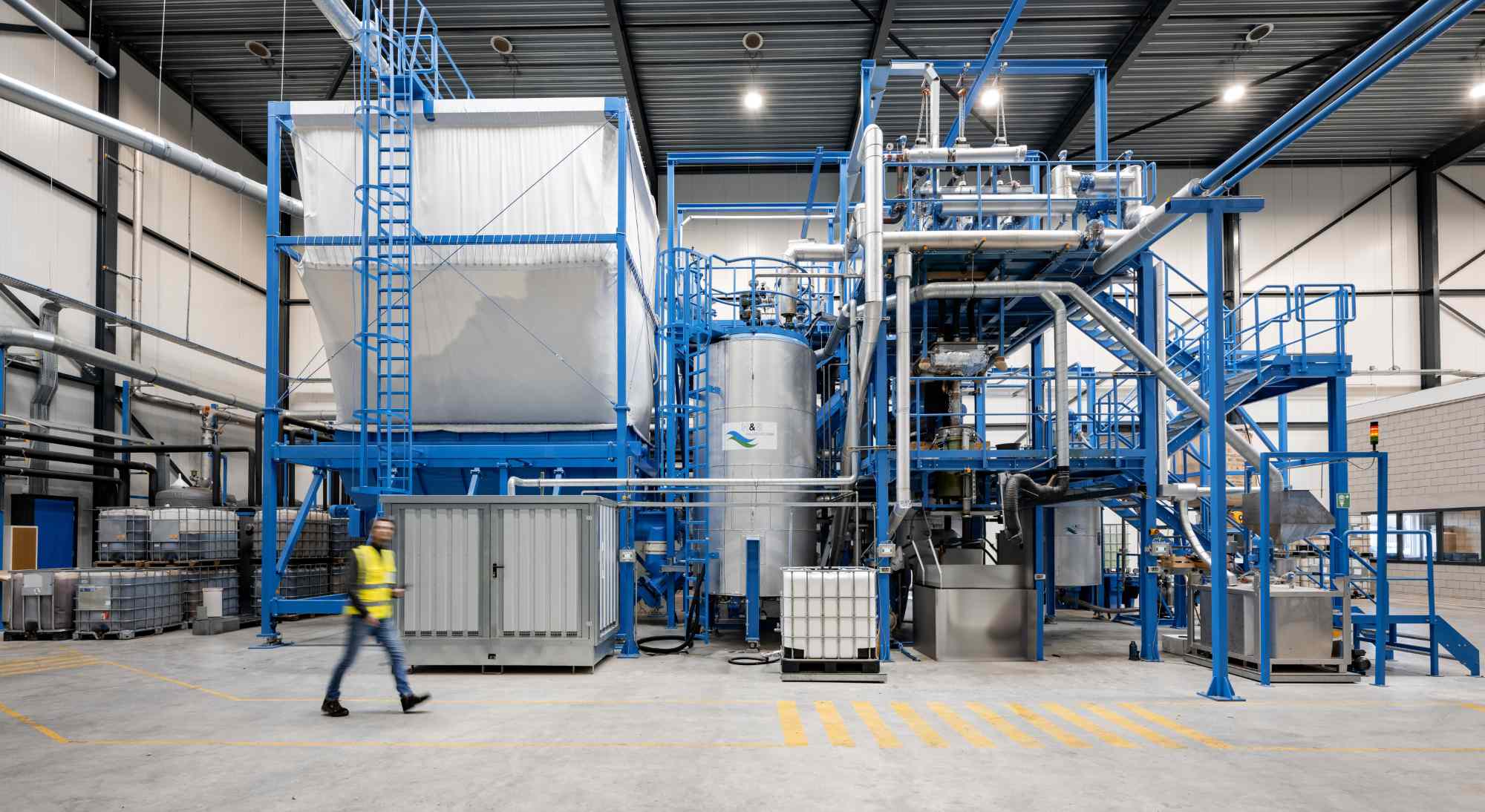
The second is chemical recycling of polyurethane waste. H&S develops and supplies industrial recycling systems for flexible and rigid PU foams. Our scope ranges from laboratory and pilot trials with customer-specific waste through process development and engineering to installation and commissioning of complete industrial plants.
What’s the news about new products/services?
M.S: One of the most important developments in recent years has been the international expansion of our chemical recycling technologies.
An important milestone was reached already in 2013 with the implementation of the world’s first industrial recycling plant for post-industrial flexible PU foam waste at Ikano Industry in Poland. The technology was subsequently extended to post-consumer waste. In 2021, H&S implemented a recycling project within the RENUVA™ program in France in collaboration with Dow, Orrion Chemicals Orgaform, Ecomaison and the Vita Group. This was followed in 2024 by a recycling plant for RetourMatras in the Netherlands, where foam from end-of-life mattresses is converted into recovered polyol. In 2025, another plant for post-industrial foam waste was implemented at Ikano Industry in Mexico.
In parallel, H&S has implemented chemical recycling solutions for rigid PU foam for insulation material manufacturers in Germany, the Netherlands and Mexico.
The next major step is Asia. H&S is currently supplying its first industrial-scale flexible PU recycling plant in Asia in cooperation with KPX Chemical and Chinyang Polyurethane in South Korea. The plant is scheduled to start operation in 2027.
Our R&D activities are also expanding towards more complex waste streams, including automotive PU foam, integral PU, and rigid PU insulation materials.
What are the ranges of products/services?
M.S: H&S offers both individual process units and complete turnkey systems. Our portfolio includes:
- chemical recycling plants and process know-how for flexible PU foam waste;
- chemical recycling plants and process know-how for rigid PU/PIR foam waste;
- tank farms for PU raw material storage (polyols, isocyanates and blowing agents);
- blending systems for polyols and liquid additives;
- blending systems for polyols and solid fillers;
- metering and dosing solutions;
- prepolymer reactors;
- commissioning, process implementation, comprehensive operator training and after-sales support.
For recycling projects, we normally start by evaluating the customer’s waste in our R&D laboratory and, where necessary, conducting pilot-scale trials. This allows us to develop the appropriate process and recovered-polyol specification before scaling up to industrial production.
What is the state of the market where you are currently active?
M.S: The polyurethane market is currently characterized by a combination of challenging economic conditions and growing pressure towards increasing circularity and resource efficiency. In some important sectors, for example, furniture and mattresses, manufacturers are facing weaker demand, high input costs and pressure on margins. At the same time, despite significant global polyol production capacity, regional supply disruptions, logistics and price volatility still affect the availability and cost of raw materials.
Despite the challenging market environment, interest in polyurethane recycling remains strong. Post-industrial waste is generally easier to recycle because it is relatively clean, homogeneous and available directly at the production site. Post-consumer recycling depends more strongly on collection and sorting infrastructure. For products such as mattresses, reliable take-back systems, dismantling and the availability of a clean PU foam fraction are essential.
European regulation is also becoming an increasingly important factor. The Ecodesign for Sustainable Products Regulation (ESPR) provides the framework for future product-specific requirements addressing aspects such as durability, recyclability, recycled content and environmental performance.
Overall, the market is undergoing significant transformation, with regulatory developments, increasing circularity requirements and the need to reduce dependence on virgin raw materials becoming important drivers for the further development of polyurethane recycling.
What can you tell us about market trends?
M.S: One of the key trends in the polyurethane industry is the increasing focus on circularity and the use of recovered raw materials in new PU products.
We see increasing efforts to move chemical recycling from research and pilot projects towards industrial applications. At the same time, attention is expanding to a wider range of waste streams, including end-of-life mattresses, automotive PU materials and rigid insulation materials. These can present additional challenges due to contamination and other materials, making efficient collection, sorting and separation increasingly important.
Cooperation across the value chain is therefore essential. Product manufacturers, foam producers, raw material suppliers, waste management and sorting companies, and recycling technology providers need to work together to establish technically and economically viable circular solutions.
What are the most innovative products/services marketed?
M.S: Chemical recycling solutions for polyurethane waste are among the most innovative areas of our portfolio. H&S has developed and industrially implemented recycling solutions for flexible and rigid PU materials, converting PU waste into recovered polyols that can be reused in new products. Depending on the application and formulation, recovered polyols can replace a significant proportion of virgin polyols, with substitution levels of up to 50% already successfully achieved.
A key strength of H&S is that we provide not only the recycling equipment but also the technological know-how. This includes process development based on the customer’s specific PU waste, industrial implementation, commissioning and comprehensive personnel training, enabling customers to operate the recycling process independently at their own production sites.
What estimations do you have for the second half of 2026?
M.S: For the second half of 2026, chemical recycling remains an important area of activity for H&S, with a focus on ongoing industrial projects and the development of new recycling applications.
One of our major projects is the industrial recycling plant in South Korea, for which equipment is currently being supplied. The plant is scheduled to start operation in 2027 and represents an important step for H&S in the Asian market.
At the same time, we are working with customers and partners in Europe, Asia and North America on recycling concepts for different polyurethane waste streams.
Looking ahead to 2027, we expect demand for industrial recycling solutions to continue growing, with further opportunities to address a broader range of PU waste streams and expand our activities in international markets.