
To navigate tightening European Union single-use packaging rules and meet growing demand for branded food-service containers, MACPAC S.A. is expanding its PET product lines and end-of-line factory automation. Operating from a purpose-built facility in Kavala, Greece, MACPAC produces standard and custom-printed PET cups, lids, salad bowls, fruit punnets, and microwavable PP containers for café chains, bakeries, and food distributors across Europe.
In the interview CEO Stefanos Papazoglou highlighted several key product launches, including tamper-evident square deli containers, U-shaped PET dessert cups, clear rectangular hinged bakery containers, and 6-colour dry-offset printing from minimum orders of just 5,000 units. Supported by a 1.5 MW rooftop solar installation and automated bagging systems, MACPAC is diversifying into retail and fresh-produce packaging while preparing reusable PP solutions to meet future EU Packaging and Packaging Waste Regulation (PPWR) mandates.
A brief description of the company and its activities
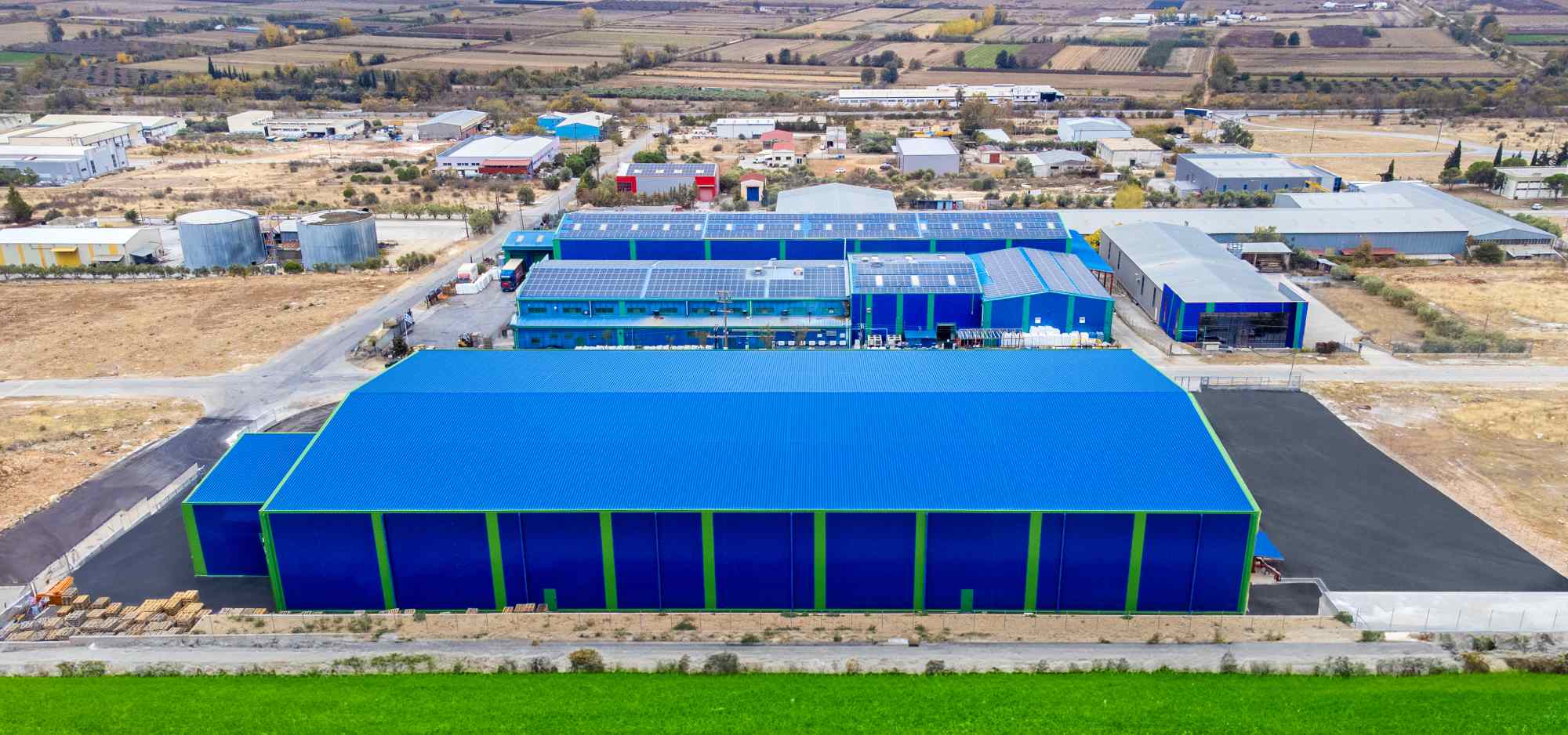
Stefanos Papazoglou: MACPAC S.A. is a Greek manufacturer of thermoformed plastic packaging for the food-service (HoReCa) and food retail markets. The company was founded in 2002 and in 2005 moved to its own purpose-built factory in the Industrial Area of Kavala, in northern Greece.
In March 2007 MACPAC became the first company in Greece to install production lines for PET cups and lids. Since then, it has grown into a supplier recognised at European level, with a team of roughly 100 people and a production process covering sheet extrusion, thermoforming and in-house printing.
Production runs under ISO and BRC certification. Today a large share of output is exported, mainly to European countries, where MACPAC supplies distributors and café chains with standard and custom-printed products.
Its sister company PREPAC S.A. (Athens) distributes packaging materials and machinery, giving the group a combined offer for Greek food producers.
What are the main areas of activity of the company?
S.P: Our activity rests on three pillars:
Drink cups and lids for food service. Clear PET cups for cold drinks, iced coffee, smoothies and desserts, with matching PET dome and flat lids, plus PS lids for paper hot-drink cups.
Food packaging for retail and food processing. Round, square and hinged deli containers, salad bowls, sauce cups, dried-nut containers, PET fruit punnets and PP microwavable containers.
Custom printing and custom thermoforming. Printing of PET cups in up to 6 colours with a minimum order of only 5,000 pieces, and bespoke thermoformed articles in PET, PP or PS developed with the customer.
We serve café chains, beverage brands, bakeries, food producers, fresh-produce packers and distributors in Greece and across Europe.
What’s the news about new products/services?
S.P: The biggest news is the expansion of our round deli container range into a new square-shaped range of equivalent sizes, featuring a tamper-evident closure.
Moreover, we are introducing our U-shaped PET cup range. We launched the 12oz cup on a 95mm rim, and we are now developing a 16oz size on the same rim. Further into the medium term we plan to launch a new 90mm family with matching lids. These cups work for cold drinks and also for layered desserts in bakeries and pastry shops.
We are also bringing to Greece the production of a clear rectangular PET hinged-lid bakery container in 500, 750 and 1,000ml sizes, a product the Greek market has so far imported. The same tooling will offer a flat-lid version for cold cuts and cheese, and the option to engrave the customer’s logo on the lid.
We are also extending printing from cups to lids and deli containers, so customers can brand every piece of packaging, not only the cup.
Finally, we are making a strategic investment in automation, starting with end-of-line packaging (automatic bagging of cup stacks and case erecting). With high energy and labour costs and fierce competition, automation is how we stay competitive: it lowers cost per piece, shortens lead times and frees our people for new lines and extra shifts.
What are the ranges of products/services?
S.P: Our catalogue covers eleven product families:
| Family | Material | Typical use |
| Cups and lids | PET / rPET | Cold drinks, iced coffee, smoothies, desserts |
| Custom-printed cups | PET | Branded cups for café chains and beverage brands |
| Lids for hot-drink cups | PS | Paper coffee cups |
| Round deli containers | PET | Salads, deli, ready meals |
| Square deli containers | PET | Deli counters, takeaway |
| Hinged deli containers | PET | Bakery, pastry, takeaway |
| Salad bowls | PET | Salads, poke, fresh meals |
| Sauce cups | PET | Dips and dressings |
| Dried-nut containers | PET | Nuts, snacks, confectionery |
| Fruit punnets | PET | Berries, cherries, fresh produce |
| Microwavable containers | PP | Ready meals, hot food |
Alongside the standard range we offer custom design and mould development, with delivery times of 2 to 6 weeks depending on size and season.
What is the state of the market where you are currently active?
S.P: The market is in transition. Demand for cold drinks and takeaway food keeps growing, especially iced coffee in Greece and Southern Europe, but the regulatory framework for single-use plastics is tightening fast.
The EU Packaging and Packaging Waste Regulation (PPWR) now applies, and it sets a path toward reuse targets and restrictions on single-use cups for on-premise consumption by 2030. National rules move at different speeds: Germany already requires reusable options in takeaway, while Switzerland and other markets are phasing in their own ordinances.
At the same time, producers face high energy and labour costs and intense price competition from large European groups and imports. Our answer is twofold: we keep investing in automation and energy self-sufficiency, and we are steadily transforming MACPAC from a producer of single-use food-service items into a broader food-packaging partner, serving retail, bakery, deli and fresh-produce customers so that our future does not depend on HoReCa alone.
What can you tell us about market trends?
S.P: We see five clear trends:
Recycled content. Customers increasingly ask for rPET, and EU rules on recycled plastics for food contact make it a mainstream requirement rather than a niche.
Reuse. Regulation is pushing food service toward reusable cups and containers, particularly for on-premise consumption. Durable, branded PP cups will be an important category in Germany, Spain and other markets.
Branding everywhere. Cafés and food brands want their logo on cups, lids and containers. Short runs and low minimums are becoming a competitive must.
Mono-material, recyclable design. Packaging is being redesigned around a single, easily recycled material, which favours clear PET.
Energy and automation. Producers that cut energy and labour costs per piece will stay competitive against large-scale imports.
What are the most innovative products/services marketed?
S.P: Low-minimum custom printing. Up to 6-colour printing on PET cups from just 5,000 pieces, using dry-offset technology we have run for many years. Few European producers match this combination of quality and flexibility.
U-shaped PET cups. A premium shape that stands out on the counter and doubles as a dessert cup, now expanding into new sizes.
Printed lids and containers. We are extending branding to deli round and square lids so the full pack carries the customer’s identity.
Locally made hinged bakery containers with logo engraving. Shorter supply chains for Greek bakeries and a branding option built into the mould.
Reusable PP cups (under study). We are evaluating injection-moulded reusable cups that, combined with our printing know-how, would give café chains a branded, regulation-ready alternative.
Behind the products sits a greener factory. Our rooftop solar capacity now stands at almost 1.5 MW, covering a meaningful share of our electricity needs during production hours.
What estimations do you have for the last part of 2026?
S.P: We expect a solid close to 2026. The strong summer season for cold drinks carried good volumes into autumn, and export demand from our European partners remains stable.
The last quarter is traditionally quieter for cold-drink cups, so we use it to prepare 2027: new moulds, new U-cup sizes, automation and stock for early-season orders.
We remain cautious about energy prices, polymer price swings and the uneven national rollout of the PPWR. Our investments in automation and solar energy, and a product range that reaches well beyond HoReCa, put MACPAC in a strong position to stay competitive and keep growing in 2027.