

Azimuth Radio Technologies was built in Cyprus with an international purpose: to keep ships moving safely, reliably and compliantly as maritime operations become faster, more connected and more complex. From the headquarters in Limassol, the company supports shipowners, ship managers and vessel operators across global trading routes with certified marine electronics, navigation, communication, connectivity and technical support solutions.
As an ISO 9001:2015 approved company, supported by multiple IACS Member and leading maker approvals, Azimuth acts as a trusted technical bridge between the vessel, the shore office, equipment manufacturers and class societies. Their role is not simply to supply equipment or attend vessels; it is to protect fleet uptime, reduce operational uncertainty and help clients make sound technical and commercial decisions under pressure.
Interview with Yvonne Tsanos, General Manager at Azimuth Radio Technologies.
What are the main areas of activity of the company?
Yvonne Tsanos: Our activity sits at the heart of the modern bridge and the connected vessel. We support marine navigation and communication systems, GMDSS radio surveys, VDR annual performance tests, bridge equipment repairs, connectivity, cybersecurity, IT support, fleet agreements, spare-parts supply and both onboard and remote technical services. This work matters because our clients operate in an environment where port windows are tighter, compliance expectations are higher, logistics are less predictable and vessel data is increasingly central to decision-making. In this context, marine engineering remains essential. Safe, compliant and efficient operations still depend on experienced technical judgement, not equipment alone. As ESG, data transparency and connectivity expectations increase, NavCom, SatCom and marine engineering will play an even greater role in enabling reliable vessel data, efficient voyage planning, remote support and credible operational reporting.
What’s the news about new products/services?
Y.T: The most important development at Azimuth is the continued evolution of our digitally enabled service model. We are investing in remote diagnostics, guided crew support, data-led preventive maintenance and AI-aware bridge data review so that clients can identify early warning signs, reduce avoidable interventions and use technical information more intelligently. This is a practical response to the realities of today’s market: tighter port calls, longer logistics lead times, cyber risk, ageing equipment and the growing need for faster technical decisions. We see AI as a powerful supporting tool for anomaly detection, alarm interpretation, route-risk awareness and objective incident review, but always within a framework of validated data, experienced engineers and human accountability. Our expansion remains disciplined and commercially grounded: scalable remote support, strategic partnerships and cost-conscious upgrade pathways that improve reliability and compliance without unnecessary over-specification.
Our digital transformation also extends inside the business. We are continuously introducing automated workflows for administrative functions, KPI monitoring, task follow-up, reporting and management visibility so that service performance can be measured consistently and acted on faster. The purpose is not automation for its own sake; it is to reduce manual duplication, improve accountability and give our people more time for higher-value work: technical judgement, proactive client communication and reliable execution.
People-first values must be built into daily operations, not treated as a separate initiative. For Azimuth, this means calm and respectful leadership under pressure, clear ownership without blame, structured mentoring between senior and younger technical colleagues, and regular knowledge-sharing after complex attendances. It is also visible in practical behaviours: checking workload before assigning urgent tasks, supporting colleagues during difficult client situations, giving constructive feedback privately, recognising teamwork publicly, encouraging questions and ensuring lessons learned from vessel attendances are not lost. In a technical maritime business, people-first culture is not soft; it is a competitive strength because it protects knowledge, improves service consistency and helps retain the talent needed for the next generation of connected vessels.
What are the ranges of products/services?
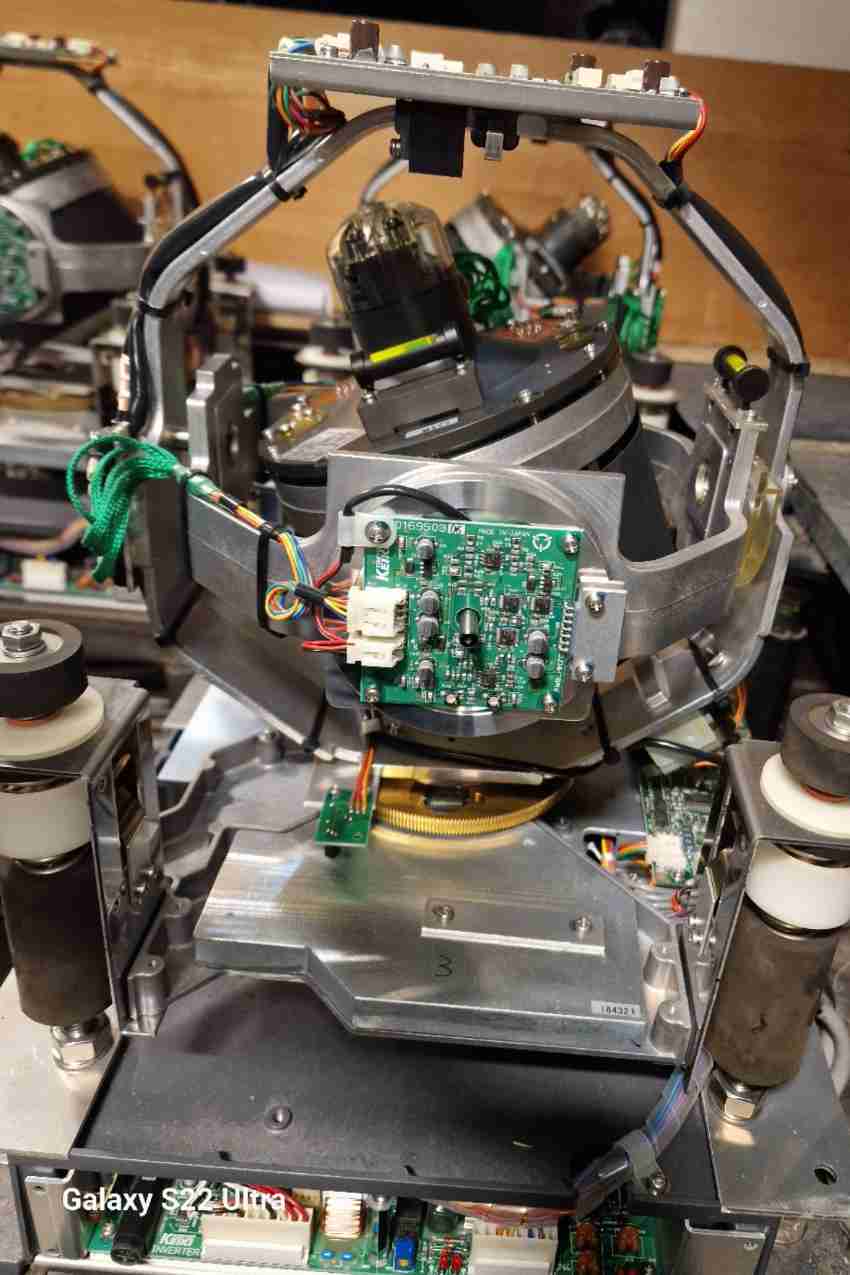
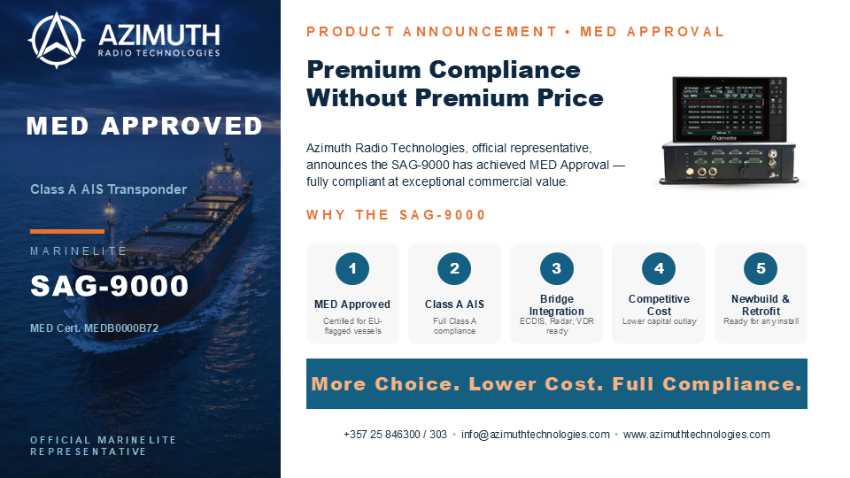
Y.T: Our range covers the critical systems that allow vessels to navigate, communicate, report and remain compliant. This includes GMDSS, VDR/S-VDR, bridge navigation electronics, radar and ECDIS-related support, gyro compass services, Satellite Speedlogs, communication and connectivity systems, IT hardware, networks, cybersecurity, CCTV, spare parts, reconditioned components and technical attendances. We support installation, inspection, maintenance, repair, certification, troubleshooting, remote IT assistance and fleet-level service agreements. As SOLAS, IMO, ESG and data-traceability expectations evolve, we help clients choose right-sized pathways: phased upgrades, lifecycle extension, logistics-aware spare-parts planning and technically suitable reconditioned or upcycled parts were safe and compliant. Approved, cost-conscious alternatives such as AIS 9000 transponders, Satellite Speedlogs, CHIYANG GMDSS radios, AIS-SART and Radar SART units, NAVTEX receivers, EPIRBs, SART batteries and hydrostatic release units can help reduce lifecycle risk through availability, spares continuity, lower logistics exposure and avoidance of unnecessary full-system replacement. Our value lies in the judgement behind the solution, not only in the equipment supplied.
What is the state of the market where you are currently active?
Y.T: The market is active, resilient and increasingly complex. Maritime demand remains strong, but the way vessels operate is changing. Political and geopolitical tensions, disrupted trade corridors, sanctions requirements and reconfigured shipping routes are turning technical reliability, compliance and logistics planning into board-level priorities. Cyprus remains a strategically positioned maritime base, and Azimuth’s strength is the combination of local presence, international reach, fast response and commercially aware technical support across regions. According to UNCTAD’s 2025 Review of Maritime Transport, the global merchant fleet stood at around 112,500 vessels of at least 100 GT at the start of 2025, with fleet capacity of approximately 2.44 billion dwt, seaborne trade growth of 2.2% in 2024 and a 5.9% increase in ton-miles. These figures tell an important story: demand is no longer driven only by volume. Rerouting, longer voyages and operational disruption are increasing pressure on technical reliability, logistics planning and compliance execution.
For ship managers, technical decisions are now connected to a wider risk picture: geopolitical disruption, sanctions screening, insurance exposure, customs clearance, maker production times, port windows and logistics costs. Ageing navigation equipment and next-generation bridge platforms require careful planning, particularly where component lead times, obsolescence and freight delays can turn a technical issue into an operational disruption. At the same time, cost pressure is driving demand for approved alternatives that help clients control capital expenditure, reduce downtime risk, maintain compliance and avoid over-investment in premium replacements where a technically suitable solution can achieve the required operational result. The market increasingly rewards partners who can protect uptime, manage uncertainty and provide commercially sensible guidance across regions.

What can you tell us about market trends?
Y.T: The strongest trends are clear: digitalisation, AI-supported navigation, remote monitoring, cybersecurity, ESG data readiness, next-generation bridge renewal and the transition from reactive to predictive technical support. Ships are no longer isolated assets at sea; they are increasingly connected operating platforms, continuously exchanging data between vessel, office, vendors and technical support teams. New SatCom providers and low-latency connectivity models are expected to reshape service choice over the next three to five years, creating more competition but also greater need for secure, well-integrated and professionally managed connectivity. Within this renewal cycle, Satellite Speedlogs are gaining relevance as approved speed and distance measurement options that can support navigation integrity, performance monitoring, ESG data readiness and safer operational decision-making.
The scale of maritime data consumption underlines this shift, although the figures should be read through the right lens. Provider-based data from Inmarsat, reported by maritime media, showed that commercial vessel data usage had more than tripled since 2019, with demand rising across major vessel types as operators adopted route optimisation, ship-to-shore broadband transfers, fuel-efficiency tools, remote support and crew welfare connectivity. In that benchmark period, container shipping data demand more than doubled year on year, increasing by approximately 108%, while oil tankers rose by around 70% and bulk carriers by approximately 47%.
On the connectivity side, Valour Consultancy’s maritime tracker recorded more than 38,300 vessels using geostationary very small aperture terminal connectivity (GEO VSAT) or low Earth orbit broadband (LEO broadband) as of May 2025, including more than 26,000 vessels using Starlink and more than 1,000 using Eutelsat OneWeb. Its latest Q1 2026 update then reported 68,528 vessels connected via LEO broadband within its dataset, including 66,866 Starlink-connected vessels and 1,662 OneWeb-connected vessels, and estimated an annual retail LEO service revenue opportunity of approximately US$1.08 billion, excluding terminal access charges.
Compared with UNCTAD’s reported global merchant fleet of around 112,500 vessels of at least 100 GT at the start of 2025, these figures show that high-speed connectivity is moving rapidly from early adoption into mainstream fleet planning, even if the datasets are market-intelligence samples rather than official whole-fleet statistics. The next phase will be defined by bandwidth appetite and resilience: ship managers will increasingly need hybrid networks combining GEO VSAT, LEO broadband, L-band safety or backup services, shore-side cybersecurity, traffic management and application prioritisation. New entrants and expanded services from providers such as Starlink, Eutelsat OneWeb, Amazon Leo, Intelsat, Viasat/Inmarsat and other multi-orbit operators will create more choice, but also more complexity. The strategic question will no longer be simply whether a vessel is connected; it will be whether that connectivity is secure, redundant, professionally managed and capable of supporting real-time diagnostics, cloud applications, crew welfare, compliance reporting and data-led vessel operations.

Latency and coverage resilience will become just as important as bandwidth. Traditional GEO VSAT remains valuable for managed service continuity, but its higher latency can limit real-time applications such as remote diagnostics, video collaboration, cloud platforms and certain operational tools. LEO services reduce latency significantly and improve user experience, but coverage, handover performance, service availability, local authorisations, cyber controls and backup architecture still need to be planned carefully, particularly across high-latitude routes, politically sensitive regions, congested beams, ports with restricted access, and areas affected by conflict or electronic interference. At the same time, GPS and wider GNSS jamming and spoofing have become a mainstream maritime risk. NATO Shipping Centre reported in 2026 that GNSS disturbances continue to affect the Baltic Sea, Black Sea and South Eastern Mediterranean, with frequent reports also outside NATO’s area of responsibility in Taiwan, South Korea, the South China Sea, the Persian Gulf and the Red Sea.
A 2025 joint statement by ITU, ICAO and IMO also expressed grave concern about harmful interference affecting GNSS and called for protection of radionavigation satellite services, stronger resilience of navigation, positioning and timing systems, conventional navigation backup and better reporting mechanisms. For the industry, this points to a clear future requirement: vessels will need more resilient GNSS arrangements, alternative positioning, navigation and timing capability, better bridge procedures, crew training, sensor cross-checking and cyber-aware integration of navigation and communication systems. Future regulation is also moving in this direction. IMO’s 2026 MASS Code for Maritime Autonomous Surface Ships places emphasis on navigation, connectivity, cybersecurity, remote operations and human oversight, while IMO MSC 111 also advanced changes linked to VDES as a possible evolution alongside AIS. For Azimuth, this reinforces the importance of supporting clients not only with connectivity speed, but with resilient, compliant and professionally managed bridge systems capable of operating safely when satellite signals, bandwidth or positioning data cannot be taken for granted.
The future, however, will not be defined by technology alone. Autonomous and semi-autonomous vessels will still require marine technical engineers who understand navigation, communication, sensors, control systems, cyber risk and data as one operating environment. The profession is converging. Future engineers will need traditional marine judgement, electronics capability, software awareness, cyber literacy and data understanding. And this is the point we should never forget: our industry will always be built on people. Technology can support decisions, automate routine tasks and improve visibility, but it cannot replace experience, accountability, trust, seamanship, mentoring and the human judgement required when conditions are uncertain. For the industry, succession, mentoring and retention of technical knowledge are therefore strategic priorities, not operational afterthoughts.
This people challenge is also becoming a competitiveness issue. The BIMCO/ICS Seafarer Workforce Report 2026 estimates that 2.57 million seafarers currently serve 85,148 merchant ships worldwide, yet the industry already faces a 2026 shortage of 39,100 STCW-certified officers and will need an additional 113,735 officers by 2030. It also estimates that 22,747 officers and 8,475 ratings must join the workforce each year until 2030 to meet demand. At the same time, the June 2026 Lloyd’s Register Foundation and World Maritime University study on digital skills in maritime education and training found that more than 80% of seafarers receive digital-skills training rarely or not at all, two-thirds are willing to upskill, and only 13% believe shore-based training consistently reflects the systems they encounter onboard. For Azimuth, these figures reinforce a clear priority: developing people who can combine marine judgement with electronics, software awareness, cyber literacy, data interpretation, remote diagnostics and ESG understanding.
What are the most innovative products/services marketed?
Y.T: Our most innovative services are those that help clients reduce uncertainty before it becomes cost. Remote bridge diagnostics, preventive thermal imaging diagnostics, 24/7 remote IT support, fleet agreement models, cybersecurity-focused support and data-led technical review all serve one purpose: faster visibility, better decisions and fewer avoidable disruptions. These services improve troubleshooting speed, reduce unnecessary attendances, strengthen technical planning and allow experienced specialists to support vessels wherever they are trading. They also help extend technical knowledge across the organisation by enabling senior engineers to guide crews, support younger technicians and share expertise across a wider international client base.
As AI, automation and high-connectivity vessels develop, the marine technical engineer becomes more critical, not less. Engineers will be needed to interpret outputs from mission-critical bridge systems, validate system behaviour, review voyage data, support safe decisions and connect technology with operational reality. Azimuth’s innovation is deliberately practical: phased upgrades, remote support, lifecycle extension, strategic spare-parts planning, alternative sourcing and pre-positioning of critical parts where justified. This approach reduces total cost of ownership by balancing purchase price, availability, installation effort, spares continuity, logistics exposure and compliance risk.
What is your outlook for H2 2026 and beyond?
Y.T: For H2 2026, our outlook is cautiously optimistic and commercially disciplined. The scale of the global merchant fleet, continued seaborne trade growth and higher ton-miles from rerouting all support resilient demand for maintenance, navigation renewal, connectivity support and logistics-aware technical services. At the same time, client decisions are becoming more cost-sensitive and more risk-based. Political and geopolitical tensions, sanctions requirements, logistics volatility and maker production times will continue to influence routing, attendance planning, spare-parts availability, insurance exposure, payment flows and the timing of technical decisions. In this environment, success will depend on the ability to act quickly, plan carefully and advise clients with both technical credibility and commercial realism.
Beyond market demand, the defining issue will be readiness. Regulatory pressure, cyber-risk expectations, ESG data traceability, equipment obsolescence, supply-chain volatility and technical talent shortages will require ship managers to plan earlier and choose partners more carefully. From Cyprus, Azimuth is well positioned to act as a regional-to-global technical hub, supporting clients across trading routes with certified marine expertise, secure connectivity, spare-parts discipline, practical execution and commercially balanced advice.
Future regulation will increasingly connect safety, connectivity, cybersecurity, emissions data and human oversight. The IMO MASS Code, VDES evolution, multi-satellite GMDSS requirements, GNSS resilience expectations, cyber risk management guidance, decarbonisation measures and remote inspection techniques all point in the same direction: vessels will need systems that are not only approved, but also secure, resilient, data-ready and professionally supported. For ship managers, compliance will become less about one-off equipment replacement and more about continuous readiness: maintaining reliable navigation, defensible data, cyber-aware bridge systems, trained crews and technical partners capable of supporting vessels across both physical and digital operating environments.
For Azimuth, these developments expand the role of our services. Our work is no longer only about repairing equipment or supplying approved systems; it is about helping ship managers maintain continuous readiness. That means resilient navigation, secure connectivity, cyber-aware bridge systems, reliable data for compliance reporting, trained people and practical upgrade pathways that protect uptime and control cost. As regulation moves toward VDES, multi-satellite GMDSS, GNSS resilience, MASS readiness, remote inspection and emissions data transparency, Azimuth’s services become part of a wider operational-resilience strategy for the connected vessel.
Looking beyond H2 2026, the next three to five years will be defined by disciplined renewal rather than unplanned spending. Ship managers will need to plan next-generation navigation equipment, hybrid SatCom models, cyber-secure connectivity, ESG data readiness, logistics risk mitigation and technical talent succession with greater care and foresight. Azimuth’s focus will be to invest selectively in people, partnerships and systems while supporting clients globally with practical guidance, reliable execution and cost-conscious compliance support. The companies best positioned for the future will be those that balance speed with sound judgement, compliance with practical agility, technical credibility with resilience, and business growth with continued investment in people.


Cyprus
Azimuth Radio Technologies Ltd
284–286 Makarios III Ave, Limassol 3105
P.O. Box 54634, 3726 Limassol
Tel: +357 25 846300 / 303
Germany
Azimuth Radio Technologies GmbH
Gertrudenstrasse 3, 20095 Hamburg
Postfach 10 61 40, 20042 Hamburg
Tel: +49 40 30967435