
Most companies talk about AI. Unnic AI implements it. The company is a Spanish consultancy that helps industrial companies and SMEs turn artificial intelligence from a buzzword into a competitive advantage: with real use cases, real workflows, and real results. No generic solutions. Just AI that works for your business.
Interview with Ugo Pérez, Co-founder of Unnic AI.
What are the main areas of activity of the company?
Ugo Pérez: Four things, done exceptionally well: AI Consulting to build adoption roadmaps that actually get executed, AI Development to deliver custom solutions embedded in real operations, AI Training tailored to every role in an organisation, and EU AI Act Compliance to help companies navigate regulation before it catches them off guard. We cover the full cycle, because partial adoption is just expensive experimentation.
What’s the news about new products/services?
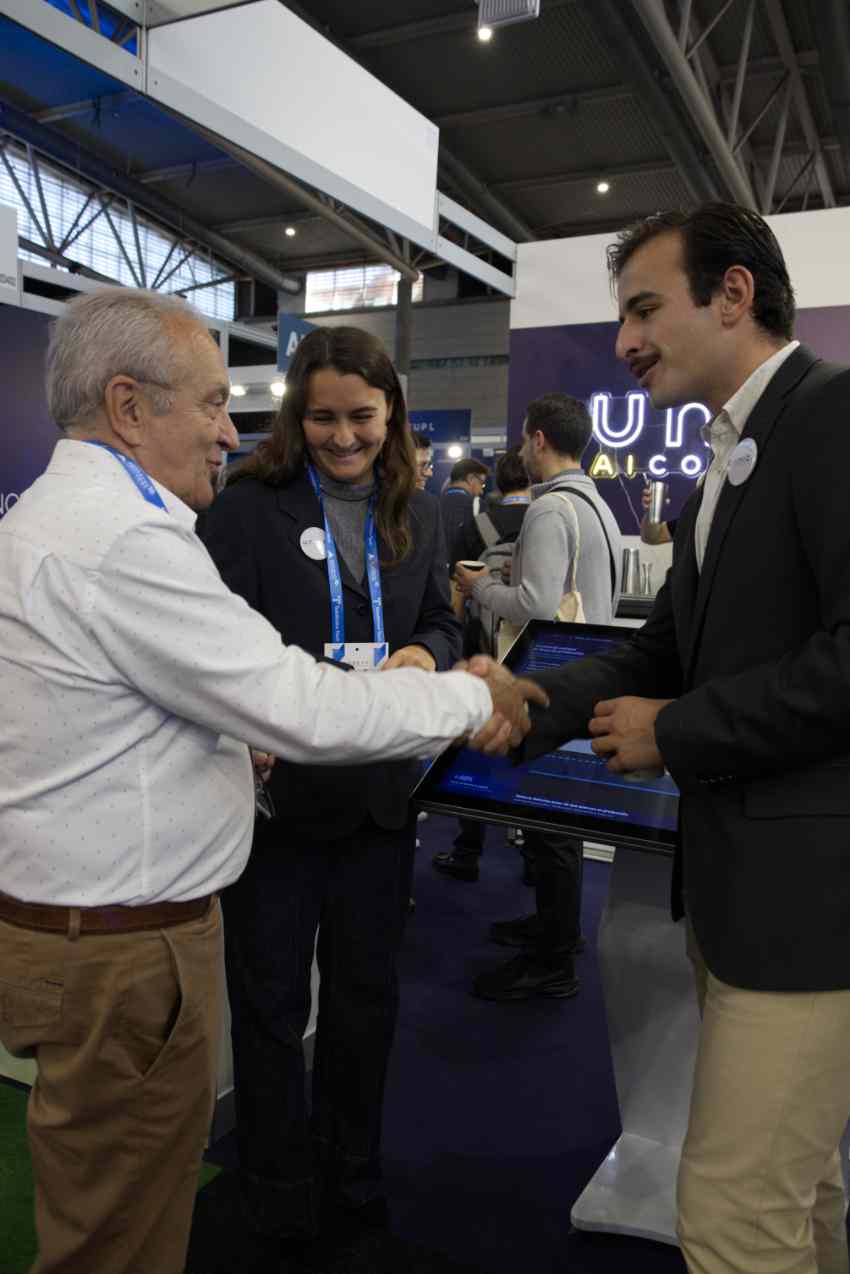
U.P: We just launched the AI Adoption Benchmark: a live diagnostic tool that tells companies exactly where they stand on AI maturity compared to their industry peers, with a free final report included. We debuted it at Advanced Factories 2026 in Barcelona, and the reaction said everything: the market is hungry for honest benchmarks, not sales pitches.
What are the ranges of products/services?
U.P: Our portfolio is built around four areas, each designed to meet SMEs and industrial companies at a different stage of their AI journey.
AI Consulting is where most engagements begin. We run a structured diagnosis (analysing processes, data availability, and bottlenecks) and deliver a prioritised 1-2 year implementation roadmap with real impact estimates. No generic advice, no technology for technology’s sake.
AI Development covers three distinct solution types: intelligent process automation (integrating existing tools like ERP, CRM, or email to eliminate manual tasks); AI agents capable of operating with autonomy, managing leads, generating quotes, or analysing quality incidents without human intervention; and predictive models that help companies anticipate demand, optimise stock, or improve production planning based on their historical data.
AI Training runs as intensive practical workshops, minimum 4 hours, tailored by professional profile: executives, sales, marketing, HR, and custom formats. And by technology: ChatGPT, Copilot, Gemini, or Claude. All programmes are eligible for FUNDAE subsidies. For companies that want a deeper commitment, we also offer a 12-month executive accompaniment programme to lead AI transformation at leadership level with full governance framework included.
EU AI Act Compliance addresses what most companies overlook: they’re already using AI, they just have no documented control over how. In 4-8 weeks, we map every AI tool in the organisation, classify risk levels, appoint a formal AI Responsible, define internal usage policies, train employees, and deliver a complete legal evidence dossier.
Entry point or full transformation: we work across the entire spectrum.
What is the state of the market where you are currently active?
U.P: Awareness is at an all-time high. Adoption is not. Fewer than 3% of Spanish SMEs have meaningfully integrated AI into their operations (IndesIA 2025). That gap, between knowing AI matters and actually doing something with it, is where Unnic AI lives. And right now, that gap is enormous.
What can you tell us about market trends?
U.P: Three shifts are reshaping industrial AI right now. Experimentation is over: companies want AI embedded in real operations, not sitting in a pilot forever. Generic training is dying: people need to learn AI in the context of their actual job, not in a theoretical vacuum. And regulation is becoming a catalyst: the EU AI Act is forcing strategic decisions that companies can no longer postpone. The window to get ahead of this is closing.
What are the most innovative products/services marketed?
U.P: Two things stand out. The AI Adoption Benchmark: a real-time, sector-contextualised diagnostic that tells companies exactly where they stand on AI maturity compared to their peers. Nothing like it existed for the Spanish industrial market, and it’s free. The reaction at Advanced Factories 2026 confirmed it: companies are starving for honest data, not vendor pitches.
The Lead Management System is proving equally compelling. It unifies the entire lead journey, from first contact to close, into a single structured flow, integrating WhatsApp, Airtable, and n8n so commercial teams work in the tools they already use, with full traceability and zero lost opportunities. No new habits required. Just control where there was chaos.
What estimations do you have for the second half of 2026?
U.P: Acceleration. As EU AI Act deadlines get closer and more concrete, industrial companies will stop debating and start implementing. The companies that built internal AI capabilities early will pull ahead fast. The ones that didn’t will be scrambling. We’re scaling to meet that demand, and our bet is that by the end of 2026, AI adoption in Spanish industry will look very different from where it stands today.