

As part of the EU Mobility Package rollout, a major deadline is approaching for light commercial vehicle operators. Starting July 1, 2026, Smart Tachograph Version 2 (G2V2) will become mandatory for vehicles weighing between 2.5 and 3.5 tonnes engaged in international transport or cabotage operations.
For businesses operating delivery vans, courier fleets, and light freight transport across European borders, this marks a significant shift in compliance requirements.
Why is the eu extending tachograph rules to vans?
The rapid growth of e-commerce and cross-border logistics has transformed the role of light commercial vehicles. Vans now perform many transport tasks traditionally handled by heavy goods vehicles, often operating on the same international routes.
The European Union’s objective is to create a level playing field by applying similar working-time and compliance requirements across both vehicle categories. The updated regulations are designed to:
- Improve road safety by reducing driver fatigue.
- Ensure fair competition between operators.
- Strengthen enforcement of cabotage and driver posting rules.
- Increase transparency across international transport operations.
Which businesses will be most affected?
The new rules will primarily impact companies that have traditionally operated without tachographs.
Among the sectors facing the greatest impact are:
- Courier and parcel delivery networks.
- E-commerce fulfilment providers.
- Refrigerated food and pharmaceutical logistics.
- Construction and trade service fleets operating internationally.
- Automotive parts distributors and just-in-time delivery providers.
- Specialist food, beverage, and craft product distributors.
Many operators in these sectors have limited experience with tachograph compliance and should begin preparations well before the 2026 deadline.
When does the requirement apply?
The Smart Tacho 2 requirement applies when all of the following conditions are met:
- Vehicle weight is between 2.5 and 3.5 tonnes.
- Transport is performed for commercial reward.
- The vehicle crosses international EU borders or performs cabotage operations.
- Examples that require Smart Tacho 2 include:
- International deliveries between EU countries.
- Returning from an international delivery with an empty vehicle.
- Performing domestic deliveries within another EU country.
- Vehicles used occasionally for commercial transport activities.
Certain exemptions remain in place, including some own-account operations, service vehicles carrying their own tools and equipment, agricultural and forestry operations, emergency services, and specific passenger transport activities.
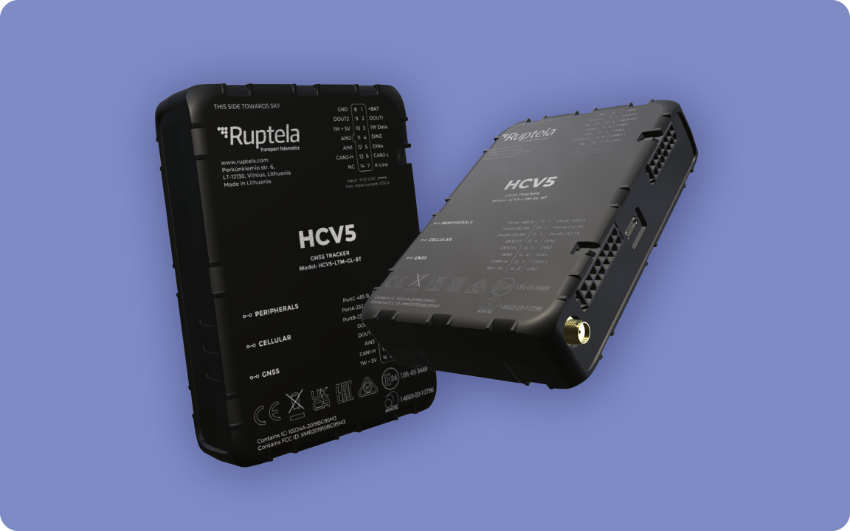
Smart Tacho 2: More Than a Standard Tachograph
Unlike previous generations, Smart Tachograph Version 2 provides significantly enhanced functionality through secure satellite positioning and advanced communication capabilities.
Key features include:
- Automatic border crossing registration.
- Recording of loading and unloading activities.
- Remote roadside enforcement through DSRC technology.
- Improved protection against tampering and fraud.
The system enables authorities to perform remote compliance checks while allowing compliant vehicles to continue operating without unnecessary roadside inspections.
In addition, drivers operating vehicles within scope must comply with EU driving and rest time regulations, including maximum daily and weekly driving limits, mandatory breaks, and legally required rest periods.
Preparing Fleets for Compliance
Achieving compliance requires more than installing a tachograph. Fleet operators must also ensure that data can be downloaded, stored, and managed according to legal requirements.
Driver card data must be downloaded at least every 28 days, while vehicle unit data must be downloaded every 90 days and retained for inspection.
For operators managing dozens or hundreds of vehicles, manual data collection quickly becomes impractical. Remote tachograph management solutions can significantly reduce administrative workload while ensuring compliance.
The Challenge of Modern Vehicle Architectures
For many fleet operators, tachograph installation is only one part of the challenge.
Modern light commercial vehicles increasingly rely on multiple CAN networks and CAN FD technology. Accessing both tachograph information and vehicle telematics data can therefore require connectivity to several separate vehicle communication channels.
This is particularly relevant for newer platforms such as the Fiat Ducato (from 2022), Peugeot Boxer (from 2024), and Citroën Jumper (from 2024), where multiple CAN interfaces may be needed to access all relevant operational data.
As fleets prepare for Smart Tacho 2 compliance, many are also looking to gain greater visibility into vehicle utilisation, fuel efficiency, driver behaviour, and maintenance requirements.
Combining Tachograph and Vehicle Data
To simplify these deployments, Ruptela developed CAN For All (CFA), a compact CAN and CAN FD aggregation solution designed to collect and consolidate data from multiple vehicle networks.
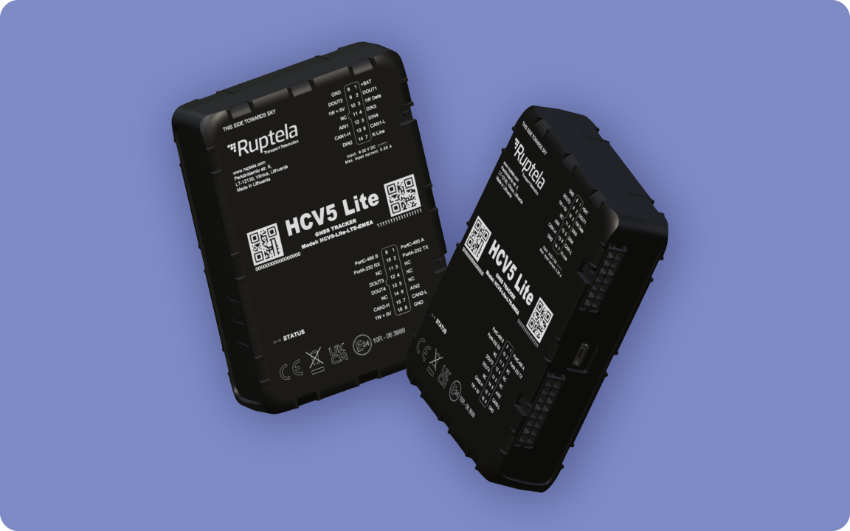
When paired with telematics devices such as the HCV5 Lite, CFA enables simultaneous access to tachograph information and vehicle CAN data through a simplified installation architecture. This allows fleet operators to combine compliance requirements with broader fleet management objectives without significantly increasing hardware complexity.
By aggregating data from multiple vehicle networks into a single output, fleets can gain access to a richer set of operational information while maintaining compliance with evolving transport regulations.
Remote Tachograph Management
Ruptela’s HCV5 and HCV5 Lite devices provide remote tachograph download capabilities, allowing fleet managers to retrieve tachograph files and driver card data over the air without requiring vehicles to return to base.
Combined with a software platform, fleet operators can:
- Monitor driver hours.
- Receive download deadline reminders.
- Archive tachograph records.
- Access compliance reports.
- Monitor fleet activity in real time.
- This helps organisations reduce administrative effort while ensuring compliance with Smart Tacho 2 requirements.

Looking Ahead
The extension of Smart Tachograph Version 2 requirements to light commercial vehicles represents one of the most significant regulatory changes for cross-border van fleets in recent years.
Organisations that begin preparing now will be better positioned to avoid installation bottlenecks, minimise operational disruption, and ensure compliance before the July 2026 deadline.
At the same time, the transition presents an opportunity to modernise fleet management infrastructure and gain greater visibility into vehicle operations. By combining tachograph compliance with access to vehicle data, fleet operators can turn a regulatory requirement into a long-term operational advantage.
Dovydas Jonuškis, Sales Manager at Ruptela