
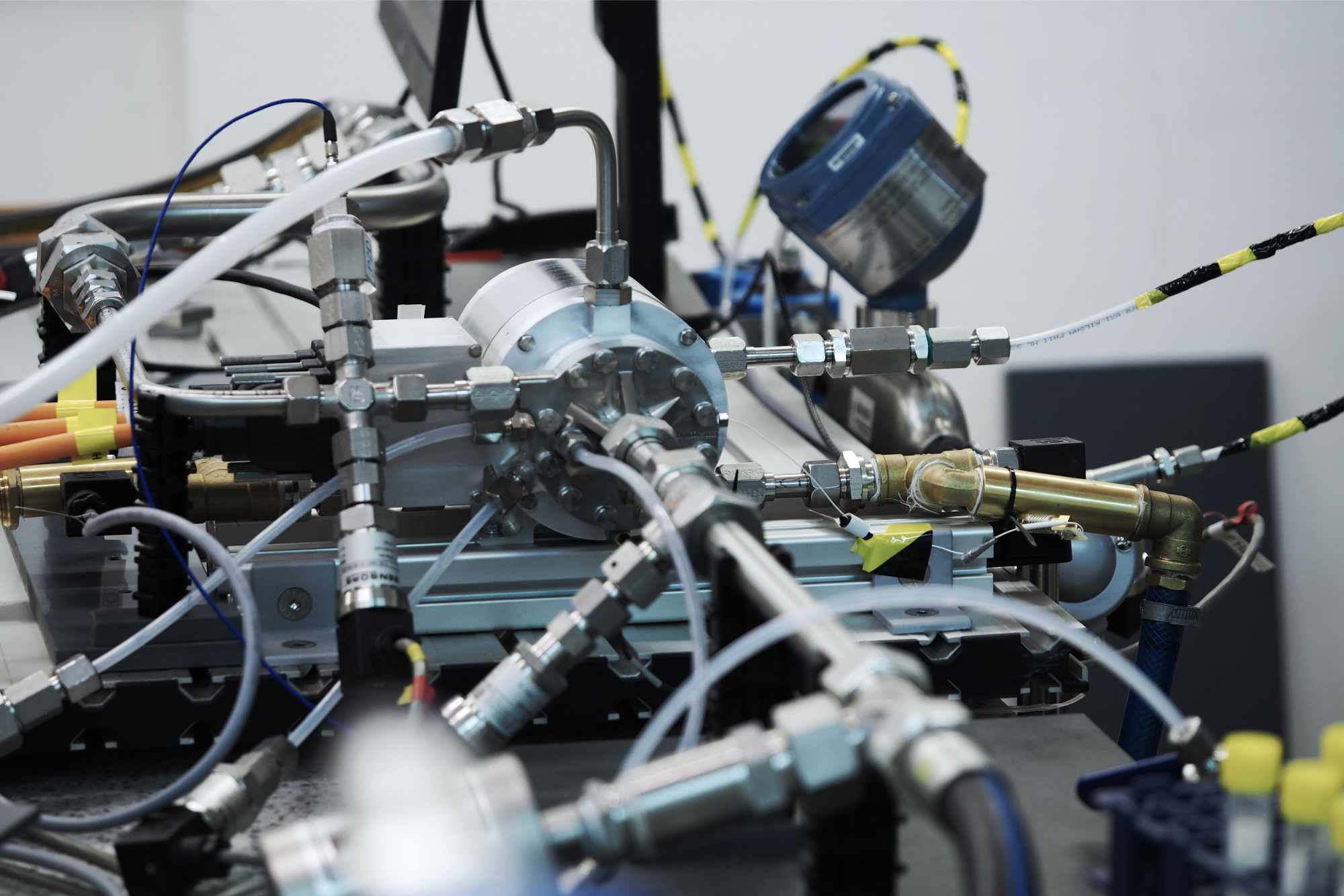
Inpraise Systems is a Czech engineering company specialising in custom high-speed turbomachinery for space propulsion, spacecraft subsystems and advanced industrial machinery. The portfolio covers electric pumps, compressors, turbines, valves, high-speed electric motors, oilless bearing systems, control and power electronics.
A key capability is designing compact turbomachines as integrated systems, with the high-speed motor, hydraulic section, oil-free bearings, dynamic seals, inverter and control software developed around the required operating point. This system-level approach is especially important at extreme rotational speeds, where efficiency, stability, thermal behaviour and rotor dynamics are tightly connected.
The technology is suited for rocket-engine propellant feed, spacecraft thermal and environmental management and in-orbit fluid handling. The same know-how is transferred into ground applications in energy and transportation, where efficiency, clean operation, power density, low maintenance and reliability are critical.
Interview with Ondřej Sležek, Co-Founder/Business Development Manager at Inpraise Systems s.r.o.
What are the main areas of activity of the company?
Ondřej Sležek: Inpraise Systems operates mainly in three areas: rocket propellant-feed systems, spacecraft fluid-management and power-conversion subsystems, and high-speed machinery for technical gases and power cycles.
For rocket engines, the company develops high-speed electric pump systems for controlled propellant delivery. This includes electric pump-fed architectures and electrically assisted turbopumps, where an integrated electric machine can support start-up, transients, precise throttling or thrust regulation.
For spacecraft, the company develops electric pumps for thermal management, in-orbit transfer of cryogenic media and related fluid systems, such as valves. A separate area is high-reliability power-management electronics, including kilowatt-class DC/DC conversion for medium and large satellites.
For energy and transportation markets, the focus is on technical-gas processing and advanced power-cycle equipment: sCO2 companders, helium and biomethane compressors. The portfolio also includes enabling hadrware for ultra-high-speed rotating equipment, such as specialised VFD inverters, oil-free gas bearings and ultra-low-viscosity hydrodynamic bearings. These are relevant in aviation, UAV applications or hydrogen-liquefaction equipment.
What’s the news about new products/services?
O.S: A key development is Inpraise Systems’ involvement in ArianeGroup’s GRETA engine programme, a 5 kN-class hydrogen-peroxide/ethanol engine for storable propulsion. GRETA is aimed at kick stages, launcher upper stages and lunar modules. In the next phase, Inpraise Systems will deliver electric pumps and controllers for the propellant-feed system. In parallel, the company continues to develop MMH/MON e-pumps for hypergolic propulsion.
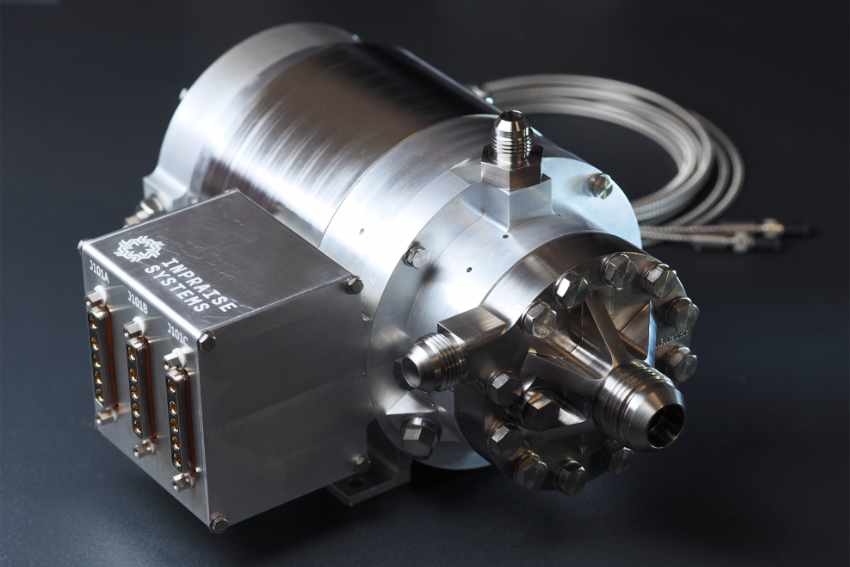
Another product line is spacecraft power management electronics. The company is developing kilowatt-class DC/DC converter technology for medium and large satellites. GaN semiconductors reduce converter mass and electrical losses through higher efficiency and smaller device size than silicon technology. GaN power-stage know-how is also used to improve VFD inverters for high-speed motor control.
Outside propulsion, Inpraise Systems is preparing helium and biomethane compressor demonstrators, where higher efficiency, clean operation and long service intervals can improve existing installations. The company has also launched aerodynamic bearing series for applications where conventional lubrication is unsuitable and foil bearings may be constrained by scaling, start-stop cycling or load capacity, particularly in aviation, UAVs, and compact compressors.
What are the ranges of products/services?
O.S: The offering is divided into complete machine units, high-speed drive technology, specialist components and development support. Complete units include application-specific e-pump packages, compressors, turbines and related assemblies, supplied with motor, inverter, control electronics and firmware where an integrated unit is required.
The drive range includes high-speed electric motors, high-frequency stators and rotors. Component and subsystem products include aerodynamic gas bearings, ultra-low-viscosity hydrodynamic bearings, aerostatic bearing solutions, active hydraulic or aerodynamic stages, shaft-sealing concepts, valves and spacecraft power electronics such as high-power DC/DC converters.
Services cover feasibility assessment, concept design, modelling, prototyping, integration, testing and small-series production.
What is the state of the market where you are currently active?
O.S: The market is becoming more active, but also more technically selective. In space propulsion, lunar logistics, in-space transportation and flexible upper stages are creating demand for compact, restartable, throttleable and reliable propulsion.
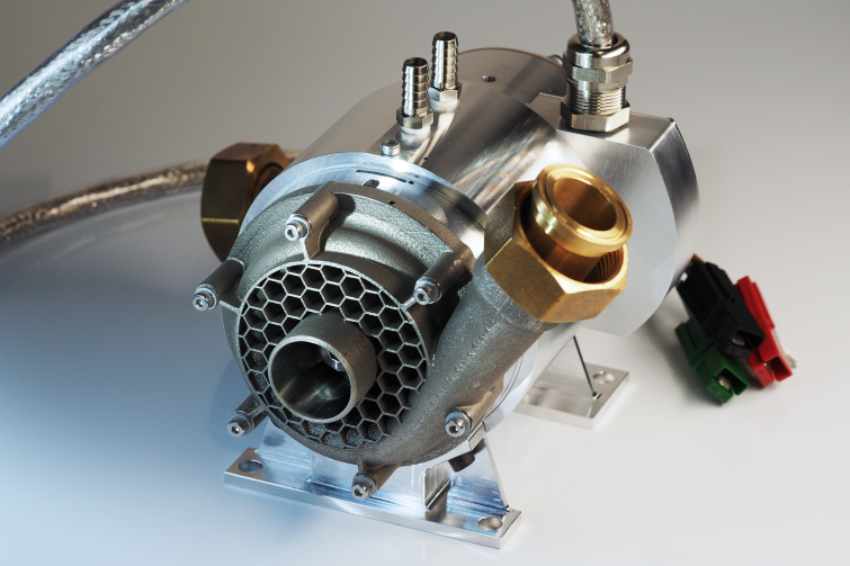
Liquid propulsion is entering a more dynamic phase. Large launch vehicles will continue to rely on classical turbopump cycles, but smaller engines, landers, orbital transfer vehicles and kick stages create more room for electric pump-fed and electrically assisted architectures. Rocket Lab’s Rutherford engine has shown that electric pump-fed propulsion can be operational, but the wider market is still early.
Green propulsion is relevant because hydrazine-class propellants are highly toxic, which results in higher handling and ground-operations costs. For storable and green propellants, the propellant-feed system remains a key bottleneck as the industry wants safer, non-toxic propellants, but still needs qualified and reliable propulsion hardware.
The energy market is moving in a similar direction. Supercritical CO2 cycles, hydrogen infrastructure, biomethane, helium systems and gas-expansion energy recovery all depend on compact, efficient rotating equipment. Here, turbomachinery and its components often determine efficiency, service life and payback.
What can you tell us about market trends?
O.S: Space is perceived as critical infrastructure. Defence, communications, navigation, Earth observation and crisis response push governments and primes toward resilient supply chains and European capability in critical subsystems. Space logistics is also becoming a market driver: lunar operations, servicing platforms and transfer vehicles require active fluid management. Electric pumps are gaining traction where their added complexity is justified by lower tankage mass, simpler pressurisation architecture, precise flow control, restart capability, and cryogenic-fluid management such as transfer or zero-boil-off storage.
What are the most innovative products marketed?
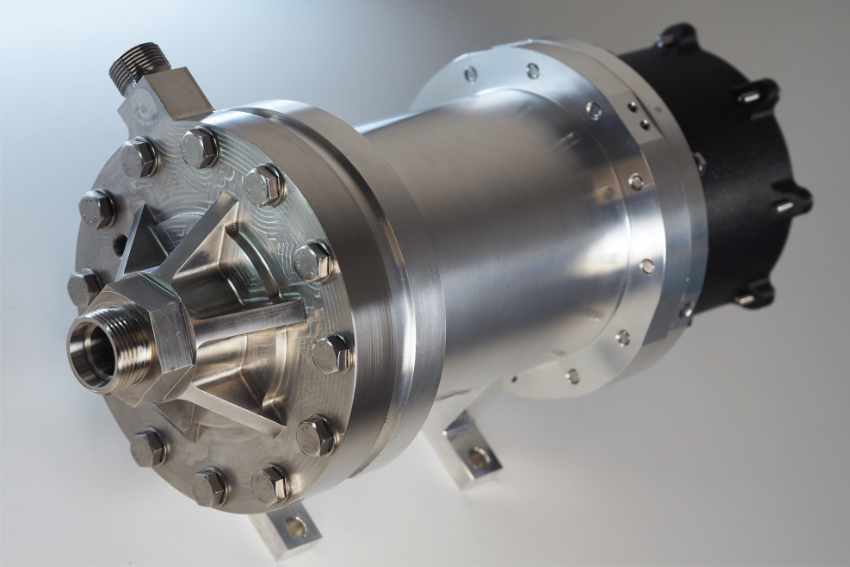
O.S: The key innovation is the company’s family of electric propellant-feed systems. They target propulsion applications demanding highly dynamic control. In the MON/MMH lunar-lander-class system, the pumps accelerate from 18,000 to 85,000 rpm in about 250 ms without overshoot and reach +/-1% of target speed within 130 ms after throttle input. This gives the engine the control authority needed for deep throttling and fine thrust regulation. Sensorless FOC avoids vulnerable rotor-position sensors while preserving speed and torque regulation.
A second novelty is electrically assisted turbopumps for medium-thrust cryogenic engines. They keep the power-to-mass advantage of turbine-driven pumps, while a smaller motor assists start-up, speed regulation and dynamic response. The aim is simpler start-up, better flexibility and less auxiliary regulation hardware.
What estimations do you have for the end of 2026?
O.S: By end-2026, the market should be less forgiving toward concepts lacking credible hardware. The US is pushing cadence, fast iteration and repeatable delivery. Europe is driven by qualification, autonomy, supply security and industrial reliability. Suppliers must show performance and a predictable validation a path from prototype to production.
For Inpraise Systems, 2026 is validation-heavy with intensive campaigns for electrically assisted turbopump technology and pump systems, plus new subsystem iterations. The aim is better performance, reliability and qualification readiness together. We believe that specialised suppliers must be fast but also deliver technically superior hardware that behaves predictably under real conditions.