
As renewable energy integration drives rapid growth in Battery Energy Storage Systems (BESS), managing electromagnetic interference (EMI) has become essential for system reliability and power quality. Global EMC solutions provider EMI Solutions (EMIS) offers targeted filtering technologies designed to eliminate electrical noise generated by pulse-width modulation inverters and high-frequency DC-DC converters within battery enclosures. Unmitigated EMI acts as electrical pollution, distorting low-voltage Battery Management System (BMS) signals, causing false sensor readings, accelerating cell degradation, and inducing nuisance shutdowns. By strategically placing EMI filters across AC inputs, AC grid outputs, DC converter stages, and Ethernet/RS485 communication interfaces, EMIS enables systems to suppress both conducted and radiated emissions while maintaining compliance with international EMC standards.
A Battery Energy Storage System (BESS) stores energy during low demand or excess generation and is increasingly integrated with renewable sources such as solar and wind power to manage variability and provide a stable power supply.
Key reasons for increased BESS deployment include:
- Intermittency of Renewables: Solar and wind generation is intermittent. Battery storage stores excess energy and supplies it during low-generation periods, improving power stability and reliability.
- Backup Power: Battery storage provides backup power during system failures and emergencies.
- Grid Balancing: BESS responds to demand-supply fluctuations and helps maintain grid frequency, reducing the risk of instability and outages.
- Reduced Dependency on Fossil Fuels: Energy storage supports greater use of renewable energy and contributes to grid decarbonisation.
Impact of EMI in BESS
Electromagnetic Interference (EMI) acts as electrical pollution within a BESS and can affect both control electronics and power components. The BMS depends on clean low-voltage signals to monitor battery health, while EMI can distort these signals and cause false voltage or temperature readings, communication failures, and erratic switching of IGBTs or MOSFETs. Such disturbances can result in unstable operation and, in severe cases, system faults.
EMI can create high-frequency current ripple and micro-fluctuations that contribute to cell degradation and parasitic heating in connectors and internal components, reducing system efficiency.
At system level, EMI can cause nuisance shutdowns, introduce unwanted harmonics into the grid, and stress sensitive electronics such as microcontrollers and capacitors, reducing reliability and component life.
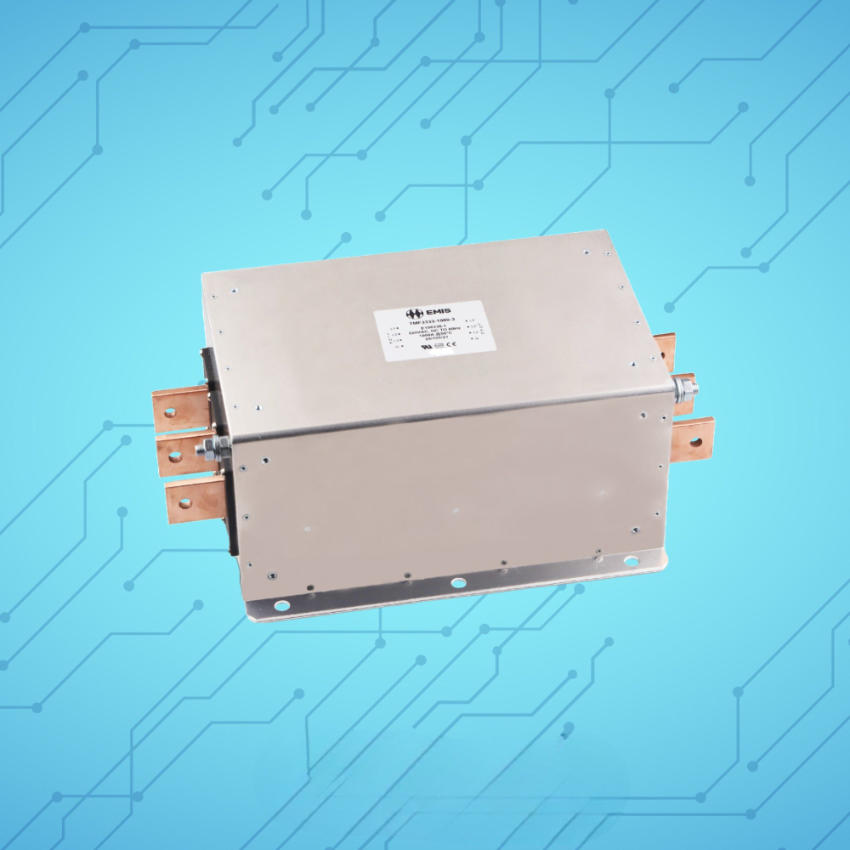
Types of EMI in BESS
- Conducted Emissions: Power electronics can generate electromagnetic noise that travels through power and signal cables and may interfere with connected equipment. Poor cable insulation, grounding, or filtering can increase the problem.
- Radiated Emissions: Unshielded cables, exposed components, and poorly designed enclosures can radiate electromagnetic fields and interfere with sensitive equipment.
- Distortion and Harmonics: Power electronic converters can generate harmonics that affect power quality and connected equipment.
Sources of EMI in BESS
- Power Electronics: Inverters using pulse-width modulation (PWM) generate high-frequency EMI. DC-DC converters used for battery charging and discharging can also produce conducted and radiated emissions at switching frequencies.
- Magnetic Fields from High-Current Conductors: High-current conductors can generate magnetic fields that may affect control electronics, communication systems, and sensors.
- Battery Cells: Battery charging and discharging can create transient voltages and currents that may contribute to EMI if not properly controlled.
EMC and EMI Mitigation Techniques in BESS
EMI and Electromagnetic Compatibility (EMC) are critical in BESS design. The objective is to reduce conducted and radiated emissions while maintaining reliable operation and EMC compliance.
Mitigation Techniques for Radiated Emissions (RE)
- Enclosure Shielding: Use suitable metallic enclosures, shielding materials, and proper grounding to contain electromagnetic radiation.
- Proper Grounding and Bonding: Properly ground and bond enclosures and system components to reduce EMI coupling and radiation.
- Ferrite Beads and EMI Filters: Use ferrite components on power and signal cables and EMI filters to suppress high-frequency noise.
- Shielding of Sensitive Components: Protect communication lines, sensors, and BMS circuits using shielded cables and appropriate shielding techniques.
Mitigation Techniques for Conducted Emissions (CE)
- Grounding and Shielding: Use proper grounding and shielded cables for power and signal lines.
- Twisted-Pair Wires: Use twisted-pair wiring for signal transmission to reduce induced noise and improve noise immunity.
- PCB Design: Use an appropriate PCB layout and separate analogue, digital, and power circuit return paths/grounding arrangements to minimise noise coupling.
- Reducing Switching Noise: Use snubber circuits and soft-switching techniques where appropriate to reduce high-frequency switching noise.
- EMI-Rated Connectors and Cables: Select shielded connectors and cables suitable for the required frequency range and application.
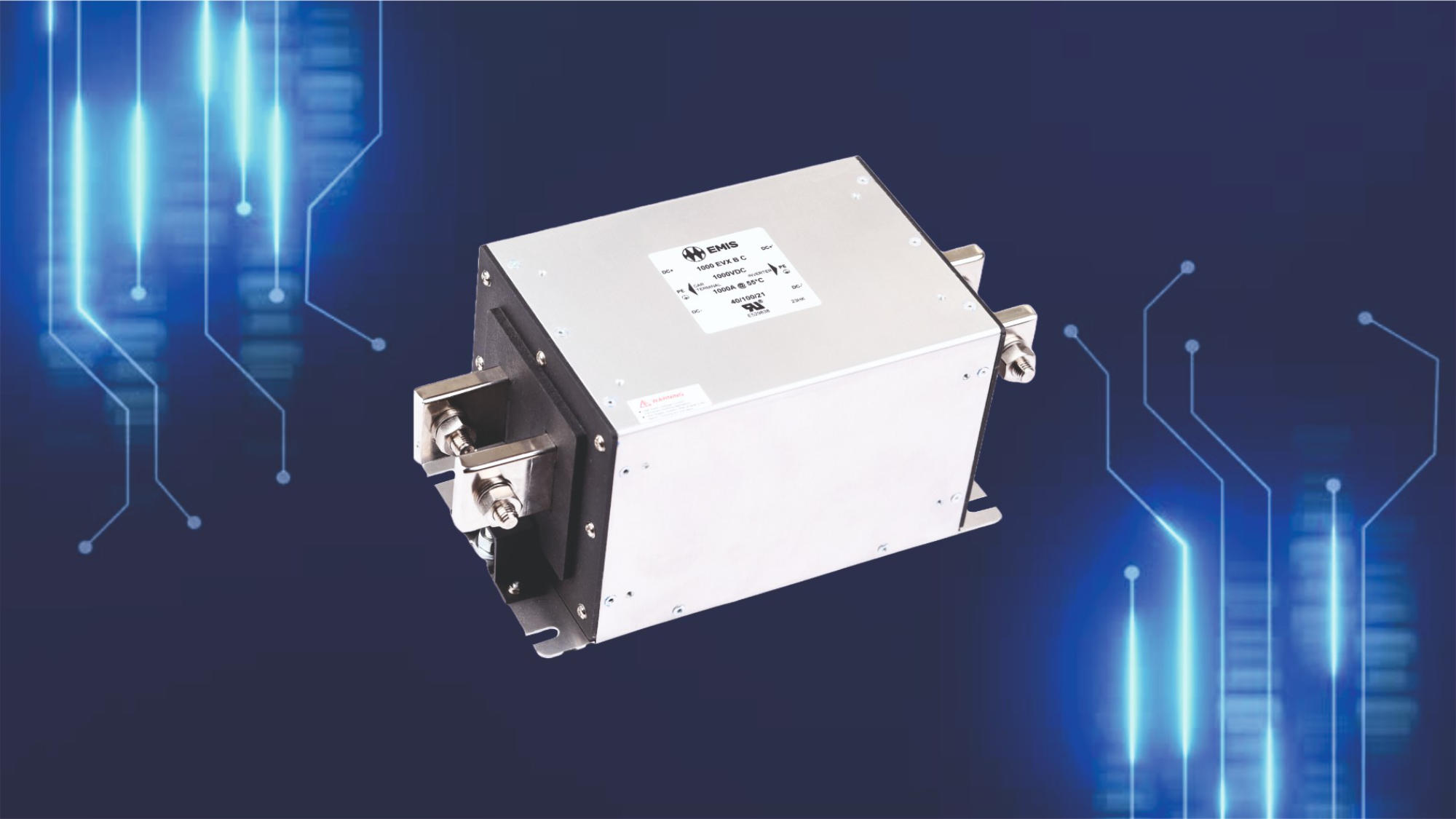
EMI Filters for Battery Energy Storage Systems
EMI filters are essential for achieving EMC performance and supporting regulatory compliance in BESS. Selecting the correct filter requires consideration of operating voltage and current, frequency range, noise source, installation location, environmental conditions, and applicable EMC standards.
EMI Filter Placement in BESS
The EMI filter should be installed as close as practical to the interference source or affected circuit. Shortening the EMI path and minimising loop areas improves filtering effectiveness and reduces the possibility of radiation.
Good isolation between filter input and output is important for effective EMI suppression and system performance.
Key filter locations in a BESS include:
- AC Power Input: Place filters between the AC source and inverter to prevent external noise from entering the system.
- AC Power Output: Install filters at the inverter AC output to reduce noise conducted toward the grid or connected load.
- DC Side: Position filters between the battery and DC-DC converter and, where required, at the converter output to limit conducted EMI.
- Communication Lines: Use suitable EMI filters on communication interfaces between the BMS, control systems, and external equipment.
Recommended EMIS Filters
- Three-phase, three-wire systems: EMIS TMF3132/TMF3332, TMF3221/TMF3222, and TMF3333 standard series models.
- Three-phase, four-wire systems: EMIS TMF4233.
- DC systems: EMIS MF610 and MF620 standard DC filter models.
- Communication systems: EMIS Ethernet RJ45 and RS422/485 filters.
Advantages of Using EMI Filters in BESS
Using EMI filters in BESS helps reduce electromagnetic interference and improve system performance, reliability, and EMC behaviour. Effective filtering can:
- Reduce conducted and radiated noise.
- Protect sensitive BMS, control, and communication electronics.
- Reduce interference between power and control circuits.
- Improve power quality and reduce unwanted high-frequency disturbances.
- Support EMC compliance.
- Reduce stress on components and improve system reliability and service life.
EMIS has been designing and manufacturing EMI filters for more than 40 years and is a global provider of EMC solutions across multiple industries and frequency domains.
With a global supply and engineering footprint, EMIS serves eight key industry segments and continues to invest in advanced technologies and engineering capabilities.
Product Portfolio Includes
- EMI / EMC Filters
- Feedthrough Filters and Components
- Power Quality Solutions
- Military Grade EMI Filters
- Surge Protection Devices