
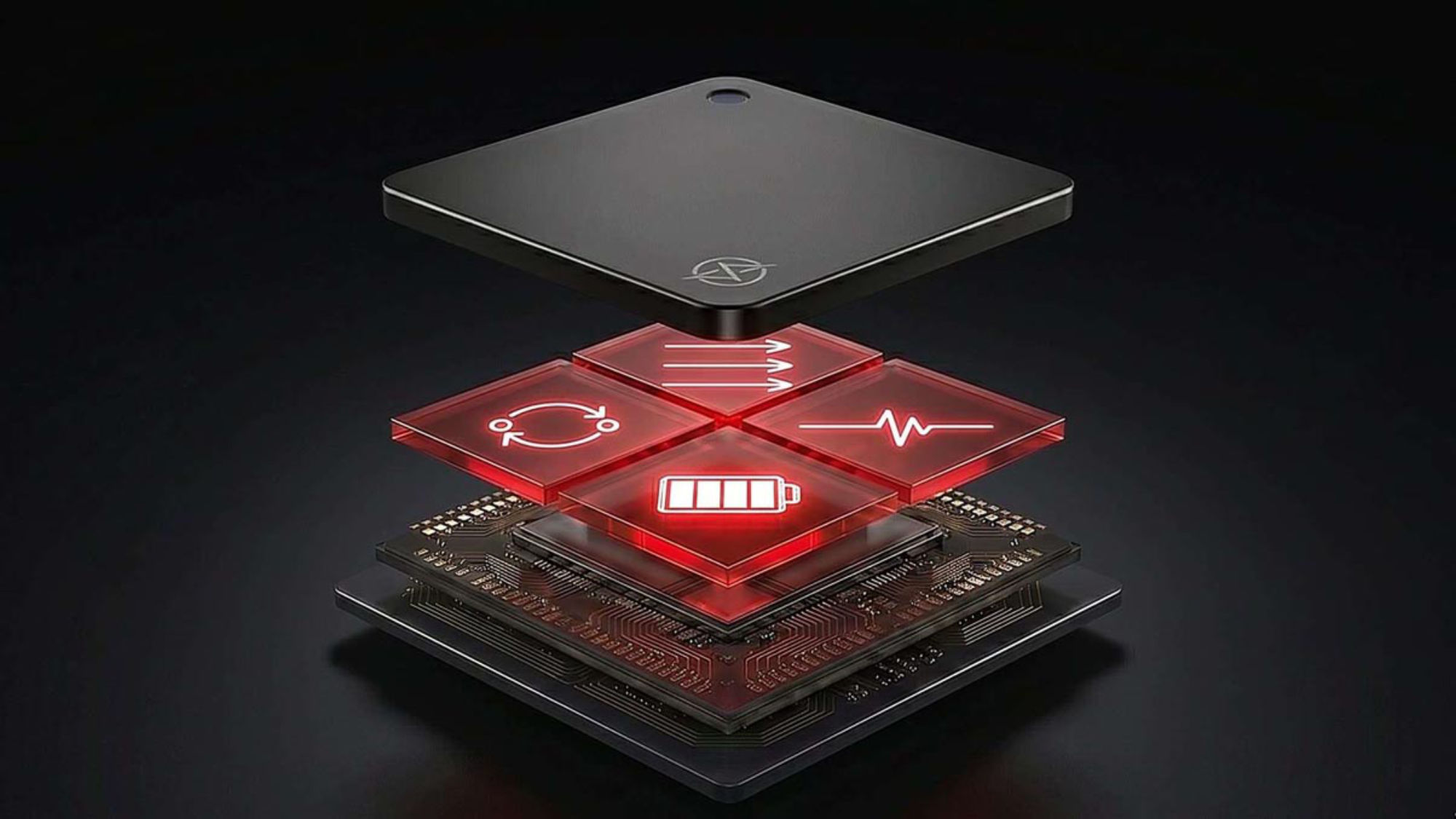
As edge applications, gaming peripherals, and professional audio systems demand real-time data exchange without performance compromises, Canadian fabless semiconductor developer SPARK Microsystems is advancing its patented Low Energy Ultra-Wideband (LE-UWB™) platform. Designed around the concept of Deterministic Wireless™, SPARK’s technology provides bounded timing, repeatable latency, scheduled access, and power consumption governed by actual communication activity. Operating as a predictable architectural alternative to conventional 2.4 GHz, Bluetooth LE, and wired links, the company’s semiconductor portfolio—including the SR1010, SR1020, and second-generation SR1120 transceivers—delivers data rates up to 40.96 Mbps with airtimes as low as 25 µs for a 1 kbit payload. Commercial adoption of SPARK LE-UWB™ has accelerated across high-performance consumer and professional hardware, powering true 8K wireless polling in SteelSeries mice and the CHERRY XTRFY K63W Pro Compact keyboard, uncompressed PCM wireless audio in LEWITT LW6 studio headphones, and lossless inter-speaker transmission in Focal’s Diva Alta Utopia system.
A brief description of the company and its activities.
SPARK Microsystems is a Canadian fabless semiconductor company developing next-generation short-range wireless technology. Its patented LE-UWB™ (Low Energy Ultra-Wideband) platform is designed for deterministic, real-time data communication, combining ultra-low power consumption, ultra-low latency, high data throughput and robust coexistence.
SPARK’s broader vision is Deterministic Wireless™: a wireless architecture built around bounded timing, repeatable latency, scheduled access and energy consumption governed by actual communication activity. The objective is to give product designers a wireless link that can be treated as a predictable part of the system architecture, rather than a variable the rest of the system must continuously absorb.
What are the main areas of activity of the company?
SPARK focuses on applications that need real-time, high-performance wireless connectivity, including gaming peripherals, professional and premium audio, AI wearables and Physical AI, industrial IoT, robotics, healthcare devices, and ranging, positioning and access control.
Across these markets, the requirements are converging: devices need to exchange more data, respond faster, operate reliably in crowded RF environments and still meet demanding battery-life targets.
What’s the news about new products/services?
2026 has marked an important step in the commercial adoption of SPARK technology.
SteelSeries introduced its new Sensei Pro and Rival Pro Series gaming mice with SPARK LE-UWB™ as their exclusive connectivity platform. The portfolio delivers true 8K wireless polling at 8,000 Hz, with up to 9,000 Hz over-polling, without relying on conventional 2.4 GHz, Bluetooth LE or wired data connectivity.
CHERRY XTRFY launched the K63W Pro Compact, the world’s first gaming keyboard featuring LE-UWB™, with true 8K wireless polling and up to 1,100 hours of battery life.
LEWITT introduced the LW6, the world’s first UWB professional studio headphones, delivering uncompressed PCM wireless audio with 5.8 ms latency and up to 21 hours of battery life for professional recording, mixing and monitoring.
Focal also selected SPARK LE-UWB™ for the Diva Alta Utopia, its flagship active wireless speaker system, using the technology for lossless wireless audio between the paired speakers.
“These products illustrate a broader shift toward Deterministic Wireless™, where predictable timing, low latency, reliability and power efficiency are becoming fundamental design requirements rather than optional features.”
What are the ranges of products/services?
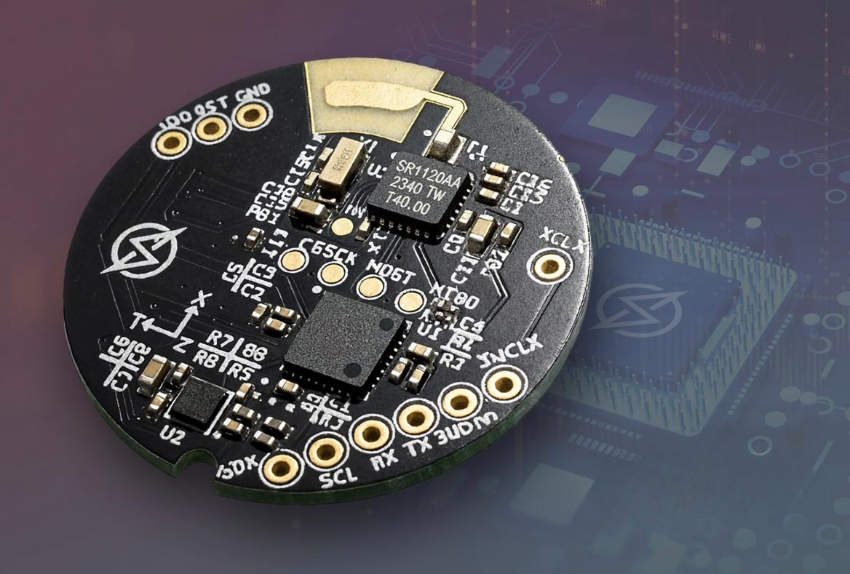
Our semiconductor portfolio includes the SR1010, SR1020 and second-generation SR1120 LE-UWB™transceivers, covering different frequency bands and system requirements.
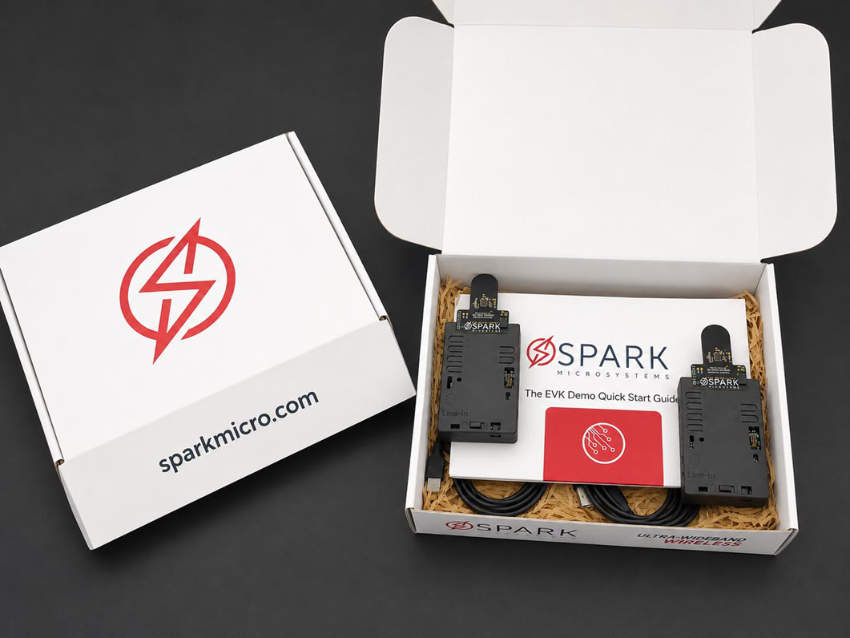
We support the silicon with evaluation kits, an SDK and a growing library of reference designs and demos for gaming, audio, AI wearables, presence detection and real-time IoT. This gives customers a practical path from evaluating the technology to integrating it into a commercial product.
What is the state of the market where you are currently active?
We see the market entering a new phase. Wireless is increasingly being used in applications that previously relied on cables or accepted compromises in latency, throughput, reliability or battery life.
At the same time, UWB is expanding beyond its established role in ranging and positioning. There is growing interest in using wideband architectures for high-performance data communication, particularly where predictable timing and energy efficiency matter. The arrival of LE-UWB™ products across gaming, professional audio and IoT is a clear indication of this transition.
What can you tell us about market trends?
One of the biggest trends is the move toward real-time intelligence at the edge. AI wearables, robotics, sensors and connected devices increasingly need to exchange data locally and act on it immediately. Gaming and professional audio are pushing in the same direction, with users expecting wireless systems to perform much more like wired ones.
That changes the design question. Average latency alone is no longer sufficient. Engineers increasingly need to know how consistently a link will behave under real RF and network conditions. That is the role of Deterministic Wireless™. Scheduled access, bounded latency and controlled timing give the system a known communication model, while short transmission windows allow the radio to return quickly to low-power states.
What are the most innovative products/services marketed?
The SR1120 is our most advanced transceiver and the clearest expression of the LE-UWB™ architecture. It combines data rates up to 40.96 Mbps with ultra-low power operation, 25 µs airtime for a 1 kbit payload, robust coexistence and antenna diversity support.
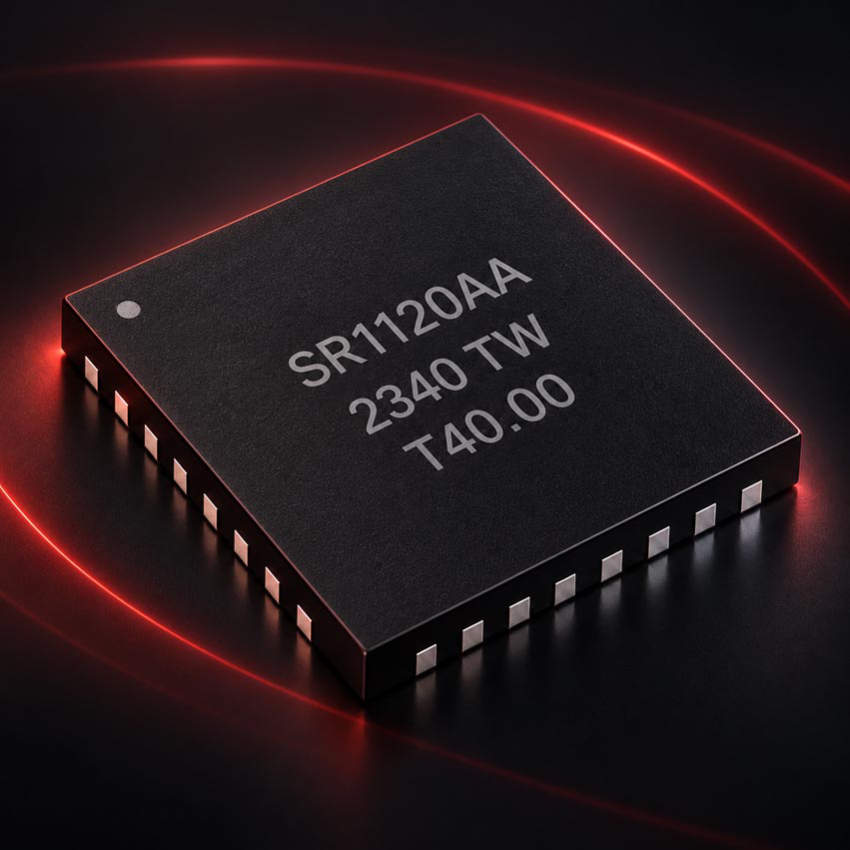
However, the innovation goes beyond one chip. LE-UWB enables a deterministic wireless architecture designed for systems where latency, throughput, power efficiency and timing consistency all matter at once. This opens the door to wireless implementations for applications that previously depended on cables or had to accept significant performance trade-offs.
What estimations do you have for the second half of 2026?
For the second half of 2026, we expect continued expansion of LE-UWB™ across our core markets. Gaming and audio are already providing visible examples, while we see growing opportunities in industrial and real-time IoT, robotics, AI wearables and other edge applications where predictable latency, reliable communication and power efficiency are critical.
In industrial environments in particular, sensors, controllers and actuators increasingly need to exchange data and respond in real time, often under tight power and reliability constraints. This is a natural fit for Deterministic Wireless™.
Our focus is on expanding deployments, strengthening our ecosystem and partnerships, and making LE-UWB™ a practical connectivity platform for a broader range of real-time intelligent systems. For more information, please visit sparkmicro.com.