
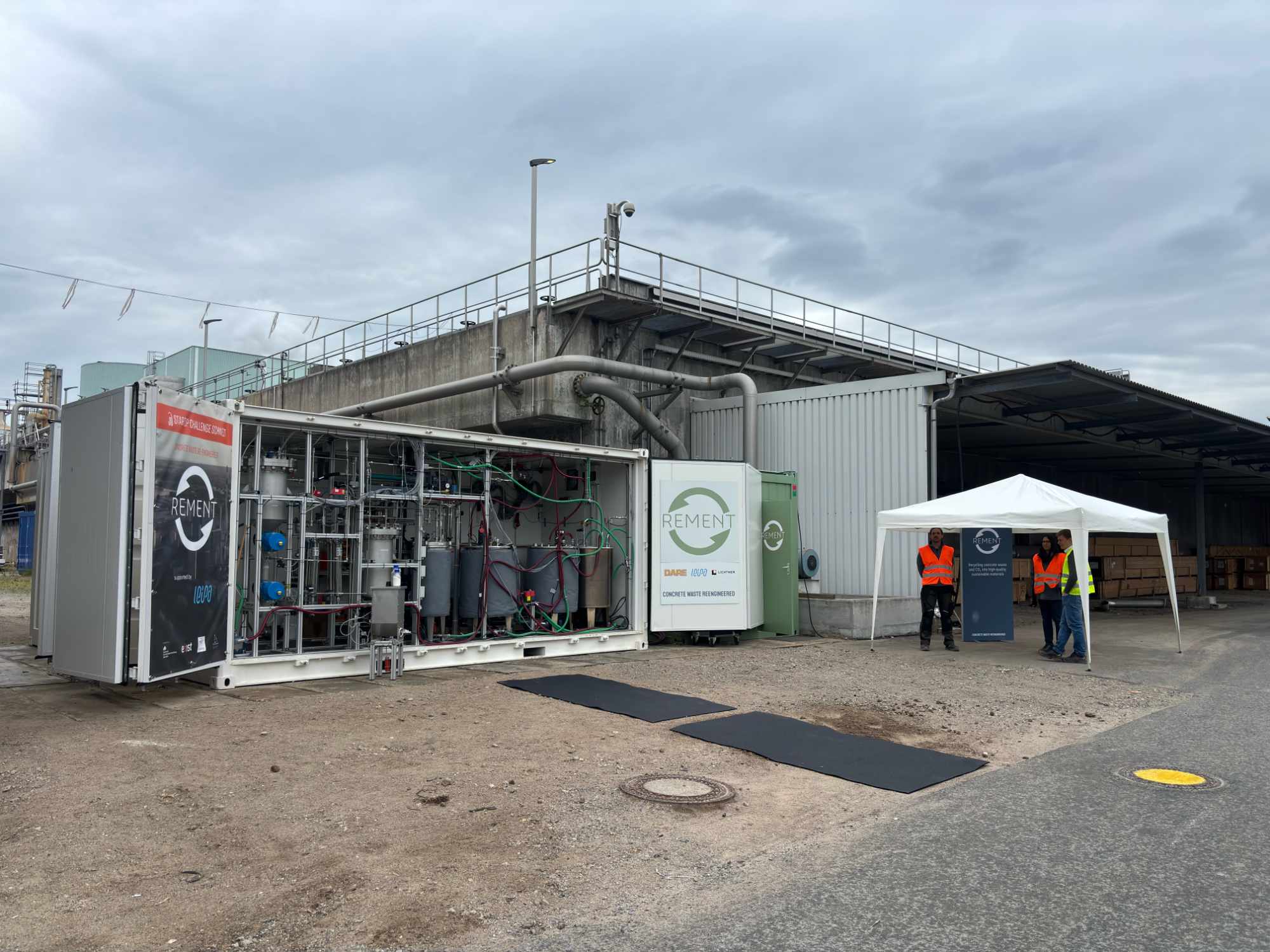
Rement develops a resource recovery technology for concrete waste that stores carbon as a co-benefit. Their chemical recycling process increases the material’s value by a factor of 30, with the potential to disrupt an industry currently dominated by mechanical downcycling.
Interview with Robert Schleinhege, CEO of Rement.
What are the main areas of activity of the company?
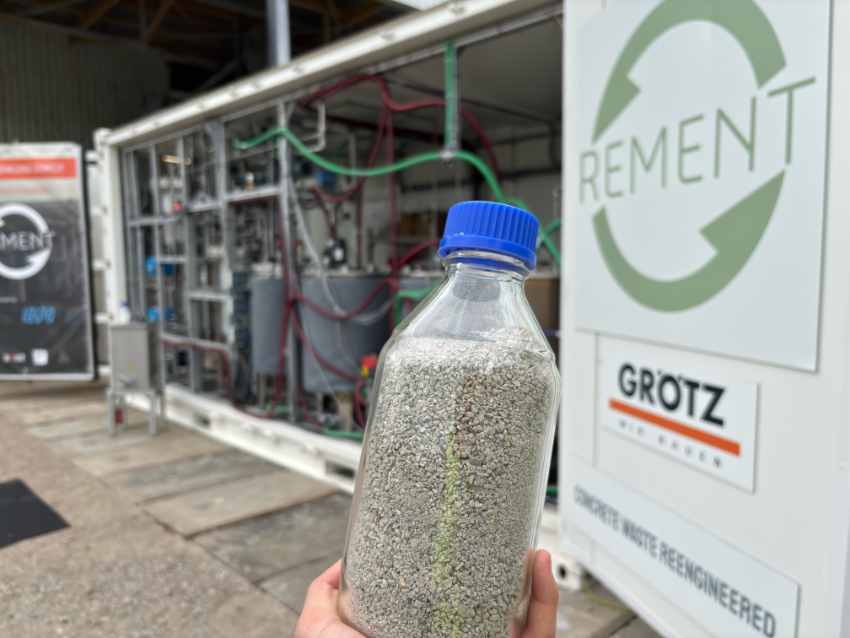
Robert Schleinhege: Our focus is on scaling and improving our concrete recycling process. The process treats finely crushed demolition concrete while storing CO2. In a first step, the cement stone is dissolved, allowing sand, an increasingly scarce resource, to be reclaimed and circulated back into the industry. In a second step, high-quality precipitated calcium carbonate (PCC), a color pigment and filler, is synthesized from the dissolved cement stone and CO2.
What’s the news about new products/services?
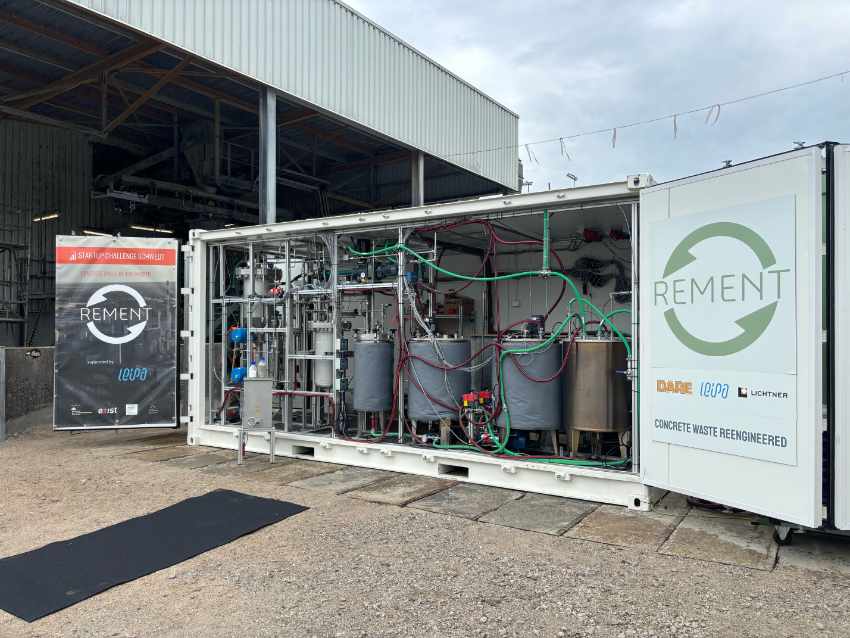
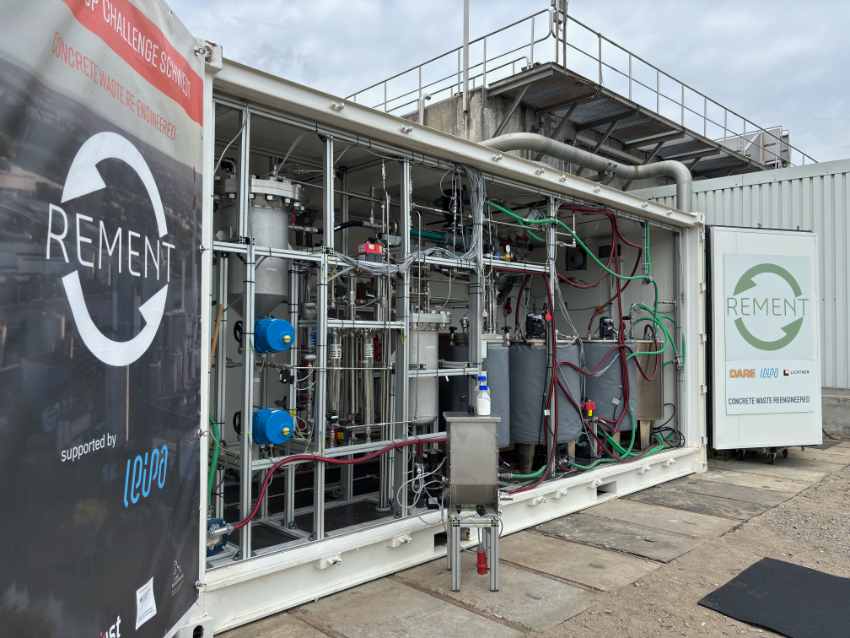
R.S: Rement recently commissioned a pilot plant in an industrial environment in Brandenburg, as part of a project with three industry partners from the construction, recycling, and paper sectors.
What are the ranges of products/services?
R.S: Our product is the concrete recycling plant itself, implemented at recycling companies specialized in construction and demolition waste. Our plants seamlessly extend the existing mechanical processing of concrete waste with an additional upcycling step.
What is the state of the market where you are currently active?
R.S: Most concrete waste is still processed mechanically only: crushed and sieved into different fraction sizes. Substituting gravel in road construction is the main application for this material. While that’s better than landfilling, it still amounts to downcycling. We want to unlock the full potential of this feedstock and help the value chain achieve decarbonization and defossilization.
What can you tell us about market trends?
R.S: Problem awareness clearly exists in the market. The public sector strongly encourages projects that contribute to decarbonizing the concrete value chain. However, the industry is still waiting for business cases that are attractive enough to stand on their own, without relying on green premiums.
What estimations do you have for the second half of 2026?
R.S: Our ambition is to further optimize product quality and the operational stability of our industrial pilot, before moving on to full industrial-scale proof-of-concepts (PoCs).