
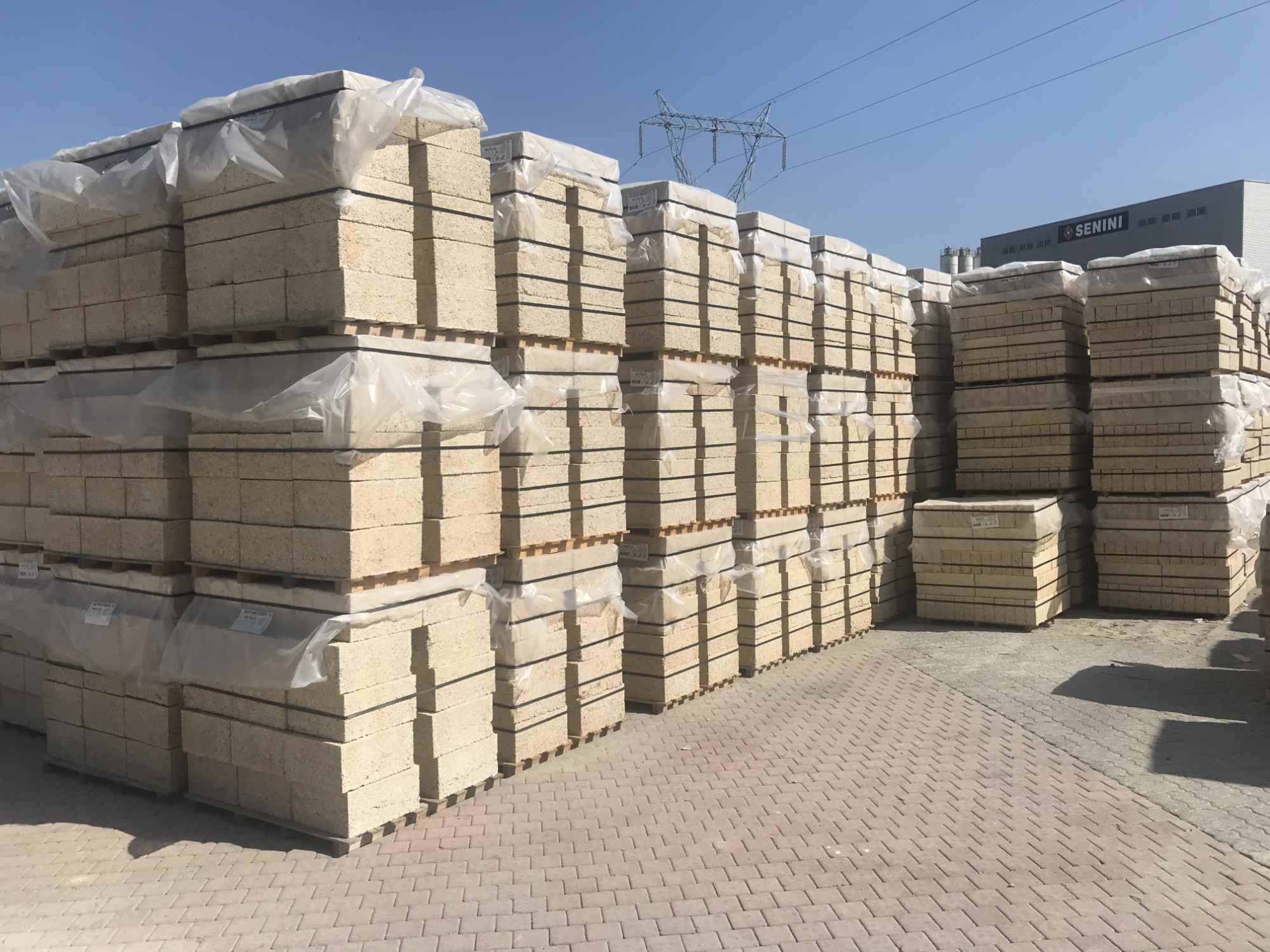
Tecnocanapa is the bio-construction product line developed by Senini, a company with over fifty years of history in the building materials sector, headquartered in Montichiari, in the province of Brescia. Born as the natural evolution of an industrial strategy long oriented towards innovation and sustainability, the company today represents the concrete response of a structured Italian manufacturer to the growing demands of the green construction market.
The core of the offering is the hemp-lime biocomposite: a combination of natural raw materials – hemp shiv (the woody core of the hemp plant), hydrated dolomitic lime and a probiotic additive based on symbiotic microorganisms – processed through the largest Italian plant dedicated to the industrial production of hemp-lime biocomposite materials.
The approach is unambiguously industrial: consistent quality, competitive pricing, scalable production. Not green craftsmanship, but natural materials engineering.
Interview with Paolo Ronchetti, Sales and Marketing Director at Tecnocanapa.
What are the main areas of activity of the company?
Paolo Ronchetti: Tecnocanapa operates across three macro application areas covering the entire lifecycle of a building. The first is new construction: the system enables the complete realisation of the building envelope – infill and partition walls, roofs, floor screeds and structural floors — using biocomposite materials that are mutually compatible and suitable for any load-bearing structure in reinforced concrete, timber or steel. The second area is the energy upgrade and restoration of existing building stock: internal and external insulating counter-walls, external insulation composite systems, interventions on roofs and loft spaces, with solutions specifically designed for historic and architecturally significant buildings, where vapour permeability and chemical compatibility with original substrates are non-negotiable requirements. The third area covers plasters and finishes, with a range of lime-hemp products that extends material coherence through to the surface layer, ensuring continuity in vapour permeability performance, hygrothermal regulation and indoor air quality.
What’s the news about new products/services?
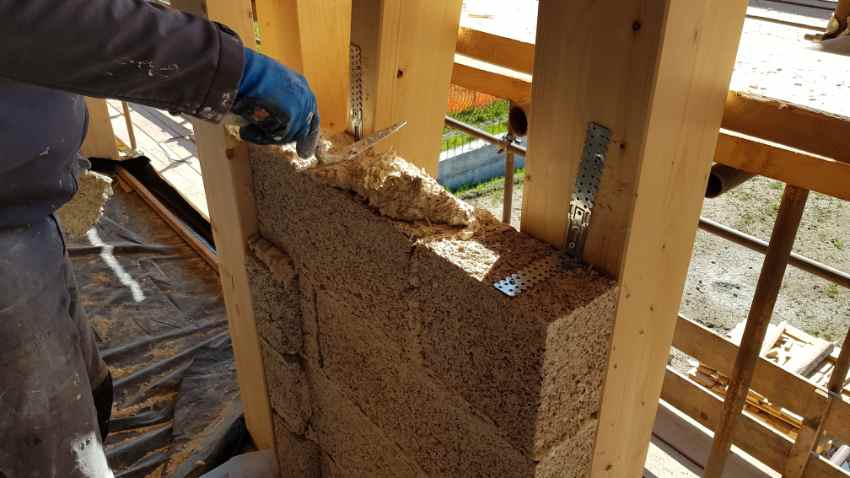
P.R: Tecnocanapa introduces several significant developments. On the Biomattone® front — the prefabricated hemp-lime block that is the flagship product of the range — three new formats have been launched: BA20, BA40 and BA50. The expansion of the dimensional line responds to concrete site requirements: improved laying yield, reduced installation time and lower transport incidence, with both economic and environmental benefits. On the loose-mix products side, Bio Beton® Jet makes its catalogue debut — a formulation optimised for mechanical spray application, which broadens the range of uses in contexts where speed of installation is critical. On the technical documentation front — often underestimated but decisive for adoption by professional practices — Tecnocanapa has consolidated its online technical area with downloadable construction details and product data sheets compliant with the Italian Minimum Environmental Criteria (CAM, Decree of 23 June 2022 no. 256), thereby opening access to the public procurement market.
What are the ranges of products/services?
P.R: The Tecnocanapa range is organised into three families. The first, insulating materials, includes Biomattone® (prefabricated masonry block), Bio Beton® in both ready-to-use and site-mix versions, Canafiber Intercapedine and Canafiber Cappotto panels in industrial hemp fibre, and the dedicated laying mortars — Malta e Canapa (classified M5 per EN 998-2) and Malta Pronta, a dolomitic-based mortar free from hydraulic binders. The second family groups the loose products for on-site mixing: Coarse Hemp Shiv 0-25, Fine Hemp Shiv 0-6, Hemp Powder, Natural Dolomitic Binder and Probiotic Additive, designed for those who prefer to formulate the hempcrete mix directly on site or for bespoke applications. The third family comprises plasters and finishes: Intonaco e Canapa, Bio Beton® 500 Venezia, ICN – Natural Lime Plaster, Stabilitura Naturale Traspirante Plus, Malta Fine, Canapulino and Canaposo. The latter two, based on 18-month-aged lime putty, represent the aesthetic pinnacle of the range, available in natural tones or with earth pigments and brick dust.
What is the state of the market where you are currently active?
P.R: The sustainable construction market in Italy is going through a consolidation phase following the strong acceleration driven by the Superbonus incentive scheme. Demand for natural and bio-based materials is structurally growing, driven by three converging factors: European regulatory pressure — with the reformed EPBD directive imposing increasingly stringent NZEB standards for new builds and progressive mandatory renovation of the existing stock —, growing awareness among private clients of indoor air quality and hygrothermal comfort, and the mainstreaming of Minimum Environmental Criteria (CAM) in public procurement, which for the first time make certified recycled content a condition of access rather than merely a competitive advantage. In this context, Tecnocanapa operates in both the private residential and commercial and hospitality segments — as demonstrated by the documented projects, from the alpine boutique hotel in Livigno to the residential developments in the Puglia region — with an international presence extending to the United Kingdom, Australia, USA, Japan and Sweden, markets where the culture of building with natural materials has deeper roots and a more mature professional demand.
What can you tell us about market trends?
P.R: Three trends deserve particular attention. The first is the convergence between energy performance and indoor health: long treated as separate objectives — efficiency on one side, air quality and hygrothermal comfort on the other — these dimensions are finally finding a common design synthesis, and hemp-lime materials are among the few that satisfy both simultaneously, without vapour barriers, without synthetic materials and without compromising breathability. The second trend is the growing focus on embodied carbon in building environmental assessment processes. LCA tools and EPDs are becoming design requirements even outside voluntary certification schemes, and in this scenario a carbon-negative material — with an EPD verified by the Politecnico di Milano and ICMQ — represents a technical argument that is difficult to counter. The third trend concerns the restoration of historic building stock: in Italy, where over 70% of buildings were constructed before energy efficiency regulations came into force, demand for solutions compatible with historic masonry in brick, tuff and stone is expanding rapidly, and natural hydraulic lime remains the reference binder for correct conservation interventions.
What are the most innovative products/services marketed?
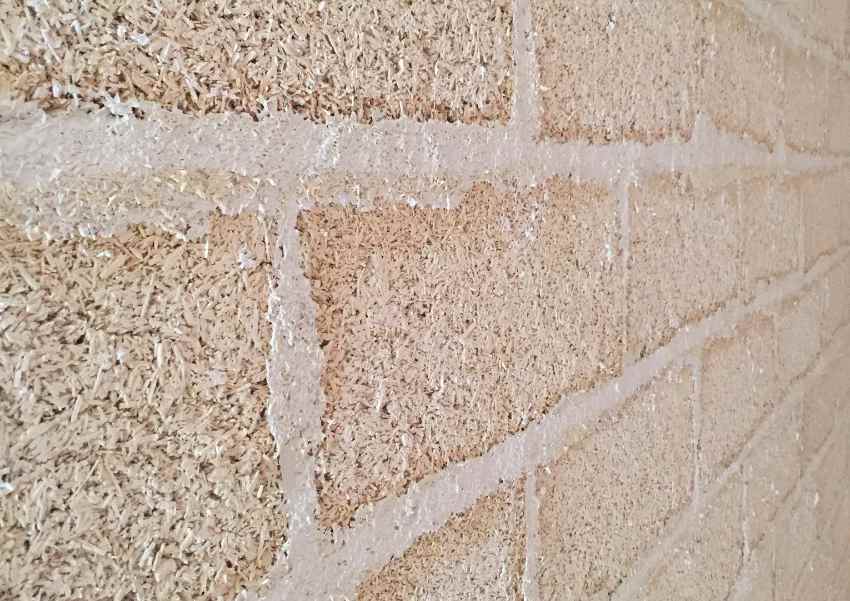
P.R: The most innovative product in the range remains Biomattone®, not so much for the raw material itself — hemp and lime have a millenary history — but for its industrialisation. Being a standardised prefabricated block, available in multiple formats, with certified performance and a verified EPD qualifying it as carbon negative, makes it the only product on the Italian market capable of combining the ease of laying of a traditional masonry unit with a regenerative environmental profile.
Equally significant is the Bio Solaio® solution: the application of Biomattone® as a replacement for traditional reinforced clay block floors in structural floor systems, with steel reinforcement and a concrete topping, enables the envelope to be completed in a consistent manner — thermally, acoustically and hygrothermally — across all six surfaces of the building, eliminating the performance discontinuity that frequently undermines hybrid interventions. On the plaster side, the hemp-shiv-based material cycle represents a systemic innovation: the ability to apply a complete stratigraphic build-up — from base coat to finish — entirely in lime and hemp, without hydraulic binders in the final layer, maximises breathability and guarantees a physical-chemical coherence that no mixed lime-cement system can match.
What estimations do you have for the second half of 2026?
P.R: The second half of 2026 presents encouraging signals on multiple fronts. On the regulatory side, the national transposition of the EPBD directive and the update of the implementing decrees on minimum energy performance requirements are expected before year-end: any tightening of standards has historically translated into an acceleration in demand for high-insulation, low-environmental-impact solutions, a market in which Tecnocanapa is well positioned. On the public procurement front, the progressive integration of CAM requirements into tender specifications – supported by the PNRR and the renovation programmes for school and healthcare building stock – opens concrete opportunities for a production system that has already completed the required certification process.
At the international level, the growing presence in Northern European and Anglo-Saxon markets, where embodied carbon regulation is more advanced, points to significant development potential. The stated objective is to consolidate a position as the technical reference for designers and contractors seeking to adopt bio-based solutions without sacrificing performance certainty: not an alternative material, but the building material of the third millennium.