
SAFERTOS® by Wittenstein High Integrity Systems (WHIS) is a certified, safety-critical real-time operating system built on the FreeRTOS functional model, letting developers prototype on FreeRTOS and migrate seamlessly to a certified environment. Certified to IEC 61508 SIL 3, ISO 26262 ASIL D, and DO-178C, SAFERTOS® has recorded zero in-field incidents since WHIS began developing safety-critical RTOS solutions in 2005.
We spoke with Maria Brown, Campaign Manager at Wittenstein, about what differentiates SAFERTOS® in performance, certification, and total cost of ownership.
What are the primary performance characteristics that distinguish your product/solution from competing offerings in your segment?
Maria Brown: SAFERTOS® combines certified safety integrity, deterministic real‑time performance, and minimal resource usage. A key differentiator is that SAFERTOS® is designed and verified using the customer specific processor/compiler combination, down to the version of the compiler and the compiler configuration settings. This approach is the only way to ensure correct operation, it’s also why there has never been an in-field incident involving SAFERTOS®.
All design and verification artefacts are supplied in the Design Assurance Pack (DAP) along with the software test harness and full SAFERTOS® source code. This gives complete transparency over the complete design life cycle for each SAFERTOS® variant delivered.
Which technological innovations or features provide your solution with a competitive advantage in industrial applications?
M.B: SAFERTOS® is based on the FreeRTOS functional model, one of the world’s most popular RTOSes, but compelety redesigned for safety. This allows developers to use FreeRTOS, a free open source operating system distributed under a MIT license to prototype their applications. Then migrate to SAFERTOS® at the start of the formal development process.
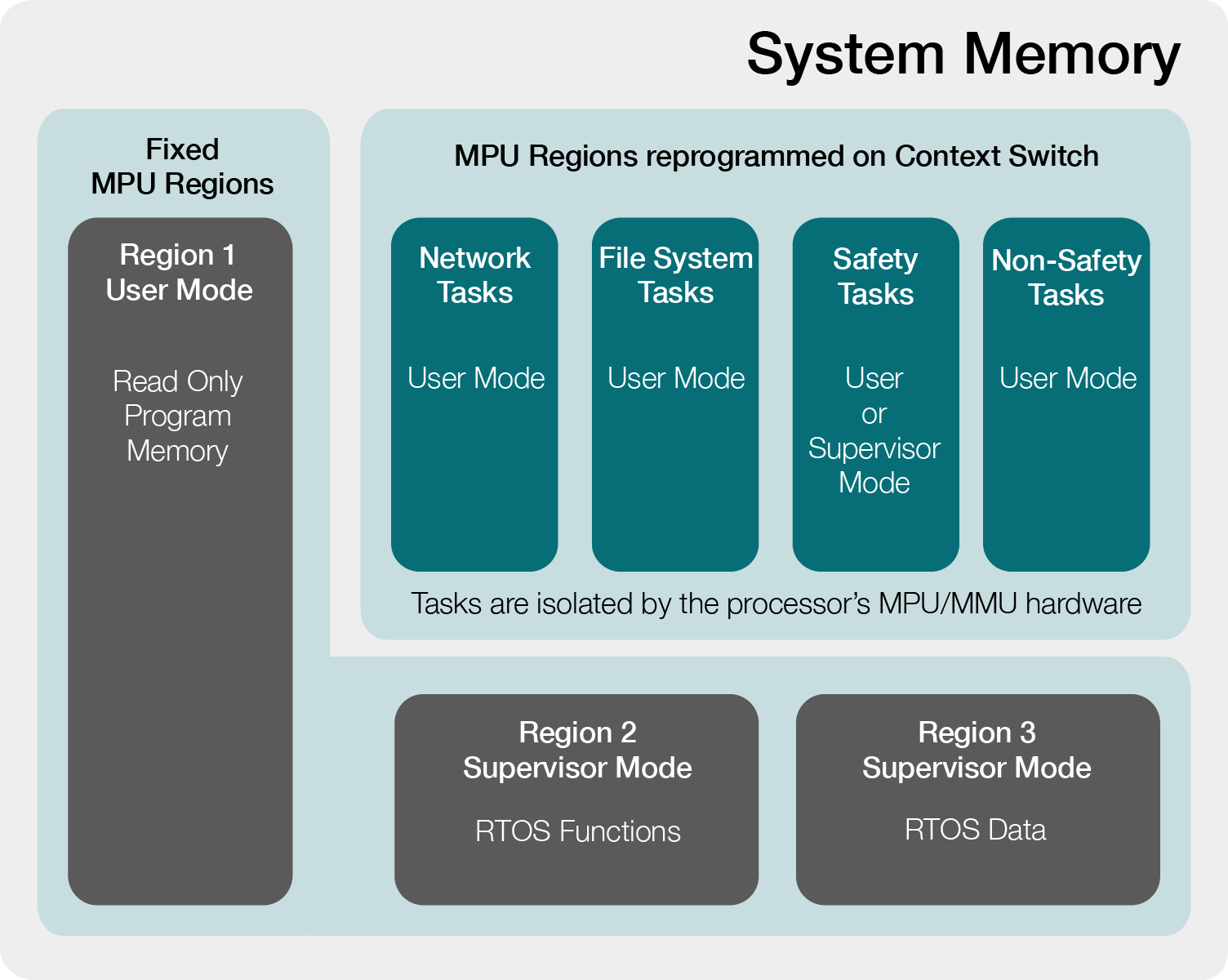
SAFERTOS® also supports the spatial separation of Tasks, allowing software of different Safety Integrity Levels to co-exist on the same processor. Without this ability, software operating on a single processor would all need to be written to the highest Safety Integrity Level, which could be costly. But by using spatial separation, the safety critical code section can be made concise and isolated from commercial grade software.
How does your product address reliability, durability, and lifecycle performance compared to industry standards?
M.B: SAFERTOS® addresses these challenges through rigorous quality assurance, independent certification, and disciplined development processes. Each stage of the lifecycle is independently verified by SQA with formal gate reviews. WHIS is certified to ISO 9001 and works with TÜV SÜD to certify individual SAFERTOS® variants to standards including IEC 61508 and ISO 26262. Combined with 100% MC/DC coverage and test cases derived from requirements and design, this ensures fully verified software with no dead or erroneous code, and reliable performance in regulated environments.
What role do efficiency metrics (e.g., energy consumption, throughput, precision) play in differentiating your solution?
M.B: RTOS performance metrics depend on a range of factors, including clock speed, memory performance, and compiler optimisation levels. Developers often focus on context switch times, but these can be difficult to compare due to varying definitions of what a context switch includes. At WHIS, we optimise SAFERTOS® for maximum efficiency in clock cycles. However, as a safety-focused RTOS, SAFERTOS® also incorporates self-test functionality to ensure that no incorrect operations occur.
With regards to energy consumption, WHIS has demonstrated by using a sample application that adding a Wait For Interrupt (WFI) instruction to the RTOS idle task on an ARM Cortex‑M processor can reduce energy consumption by over 37% without affecting real‑time behaviour or safety, equating to roughly 480–528 MWh saved annually across one million devices.
How does your solution integrate with existing systems, platforms, or Industry 4.0 environments (e.g., IoT, automation, data analytics)?
M.B: SAFERTOS® supports a wide range of standard toolchains, IDEs, and industrial middleware, enabling mixed‑criticality systems where real‑time safety‑critical functions coexist with connectivity, monitoring, and Edge AI processing, while keeping certification boundaries clearly defined and protected.
Integration is further strengthened through our close collaboration with a broad ecosystem of industry partners, ranging from leading silicon vendors to specialist tool providers. As a processor‑ and compiler‑agnostic RTOS, SAFERTOS® can be tailored to a wide range of hardware and software environments, ensuring flexibility and long‑term compatibility across diverse platforms.
What customization or scalability options do you offer to meet diverse customer requirements across industries?
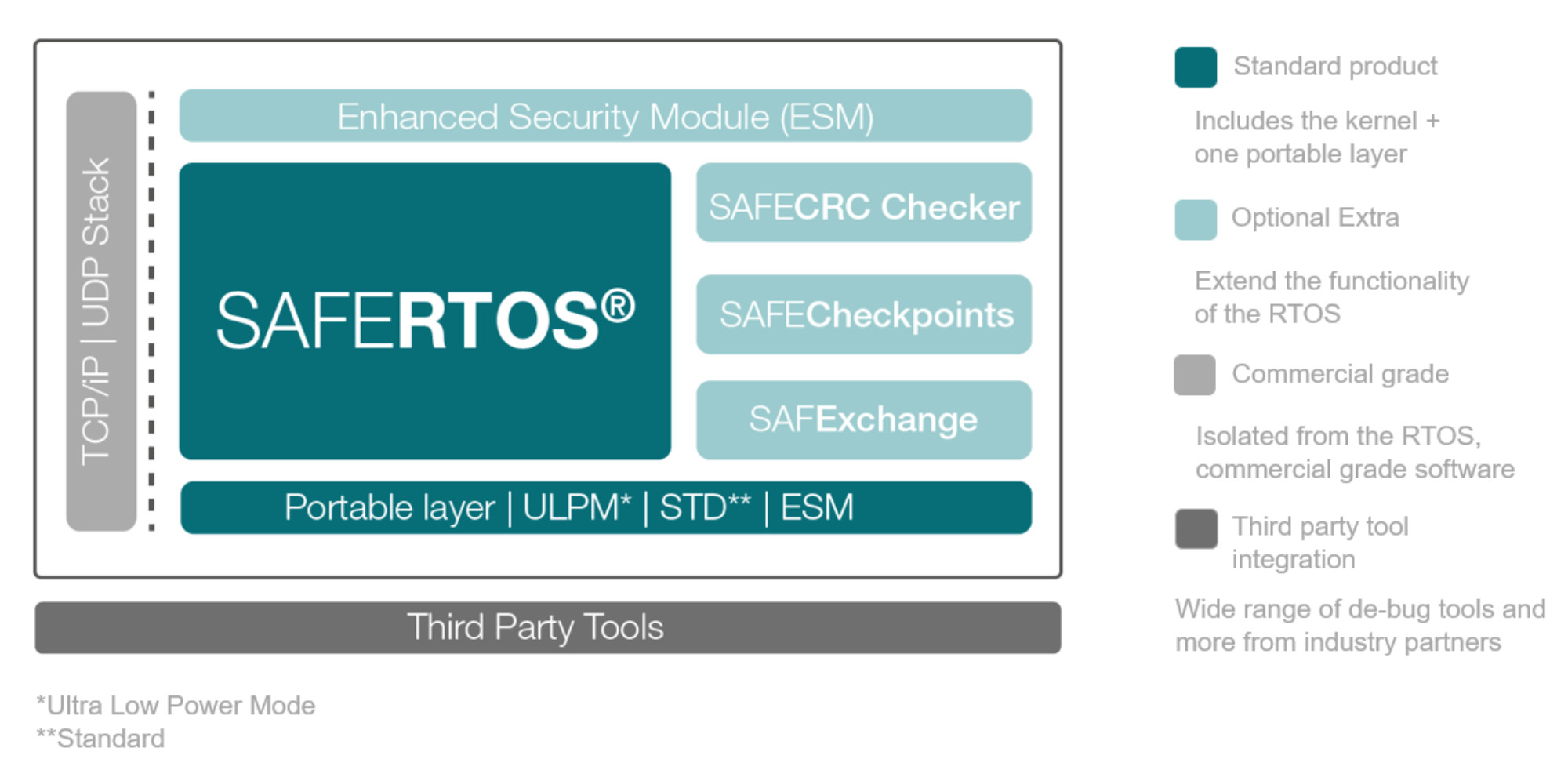
M.B: WHIS focuses on delivering safety-critical RTOS solutions and supporting services, enabling customers to meet all embedded RTOS needs from a single source. SAFERTOS® uses a two-layer architecture, with the core SAFERTOS® code (around 80% of the codebase) and a portable layer.
The core code and functionality remain the same, with only the portable layer needing adapting for different hardware. This provides a common set of APIs that can be used across all SAFERTOS® ports for various processors.
WHIS also supplies a range of plug-ins that extend the functionality of SAFERTOS® for specific use cases. In addition, WHIS provides an Enhanced Security Module for applications that are exposed to cyber security risks.
How do safety, compliance, and certification standards influence your product design and market positioning?
M.B: Safety, compliance, and certification are central to WHIS. Founded in 1999 to support aerospace applications, WHIS has extensive real-world experience in aerospace and medical sectors. Since transitioning to a safety-critical RTOS provider in 2005, WHIS has achieved key certifications for SAFERTOS®, including IEC 61508 SIL 3 (2007), FDA 510(k) and IEC 62304 (2008), ISO 26262 ASIL D (2017), and DO-178C (2019).
WHIS uses TÜV SÜD for certification services, with our customers using a wide range of certification bodies. All our customers have achieved certification of SAFERTOS® within their products.
In what ways do your after-sales services (technical support, maintenance, training) enhance the overall value proposition of your solution?
M.B: WHIS provides 12 months of free Support and Maintenance with SAFERTOS® to ensure developers get the best possible start, with optional annual renewal thereafter. SAFERTOS® training is available on-site or remotely, with on-site sessions recommended for better engagement with one of our senior engineers. WHIS also offers consultancy services to help optimise design and improve project outcomes.
How do total cost of ownership (TCO) and return on investment (ROI) compare with alternative solutions on the market?
M.B: WHIS offers a royalty‑free, perpetual license with no production limits for a single up‑front fee. The license allows an unlimited number of developers from a specific Development Unit, and third parties undertaking work on behalf of the Licensee, access to the code. SAFERTOS® is supplied with 12 months of Support and Maintenance for free, enabling easy adoption. This hassle-free approach to licensing reduces the overall cost of ownership.
As SAFERTOS® has been designed to comply with some of the toughest safety standards in the world, it has resulted in a very high-quality product, with no in-field incidents reported.
Finding engineers who can use SAFERTOS® is straight forward, resulting in lower recruitment and training costs. SAFERTOS® is based on the FreeRTOS functional model, so engineers can easily convert to use SAFERTOS®.
What feedback from customers or industry use cases best demonstrates the unique strengths of your product/solution?
M.B: Ease of adoption, the ability to prototype using FreeRTOS and then convert to SAFERTOS® at the start of formal development.
Ease of use, SAFERTOS® is supplied with clear documentation and manuals, supported by a myriad of information on the WHIS website.
Ease of certification, the Safety Manual clearly defines how SAFERTOS® should be installed and integrated. Following the detailed instructions also generates the evidence required by third party auditors.
Broad range of processors and compliers supported, which allows companies to single source all their embedded RTOS needs from WHIS.