
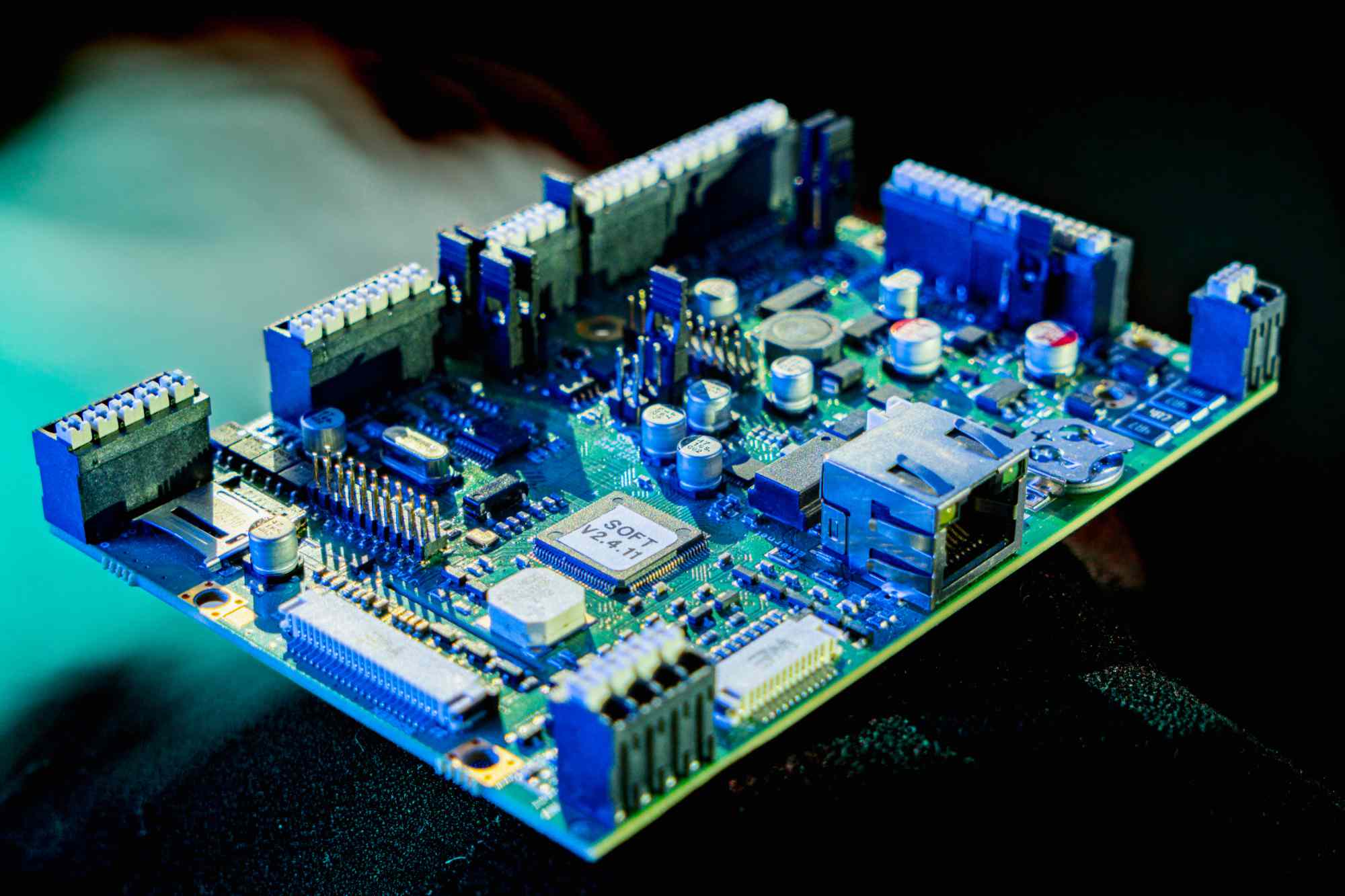
Synov, a French electronics engineering and manufacturing group founded in 1949, has grown into a 14-entity, €170 million European platform combining EMS production with in-house ODM engineering. Following its October 2025 acquisitions of Italian power-electronics specialist Prima Electro and security firm ATLS, Synov is expanding into high-power industrial electrification, defence, and energy infrastructure.
We spoke with Alix Joseph, Group Sales & Marketing Director, about the company’s diversified manufacturing model, current market trends, and outlook for 2026.
A brief description of the company and its activities
Alix Joseph: With its first entity founded in 1949, Synov is a French based electronics engineering and manufacturing group, with an European footprint.
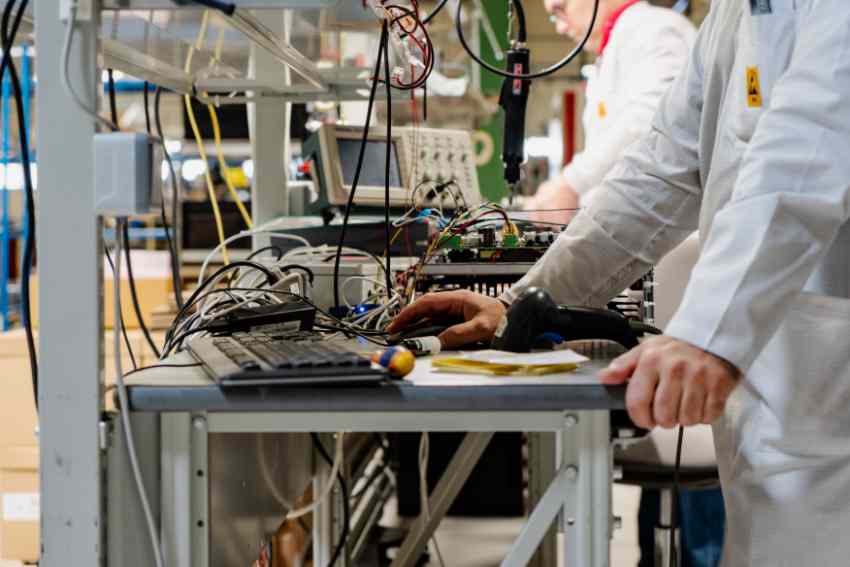
The group specializes in the design, industrialisation and manufacture of customised electronic and electrical systems. We support customers throughout the entire product lifecycle, from initial specifications and electronic, mechanical and software development to prototyping, qualification, serial production and operational maintenance.
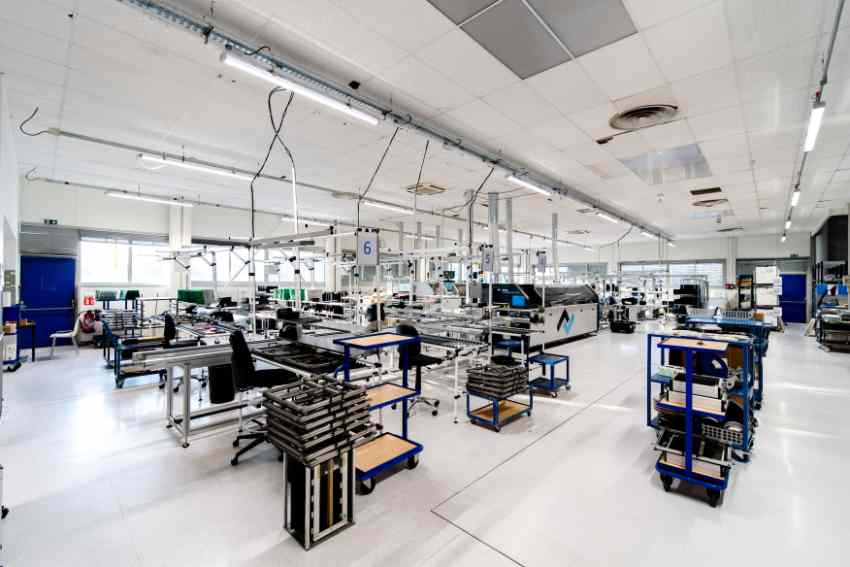
Today, Synov brings together 14 complementary industrial entities, more than 1,000 employees, including over 130 engineers, and generates more than €170 million in revenue. The Group has over 40,000 m² of production and laboratory facilities and an expanding European presence, notably in France and Italy.
Our defining characteristic is the combination of an EMS manufacturing platform with strong ODM engineering capabilities. We do not simply manufacture electronic boards, we help customers design, secure, industrialise and maintain complete systems for demanding and often mission-critical applications.
What are the main areas of activity of the company?
A.J: Our activities are organised around two complementary areas.
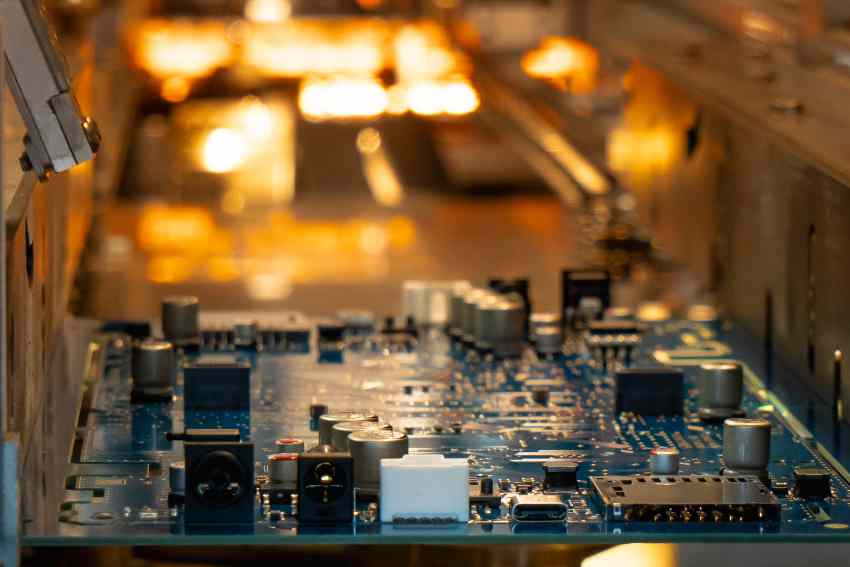
The first is customised electronics, combining design and development, industrialisation, manufacturing and lifecycle services. This includes electronic boards, embedded hardware and software, power electronics, cable assemblies and wiring harnesses, mechatronic enclosures, complete equipment integration, connectivity and IoT solutions.
The second covers proprietary solutions for building management, Smart City infrastructure, public-lighting control, intrusion detection, remote alarm transmission and connected security.
Synov serves diversified strategic markets, including defence and aerospace, energy and nuclear, transportation and mobility, healthcare and medical devices, industrial equipment, agriculture and environmental systems, HVAC, IoT and smart buildings. This diversification gives the Group resilience while allowing each subsidiary to retain specialised technical expertise and close customer relationships.
What is the news about new products/services?
A.J: The most important recent development is the integration of Prima Electro, an Italian specialist in power electronics, embedded control and industrial automation. This acquisition, closed in October 2025 marks an important step in Synov’s European development and significantly expands our ability to address high-power and mission-critical applications.
Our combined offering now includes power-conversion systems, advanced control electronics, multi-axis and multi-module architectures, regenerative testing solutions and engineering for industrial electrification. Prima Electro also brings expertise in applying artificial intelligence to battery energy storage and energy-management systems.
The acquisition of ATLS at the same period has simultaneously strengthened our security portfolio, particularly in intrusion detection, acoustic deterrence and connected alert systems.
We are also expanding our “Design-to-Future” approach. This service integrates design-to-cost, manufacturability, testability, cybersecurity, component availability, regulatory constraints and maintainability from the beginning of a project. The objective is no longer merely to design a functioning product, but to deliver one that remains reliable, manufacturable and economically sustainable throughout its lifecycle.
What are the ranges of products/services?
A.J: Synov’s offer covers the complete electronic value chain:
- Electronic, mechanical and embedded-software design;
- Prototyping, validation, certification support and design-to-cost;
- Industrialization, test strategy and production-process development;
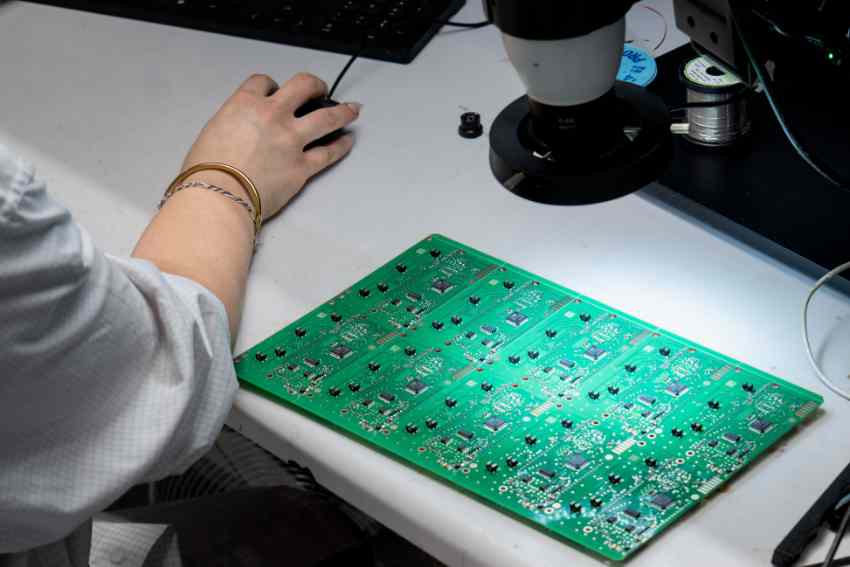
- PCB assembly, from prototypes and small batches to serial production;
- Cable assemblies, wiring harnesses and electrical cabinets;
- Mechatronic integration and complete finished-product assembly;
- Power electronics, motion control and energy-conversion systems;
- IoT connectivity using technologies such as LoRa, cellular, Bluetooth and Wi-Fi;
- Building-management, public-lighting and Smart City solutions;
- Intrusion detection and secure alarm-transmission equipment;
- Supply-chain management, component-obsolescence management, repair and long-term operational maintenance.
Most of our solutions are customised. Consequently, our true product is not a catalogue item but a controlled industrial process capable of transforming a customer’s technical requirement into a reliable, certified and repeatable system.
What is the state of the market where you are currently active?
A.J: The European electronics market is contrasted. Some traditional industrial segments remain cautious, with customers managing inventories closely and postponing non-essential investments. At the same time, demand is strong in defence, aerospace, energy infrastructure, electrification, railway modernisation and cybersecurity-related applications.
Component availability has generally improved compared with the severe shortages of previous years, but the market has not returned to its former simplicity. Lead times, geopolitical exposure, allocation risks and component obsolescence still require active management.
Customers are therefore looking beyond unit price. They increasingly evaluate suppliers according to engineering capability, financial and industrial robustness, supply-chain transparency, cybersecurity, regulatory compliance and their ability to guarantee production over ten or twenty years. This development favours structured European partners with both local responsiveness and sufficient industrial scale.
What can you tell us about market trends?
A.J: Several structural trends are reshaping our industry. The first is the electrification of equipment and infrastructure, which is increasing demand for power conversion, battery-management, motor-control and energy-optimisation technologies.
The second is the growing electronic content of almost every industrial product. Equipment is becoming connected, software-driven and capable of collecting and analysing data. This creates opportunities, but also greater requirements in cybersecurity, functional safety and software lifecycle management.
A third trend is the search for European technological sovereignty. Recent supply disruptions and geopolitical tensions have demonstrated that purchasing electronics solely on the basis of the lowest immediate cost can create substantial long-term risks. Customers increasingly want resilient, traceable and geographically diversified supply chains.
Finally, environmental performance is becoming an engineering issue rather than simply a reporting exercise. Repairability, energy efficiency, component selection, product lifetime and obsolescence management must now be considered from the design stage.
What are the most innovative products/services marketed?
A.J: Among our most innovative developments are high-power, synchronised multi-module architectures. These systems distribute power and control across several coordinated modules, providing scalability, redundancy and easier maintenance for demanding industrial applications.
We are also developing active power-filtering and regenerative test solutions. By recovering and recirculating energy during converter testing, these systems reduce energy consumption while reproducing realistic operating conditions.
Another promising field combines artificial intelligence, battery storage, renewable-energy generation and electric-vehicle charging. Predictive control can optimise when energy is stored, consumed or returned to the network, improving both economic and environmental performance.
Innovation at Synov is nevertheless not limited to a particular product. It also lies in our ability to combine electronics, embedded software, mechanics, connectivity, industrialisation and long-term manufacturing within a single accountable organisation.
What estimations do you have for the second half of 2026?
A.J: For the second half of 2026, we expect market conditions to remain uneven but globally favourable to Synov’s positioning. Defence and aerospace, energy, electrification and critical infrastructure should remain the strongest growth drivers, while some conventional industrial markets may recover more gradually.
Our priorities will be to accelerate commercial and technical synergies with Prima Electro, develop cross-border projects, strengthen our presence in strategic European markets and convert our expanded engineering capabilities into new serial-production programmes.
We also expect customers to intensify supplier consolidation. They want fewer partners, but those partners must provide broader expertise, multiple production options and strong lifecycle support. Synov is well positioned to benefit from this movement. Our objective is sustainable growth supported by technical differentiation, operational excellence and long-term customer partnerships.