
While concrete durability is traditionally designed on paper through mix recipes and cover depth, its long-term structural integrity is determined during the first few hours of placement on site. Unseen voids, premature formwork stripping, and improper water-to-cement ratios can compromise performance long before surface flaws appear. Vemaventuri GmbH, a sensor technology subsidiary of the PERI Group, addresses this compliance gap by digitizing the internal hydration process of fresh concrete. By combining embedded sensors (tracking temperature, maturity, compaction, and formwork pressure) with centralized cloud analytics, Vemaventuri delivers real-time site verification.
Michel Seeger, CEO of Vemaventuri, details the practical deployment of their IoT platform on major infrastructure projects like HS2, the impact of Eurocode 2 revisions, and how live sensor data mitigates field rework costs.
Vemaventuri GmbH, part of the PERI Group, develops sensor-based monitoring systems that track what actually happens inside curing concrete, from water content, formwork pressure, fill level, compaction to temperature and maturity, from the moment it is placed to the moment it can safely be loaded. We sat down with CEO Michel Seeger to talk about durability, standards, and what “built to last” really means once the concrete arrives on site.
Let’s start simple. What does Vemaventuri actually do, and what drives the company?
Michel Seeger: We build sensor systems that show what is really happening inside concrete, rather than what a data sheet or a lab cube suggests should be happening. That includes the water-to-cement ratio at the point of pour, formwork pressure, fill level, compaction, as well as temperature and maturity. As part of the PERI Group, we sit close to the people who actually build the formwork and pour the concrete, which keeps us honest about what’s practical on a real site, not just in a lab. Our goal is simple: give engineers and contractors a live, verifiable picture of the concrete they are responsible for, instead of an assumption.

Our theme for this issue is ‘Built to Last.’ In concrete construction specifically, where does long-term durability actually get decided?
M.S: Almost everyone assumes it’s decided at the design desk, the mix design, the cover, the reinforcement. And that’s necessary, but it’s not sufficient. Durability is also decided in the first few hours and days on site: how much water actually went into the mix at the point of discharge, how warm the concrete got while it hydrated, whether it was properly consolidated all the way through. Not all of that is visible on the finished surface. A wall that looks perfect can still have a compliance gap nobody can see. That gap between what was assumed on paper and what actually happened on site is exactly where we operate.
Concrete design standards are evolving too. Eurocode 2 was substantially revised in 2023. Does that change what you do?
M.S: It sharpens the point, rather than creating it. The new edition leans much more on outcomes and performance than on fixed, prescriptive recipes, which is a sensible direction, but it only works if the data behind those outcomes is actually real. To be clear: Eurocode 2 does not require anyone to put a sensor in their concrete. It requires an outcome. What it does not tell you is how to demonstrate, after the fact, that the assumptions the design relied on actually held on site. That is the gap our systems close, not because a code demands it, but because it is the only way to turn an assumption into a documented fact.
You’ve built out a fairly broad portfolio — TEMO, PREMO, PHONO, SONO Hub, ISC LINK. How does that fit together?
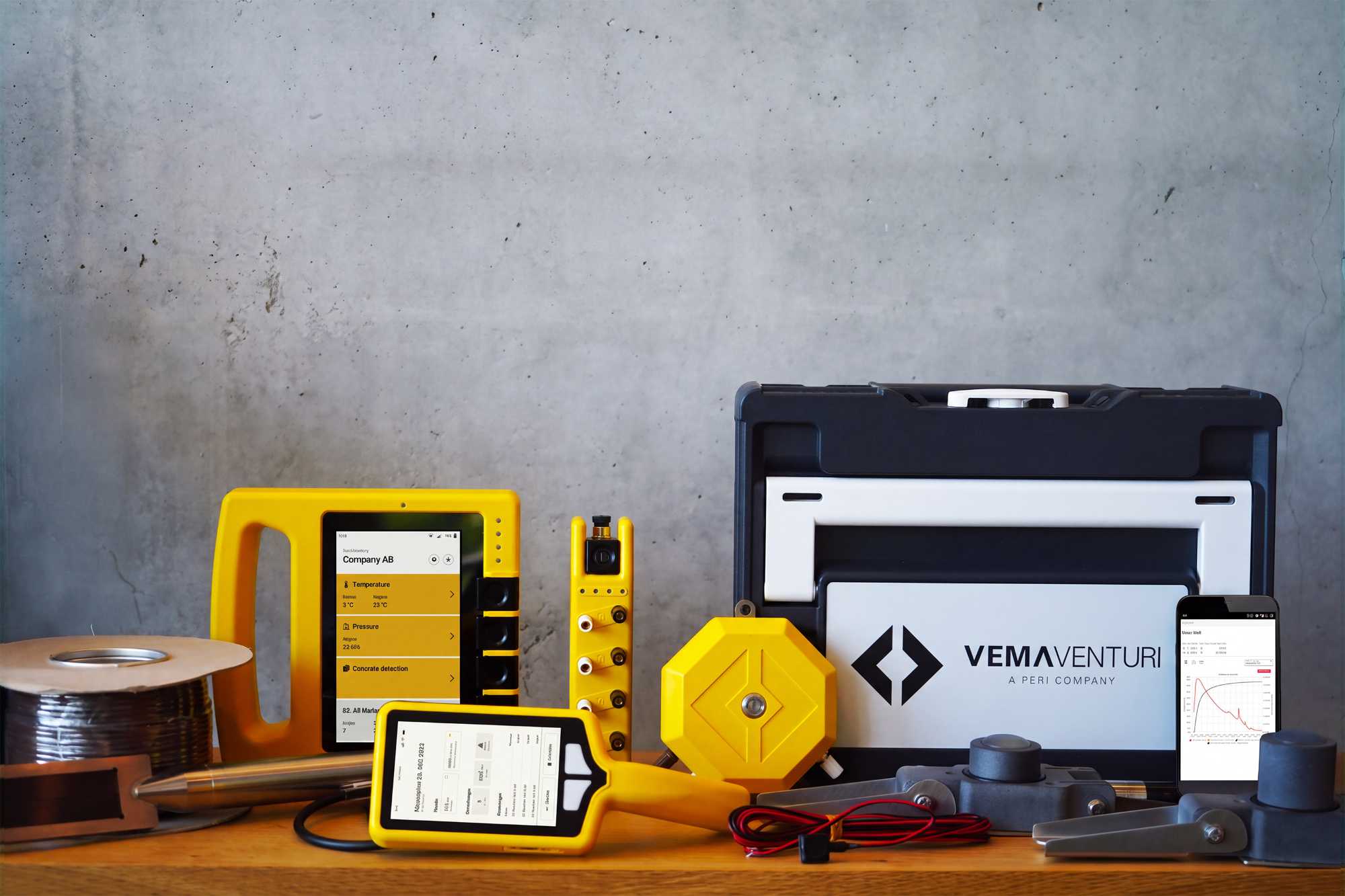
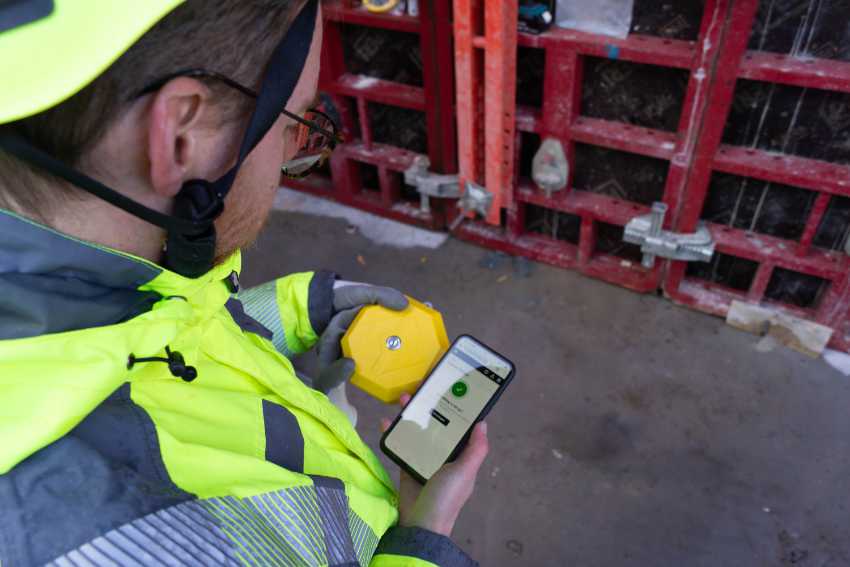
M.S: Each system answers a specific question on site, but what we’re really building is a platform for data. The sensors are the means, not the end. SONO Hub determines the water-to-cement ratio of fresh concrete at the point of discharge, before it’s placed. PREMO measures formwork pressure directly, which is a different question about the formwork system itself. PHONO actually covers two questions with the same sensor: fill level, whether concrete has genuinely reached and filled a given point, and compaction, whether it’s been properly consolidated once it’s there, catching voids before they become a structural or aesthetic problem.
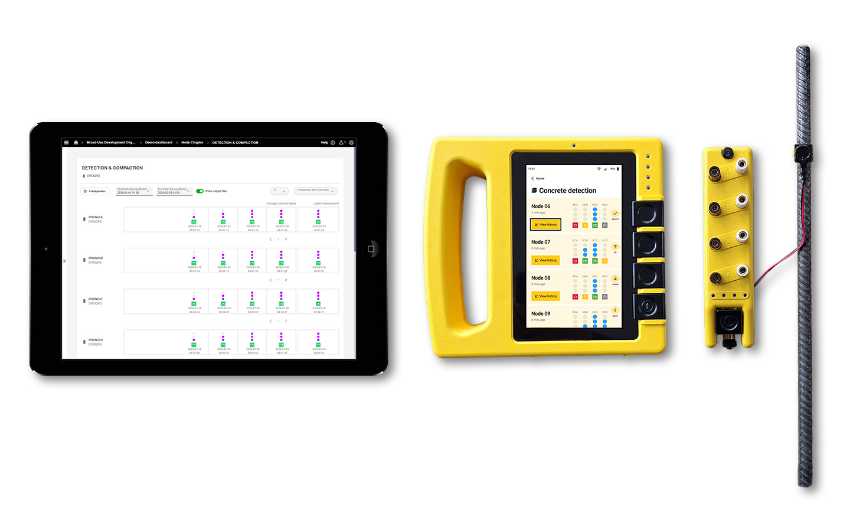
TEMO tracks temperature and concrete maturity, which tells you when it’s actually safe to strike formwork or transfer load, not when the calendar says it might be. And ISC LINK combines two of these, PREMO’s formwork pressure monitoring and TEMO’s temperature and maturity monitoring, in a single unit. What sets it apart is that it’s the only one of our systems using digital thermocouples, for higher measurement accuracy, and it has built-in cellular connectivity, so it doesn’t need a separate Hub to get data off site. Some of them do overlap on purpose. ISC LINK and our Hub & Node setup both cover the same ground, formwork pressure plus temperature and maturity, but which one you use depends on the site. ISC LINK relies on mobile signal to send data; underground, or wherever there’s no reliable connectivity, that’s not an option, so Hub & Node takes over instead. None of that is really about the hardware, though. Whichever sensor is on site, the data lands in the same place, on the same platform, so it compounds instead of sitting in separate silos. We didn’t design one universal sensor; we designed one data platform with a set of applications that fit whatever conditions the site actually gives us.
Can you give us a concrete example, pun intended, of where this made a real difference?
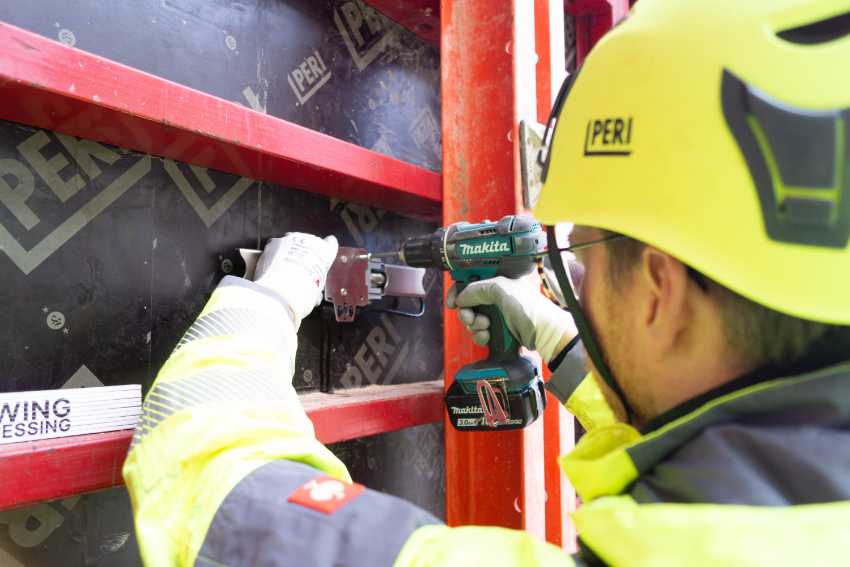
M.S: A recent example that stands out is the A46 Kenilworth Bypass, part of the UK’s high-speed railway program HS2, delivered by Balfour Beatty VINCI. A 14,500-tonne concrete box structure was built off-line and slid into place across the live highway, then needed roughly 400 cubic meters of concrete infill on each side to lock it in, poured into tall, enclosed voids with no line of sight into them at all. You cannot inspect what you cannot see. We supplied 24 PHONO sensors and ran the site crew through onboarding and training. Their own team then installed the sensors and connected them via nodes wirelessly to a hub and cloud platform, so they could watch the self-compacting concrete rise live, confirm full coverage, switch pump lines when needed, and hold the required rate of rise, across a three-day pour of more than 800 cubic meters. The result was a flawless installation, ahead of schedule, with a validated digital record instead of a guess. Their works manager told us afterwards that having that live view gave the team real confidence and traceability on what was, by any measure, a genuinely complex pour, which is exactly the reaction we are aiming for.
Beyond compliance and risk, what’s the practical business case for a contractor or precaster to invest in this?
M.S: Two things really, and they are connected: schedule and cost. On the schedule side, if you do not know the real strength of the concrete in an element, the safe move is to wait longer than necessary before striking formwork or loading it. That is especially true now that reference ages in the new Eurocode can stretch out to 91 days for slower, lower-clinker mixes. With live maturity data, formwork comes off when the strength is actually there, not when a conservative program says it might be. On a repetitive structure, such as a multi-storey slab or a precast yard, that difference compounds across every cycle. Then there is rework, which is the bigger number that usually goes unspoken. The Construction Industry Institute puts average direct field rework at around 5 percent of total project cost, and other industry studies push well into double digits once you include latent defects and indirect costs. A void nobody caught, cover that was not where it needed to be, formwork struck too early. All of that turns into demolition, re-pour and schedule slip once it is found, usually weeks or months later, when it is far more expensive to fix than it would have been to catch live. A sensor that flags a problem while the concrete is still workable, or before the crew moves to the next lift, is the difference between a short, manageable correction and a very costly one.
Looking ahead, where do you see the biggest opportunity for Vemaventuri?
M.S: Honestly, it is not a new sensor or a new market. It is where in the project timeline we get involved. Today, monitoring is mostly a decision the site team or the contractor makes once construction is already running. The bigger opportunity sits much earlier than that, with the planners and structural engineers who write the specification, before a single piece of formwork goes up. In the US for example, mass concrete thermal control plans already work exactly this way. The monitoring approach, sensor locations and remedial actions have to be calculated and approved before placement even starts. When monitoring is a required part of the specification rather than an afterthought, everything downstream changes.
Compliance documentation exists because it was built into the process, not reconstructed after the fact. Contractors get real schedule certainty, because striking times are agreed and tracked against live data instead of negotiated after something has already gone wrong. And on demanding pours, heating and cooling measures such as insulation, cooling pipes and heated enclosures can be steered by what the sensors are actually showing, rather than a fixed plan. We already publish ready-to-use tender texts and specification templates, so an engineer can pull a clause straight into a project instead of drafting one from scratch. What we are expanding now is the audience for these tools. We want to reach planners and architects at the design stage, not only contractors. If monitoring is considered at the design table, the whole project benefits.