
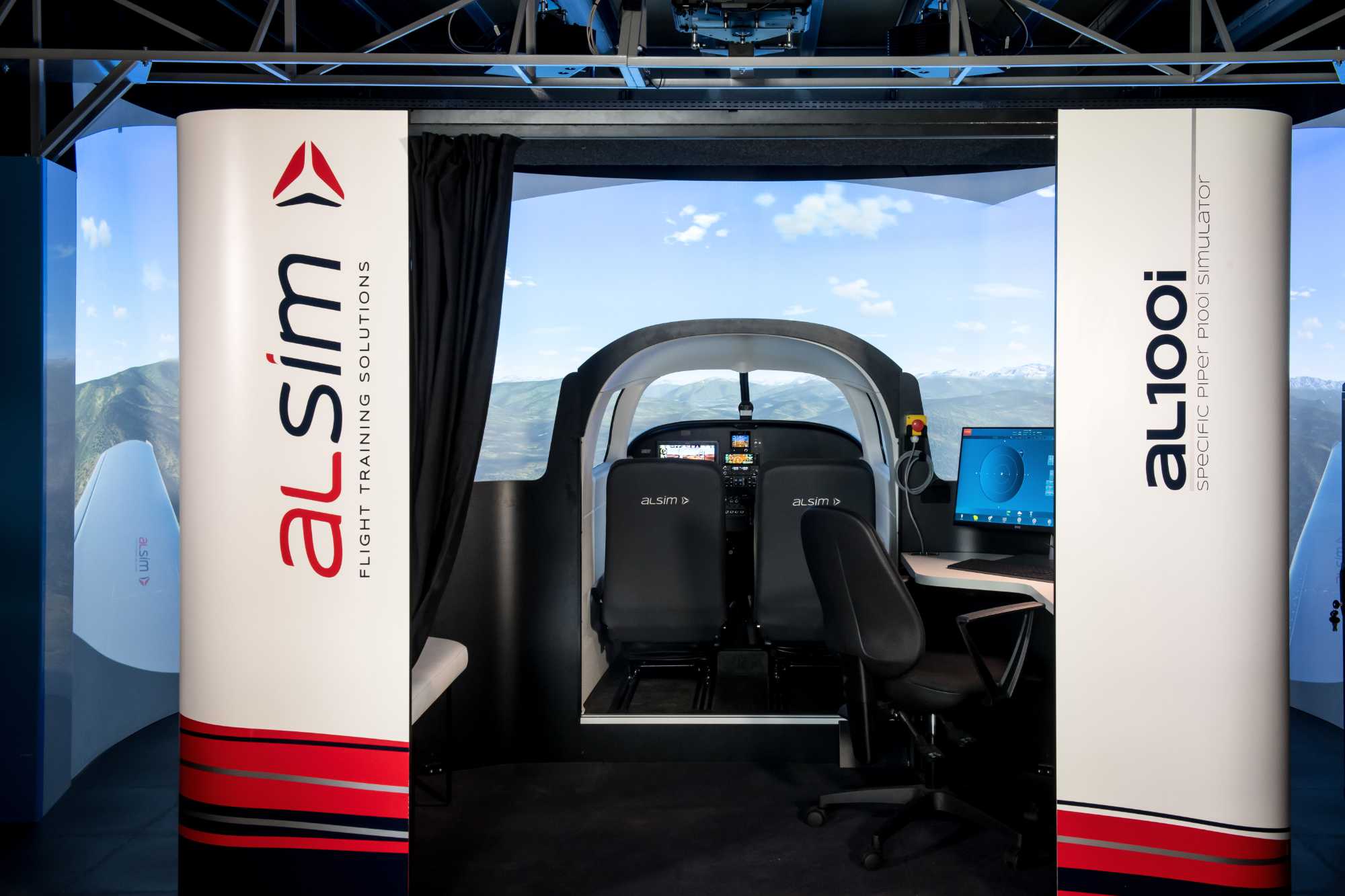
ALSIM is a global manufacturer of flight simulators dedicated to pilot training. Founded in 1994 and headquartered in France, ALSIM designs and develops innovative simulation solutions for flight schools, universities, training organizations, and airlines worldwide.
With more than 400 simulators installed in over 60 countries, ALSIM offers a wide range of FAA- and EASA-qualified training devices, covering everything from ab initio pilot training to advanced airline-oriented programs. Our simulators are designed to provide realistic, cost-effective, and flexible training environments that help organizations improve training efficiency, enhance safety, and better prepare pilots for their future careers.
Driven by continuous innovation and close collaboration with the aviation training community, ALSIM remains committed to delivering high-quality simulation solutions that meet the evolving needs of the global aviation industry.
Interview with Jordan Basirico, Product Engineer at ALSIM.
What are the main areas of activity of the company?
Jordan Basirico: ALSIM is widely acknowledged for its know-how, built on over 30 years of experience in flight simulation.
ALSIM works closely with its customers to develop training solutions that meet real-world operational needs. This collaborative approach drives continuous innovation, delivering effective, reliable, and forward-thinking training applications.
ALSIM’s main area of activity is the design, development, manufacturing, and support of flight simulators for pilot training. Our expertise covers both hardware and software development, enabling us to provide innovative simulation solutions tailored to various training needs, from ab initio flight training to advanced airline-oriented programs. In addition to simulator manufacturing, we offer installation, qualification support, instructor training, technical assistance, and long-term customer support.
Through continuous innovation and close collaboration with the aviation industry, ALSIM helps training organizations improve training quality, increase operational efficiency, and prepare pilots for successful careers in aviation.
What’s the news about new products/services?
J.B: At ALSIM, innovation is a continuous process. We regularly expand and enhance our product portfolio to meet the evolving needs of flight training organizations worldwide.
One of our most recent highlights is the AL100i, developed around the Piper Pilot 100i. It has been extremely well received by schools aiming to optimize training from PPL through IR (IFR training for the U.S. market). Paragon Flight Training in the U.S. described it as “the missing link” in delivering a cost-effective, student-centered program.
We’ve also launched the ALSR G7, based on the Cirrus SR22 G7. With full CAPS® simulation and Cirrus-standard avionics, it’s already operational at Cirrus Vision Centers in the U.S. and gaining popularity among Cirrus-affiliated training providers.
Another important addition is the AL2006, developed around the Tecnam P2006T NG. It has become a go-to solution for CPL and multi-engine IR training, offering a highly realistic experience aligned with one of the most widely used twin-engine aircraft in flight schools.
What are the ranges of products/services?
J.B: Beyond launching new aircraft-specific FTDs, we’ve been focused on developing tools that enhance student selection, immersion, and post-flight analysis—key pillars in modern pilot training.
One exciting innovation is the ALSIM FAST Flight assessment and selection tool (FAST), now integrated directly into our devices. It allows training centers to evaluate candidates before they begin formal training through a combination of flight exercises and cognitive tests—assessing memory, awareness, reflexes, and coordination. Results are compiled into clear performance profiles, helping schools make informed, data-driven recruitment decisions.
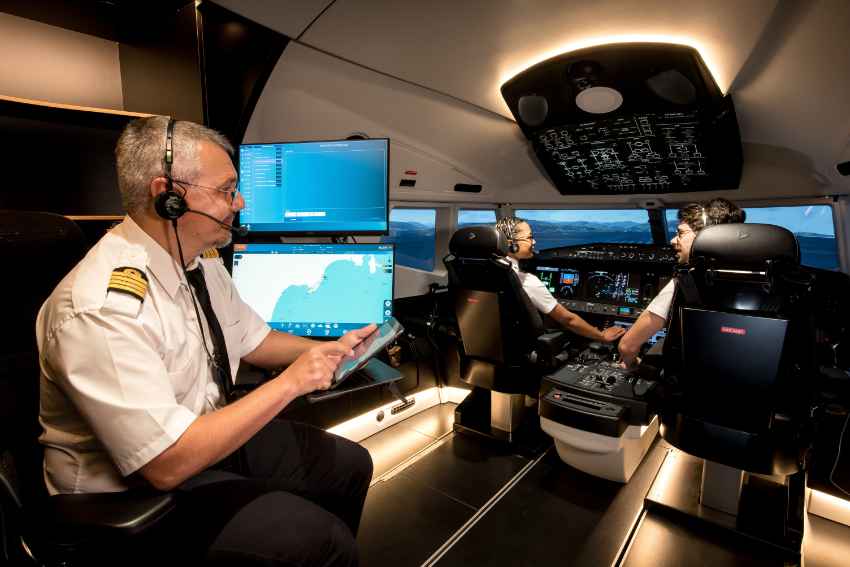
We’ve also developed a Debriefing Station (DBS). This standalone tool enables full session playback—including synchronized flight data, audio, and video—allowing for structured post-flight reviews, crew analysis, and scenario deconstruction, all outside the cockpit.
We’ve also significantly enhanced our visual environment to align with the highest Level D standards, raising the bar for realism and training depth.
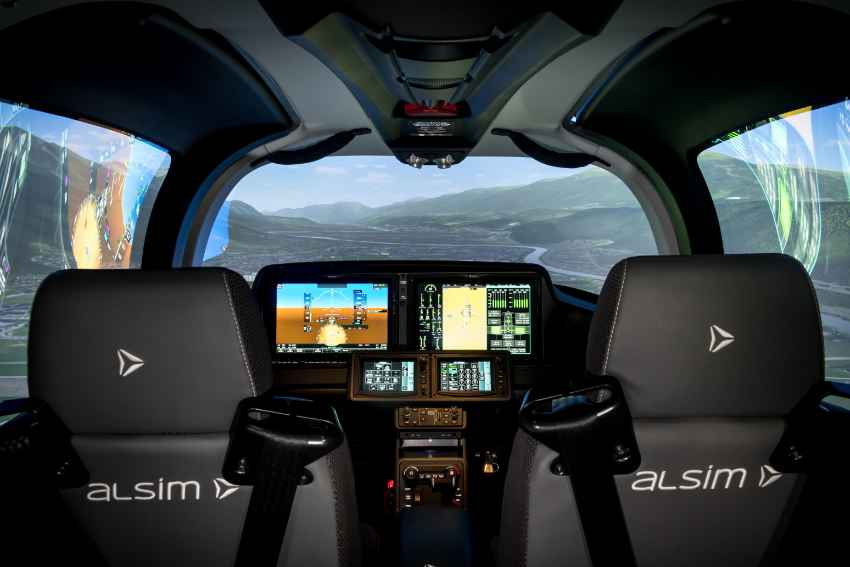
It brings 4K resolution, lifelike terrain modeling with satellite imagery and 3D-rendered landscapes, and lively, dynamic airport environments featuring animated ground traffic and marshallers. In addition, it enables the simulation of complex training conditions, such as runway contamination, ground traffic density, and low-visibility scenarios, with immersive ambient visuals including dynamic lighting, cloud layers, and realistic contrast management.
The system is also hardware-compatible, allowing for integration with non-ALSIM devices when needed.
Together, these tools demonstrate our commitment to helping schools train smarter, not just harder—with a focus on every stage of the pilot journey.
What is the state of the market where you are currently active?
J.B: The flight training market is currently very dynamic and under significant pressure to modernize. Demand for pilot training remains strong, driven by airline growth, regional aviation development, and the ongoing need to replace retiring pilots. As a result, flight schools are looking for ways to increase training capacity while keeping programs affordable, safe, and compliant.
At the same time, many flight schools are renewing their aircraft fleets and moving toward newer-generation platforms, such as new Tecnam aircraft, Piper P100i aircraft, and other efficient glass-cockpit training aircraft. This creates a need for training tools that are aligned with the aircraft students will actually fly, especially in terms of avionics, cockpit ergonomics, procedures, and aircraft behavior.
One of the most visible pressure points is multi-engine training. Reliable and affordable MEP aircraft have become difficult for schools to obtain quickly, while demand for CPL, multi-engine, and instrument training remains high. This makes simulator-based training increasingly important, both as a capacity solution and as a way to reduce dependence on scarce aircraft resources.
Cost is also a central factor. Flight training is expensive, and schools are under pressure to control aircraft operating costs, maintenance costs, fuel costs, instructor time, and student expenses. This strongly supports the adoption of certified flight training devices. Simulators allow schools to perform more training on the ground, repeat scenarios efficiently, expose students to abnormal and emergency situations safely, and reserve aircraft time for the phases where real flight experience is most valuable.
Overall, flight schools are no longer looking only for standalone devices; they increasingly need complete training ecosystems that help them improve safety, increase throughput, manage costs, support regulatory compliance, and deliver more consistent training outcomes.
What can you tell us about market trends?
J.B: Several major trends are shaping the flight training market.
First, there is a clear shift toward greater use of flight training devices across the training syllabus. This is partly driven by cost, but also by safety and training effectiveness. Schools want to perform more critical tasks in the simulator before exposing students to them in the aircraft, especially emergency procedures, engine-out practice, spatial disorientation, decision-making exercises, and abnormal situations that are difficult or unsafe to reproduce in flight.
Second, the market is moving toward higher-fidelity devices. Training organizations and regulators are increasingly focused on matching device capability to the training task. The question is no longer simply whether a simulator is available, but whether it provides the right level of fidelity and instructional value for a specific training objective.
Third, regulatory frameworks are evolving. In Europe, EASA is working on a new generation of CS-FSTD rules, with new ways of characterizing and choosing training devices. In the United States, FAA receives recommendations encouraging better use of simulation for targeted safety training. In India, the rapid growth of the flight training ecosystem is pushing the DGCA to build a more complete regulatory framework, including work around MPL training. This regulatory movement brings in new standards and ways of using training devices, to which both manufacturers and flight schools will have to adapt.
Fourth, training is becoming more competency-based and data-driven. The industry is moving beyond a purely hours-based view of training toward a stronger focus on skills, decision-making, workload management, crew coordination, and measurable performance. This supports the growth of tools such as structured debriefing, performance analytics, student screening, and personalized training pathways.
Finally, emerging technologies such as MR, VR, AR, eye tracking, and advanced visual systems are gaining attention. They are not yet replacing traditional certified simulators, mainly because of regulatory, comfort, hygiene, and acceptance challenges. However, they are becoming credible complementary tools for familiarization, procedures, ground school, cockpit flows, and immersive learning.
The likely direction of the market is therefore not one single technology replacing another, but a blended ecosystem combining new generation aircraft, certified high-fidelity simulators, digital tools relying on data, and new immersive technologies.
What are the most innovative products/services marketed?
J.B: ALSIM is recognized for developing innovative simulation solutions that address the evolving needs of pilot training organizations.
Among our most innovative products is the ALSIM Airliner, a unique simulator designed to bridge the gap between traditional flight training and airline operations. Its reconfigurable cockpit allows training organizations to expose students to both Airbus A320 and Boeing 737 environments within a single device, providing exceptional flexibility and value.
Another key innovation is the ALSR G7, a reconfigurable simulator capable of representing multiple single- and twin-engine aircraft. Its versatility allows training organizations to adapt their training programs while optimizing simulator utilization and reducing operating costs.
Beyond our products, ALSIM differentiates itself through comprehensive customer support services, including installation, qualification assistance, instructor training, software updates, and long-term technical support. Our objective is not only to provide advanced simulation technology but also to ensure that our customers achieve the highest training standards and maximize the return on their investment.
By combining innovation, flexibility, and customer-focused services, ALSIM continues to help shape the future of pilot training worldwide.
What estimations do you have for the second half of 2026?
J.B: The second half of 2026 remains difficult to predict, given the current geopolitical and economic instability. Fuel prices, airspace disruptions, aircraft availability, and training costs continue to create uncertainty for flight schools.
In this context, flight simulators are becoming even more strategic. They are a kind of “diamond asset”: allowing schools to keep students progressing on a reliable device that is far less impacted by fuel prices, weather, maintenance constraints, or aircraft availability.
ALSIM expects regulatory evolution around FSTDs and new training technologies to continue, but these changes take time. We do not foresee a major regulatory shift materially changing the market in the next few months. Overall, if worldwide tensions manage to ease, aviation could quickly return to stronger growth, further increasing the need for new pilots and for efficient, simulator-supported training capacity.