
PowerPhotonic is a specialist developer and manufacturer of wafer-scale freeform optics designed to enhance the performance of advanced laser systems. Drawing on more than two decades of research and engineering expertise, the company combines proprietary design and manufacturing technologies to deliver high-precision optical components that help accelerate the development of next-generation laser applications.
Its freeform optical surfaces, engineered for exceptionally smooth finishes and low light scatter, enable improvements in efficiency, precision and power handling while reducing component size and weight. These capabilities support innovation across a range of sectors including healthcare, defence, data communications and industrial manufacturing.
With ISO 9001 accreditation and operations in both the United Kingdom and the United States, PowerPhotonic serves a growing international customer base spanning Europe, the US and Asia. Backed by a strong portfolio of patents and ongoing research and development, the company works closely with engineers and technology partners to bring advanced optical solutions from concept to scalable production.
Interview with Persephone Poulton, Product Development engineer at PowerPhotonic.
What does “reliability” mean for your customers today, and how has your company’s definition of reliability evolved in recent years?
Persephone Poulton: PowerPhotonic creates high-value components, therefore it is critical that our technology continues to perform well even with repeated use of our optics. For customers who make use of our experience in optic design and modelling, we can transform a list of requirements into beam shapers that will enhance their laser system’s performance. Design projects can take some time, depending on the complexity of the customer’s needs. In some cases, the requirements will be new to us too and these projects give us an opportunity to push boundaries collaboratively. Our customers need to accurately know the timescale of their project upfront.
All of our optics are subject to careful inspection and surface testing to ensure that performance will be as expected. An example of this would be functional testing of a PRIME flat top beam shaper. For PRIME users, it is important we check the flat top size, flatness factor and “power in the bucket” (PiB) of the shaped spot in the focal plane. The PiB indicates how much light will be directed within the boundaries of the shaped spot, and how much is scattered. The higher the power, the more serious escaped light becomes. So we really need to be able to check ahead of time how efficient the shaping of each optic will be.
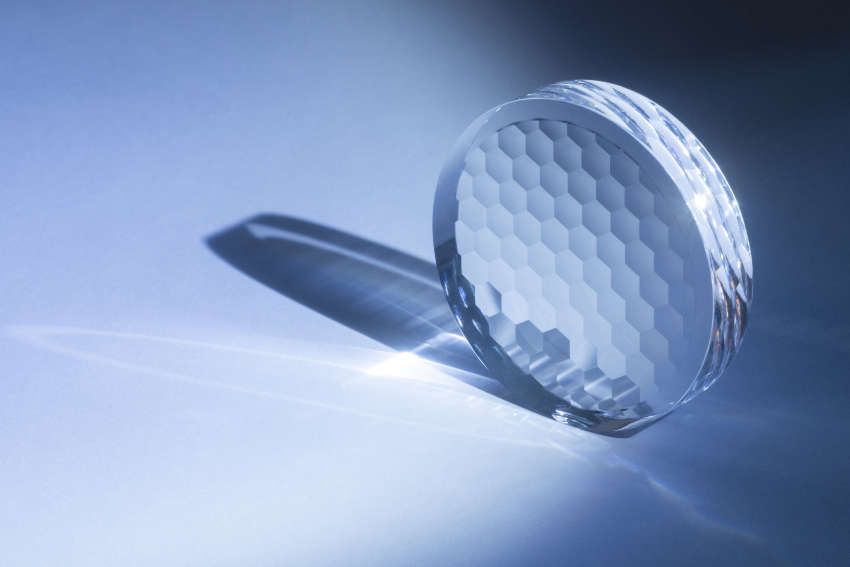
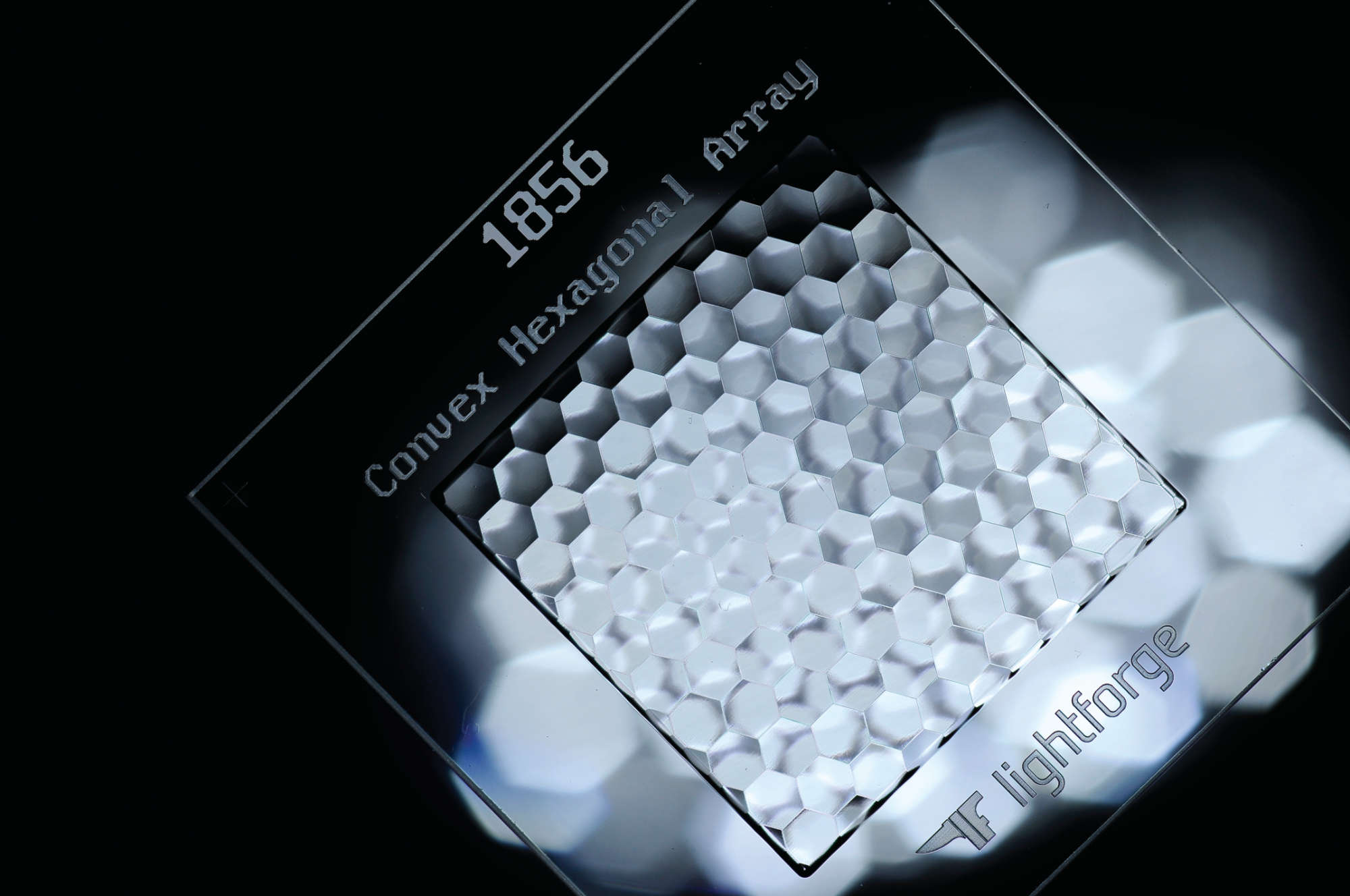
For those customers able to design their own optical surfaces, we have the LightForgeTM rapid prototyping service. Customers can create their own build-to-print optics and expect to receive them within 3 weeks of purchase.
https://www.powerphotonic.com/products/lightforge/
Which specific features of your products or solutions most directly impact reliability for your customers’ operations?
P.P: Quality control throughout the manufacturing process and careful consideration of customer requirements during design phases. For example; what are the power levels in the end use system going to be? Where should energy be placed to protect any vulnerable components? What will happen if the optic is used with multiple wavelengths? We also work with AR coating technology experts to find the best fit.
PowerPhotonic’s unique laser machining and polishing process. This is used to create tailor made free-form beam shaping components. We can use computational modelling to simulate how light will interact with each surface we make, or if appropriate we directly measure output functionally using a similar beam in-house. This is how we ensure that our customers can rely on the parts that they receive.
How do you design reliability into your products from the earliest stages of development?
P.P: The laser processing technology itself. We make very smooth, freeform surfaces which are resistant to laser damage when used in high power environments.
We can take the customer’s specific optical setup and position power in an optimized way. The efficiency of end-use systems is improved via beam shaping whilst potential laser damage to components is minimized by careful placement of high light intensity zones.
What role do data, monitoring, or predictive technologies play in improving reliability and preventing failures for your clients?
P.P: Every part that leaves our site has been inspected at multiple manufacturing levels to ensure high quality throughout the process. Laser-processed optical surfaces are assessed using white light interferometry or functional testing. This allows us to predict if the parts will perform well in a customer’s system before they leave the building.
How do you balance innovation and speed-to-market with long-term reliability and operational stability?
P.P: There are some application spaces that we have worked in for many years. Here we have built up a good understanding of what typical laser beams look like and therefore how we can design freeform surfaces to help our customers get ahead of their competitors.
We value the relationship we have with all our customers and in many cases these have grown into long-term collaborations. In areas that are new to us or indeed new to the world, we rely on the collective expertise of our people to come up with ideas and methods to test these ideas and implement them to make our solutions commercial. We are always looking for projects which allow us to enhance our capabilities whilst simultaneously allowing us to meet a new customer requirement.
Can you share an example of how your solution helped a customer reduce downtime, improve process stability, or increase operational confidence?
P.P: PowerPhotonic is involved with the ongoing Soni-Shape-Laser Innovate UK project. We provide beam shapers which work together with an ultrasound module to optimize welding speed, power distribution and strength for constructing electric vehicle battery casings. For high throughput welding we need to speed things up without sacrificing weld quality. Shaping the light that is focused within the work piece can help to create a stable melt pool with reduced spatter and porosity. We aim to reduce sharp temperature changes around the join to lower the risk of hot cracking. Our beamshapers are designed to last a long time in the welding process heads. No optic degradation has been observed by our welding partners to date.
We supply homogenizer optics to customers working with skin treatment systems. Without beam shaping, a Gaussian spot has a high intensity centre with trailing power towards the edges. For the operator, scanning such a spot over skin surface is difficult. Some skin gets too much irradiation whilst other areas do not get enough to produce the desired effect. Instead, we improve our customer’s systems by adding flat top capability. A uniform square profile tiles easily across a surface. The system operator now has a reliable beam output which is set to the correct power level throughout the beam. This is an example of how we can improve operational confidence for our end users.
How do service, maintenance, and after-sales support contribute to overall reliability and customer satisfaction in your business model?
P.P: At PowerPhotonic we have a dedicated sales team member for each customer, from enquiry right through to shipment of product. Regular online meetings and e-mail support are available for the customer should they have any technical or general queries before and after purchase.
What standards, certifications, or internal benchmarks guide your approach to ensuring consistent quality and performance?
P.P: We have a Quality Policy that sets the framework for our quality objectives and these documented measurable objectives are centred around ensuring product compliance and customer satisfaction. As a company we are ISO9001:2015 certified which sets a high quality standard for us to maintain.
How do you collect and use customer feedback to continuously improve the reliability of your products and solutions?
P.P: Sales have a customer feedback questionnaire that turns perception into a measure. We also receive customer feedback via emails and customer meetings. This feedback is captured within our monthly business performance reviews in a SOFT format and from that we take appropriate actions.
Looking ahead, what do you see as the next big shift in how industrial companies will need to think about reliability to stay competitive?
P.P: One of the biggest challenges will be rebuilding laser-based industries so that they can draw from more sustainable foundations. The true challenge is that investment needs to come from sources which prioritize global health and sustainability over short term growth. Staying competitive 20 years from now will require reliance on renewable energy, reducing energy consumption and water waste (A.I. is a big contributor). Collectively, we need to think ahead and work more collaboratively to build reliability and sustainable production into our supply chains.